
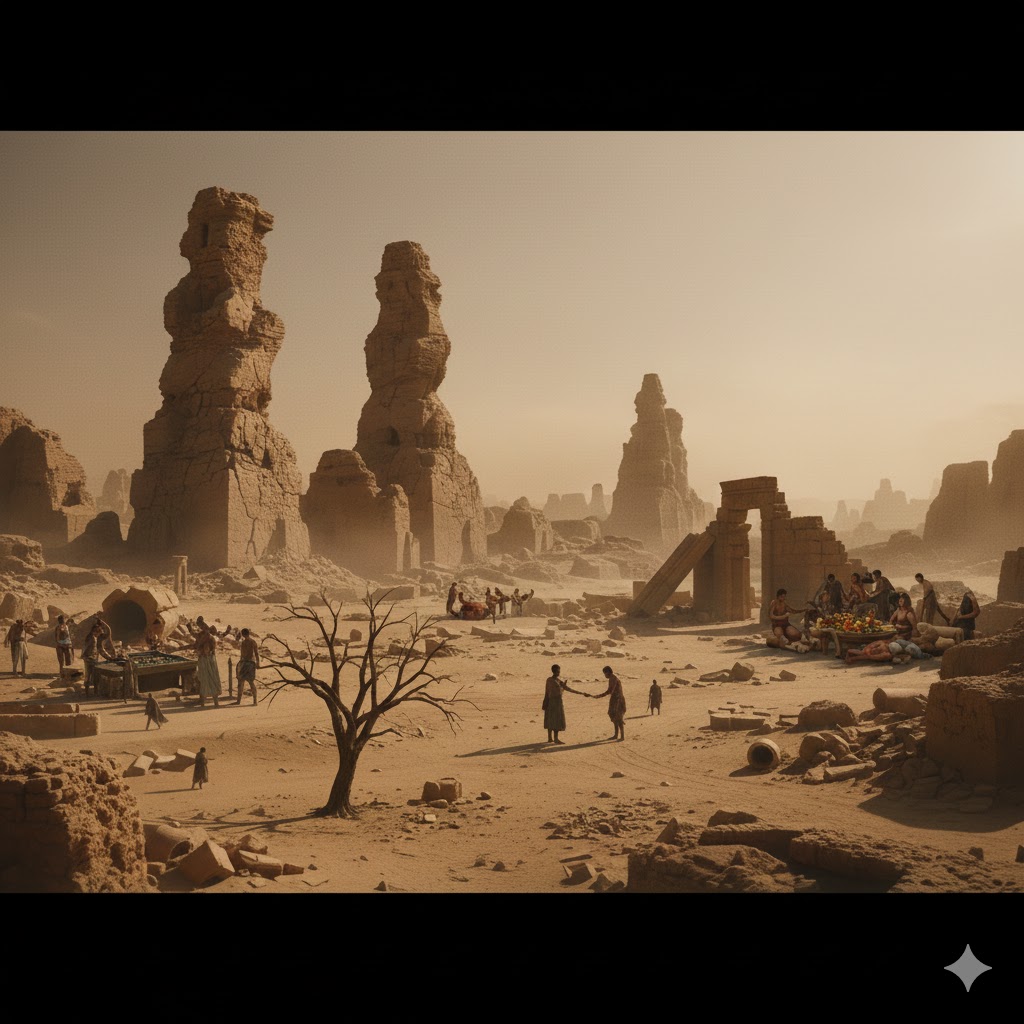
Babylon in Scripture represents far more than an ancient empire; it symbolizes a spiritual system of rebellion, pride, idolatry, and oppression. In the Old Testament, Babylon rose to power as a wealthy, militarized nation that exalted itself above God, consuming weaker nations and enslaving peoples. Yet its physical fall, recorded in Daniel and Jeremiah, foreshadowed a much deeper truth: Babylon is ultimately a spirit, a mindset, and a world system that continues into the modern age. The modern-day Babylon is not a single city but the global structure of power that exalts wealth above righteousness, self above God, and corruption above truth. Revelation describes it as a great city “which reigneth over the kings of the earth” (Revelation 17:18 KJV), pointing to a worldwide system rooted in spiritual deception and the worship of materialism.

Modern Babylon appears in political empires, economic systems, media powers, and cultural forces that lead humanity away from obedience to God. Its influence blinds hearts, normalizes sin, and rewards wickedness. Revelation declares, “Babylon the great is fallen, is fallen” (Revelation 18:2 KJV), meaning that every proud nation built on exploitation, violence, and immorality will ultimately collapse. Modern Babylon thrives wherever people trust in militaries, governments, wealth, or human intelligence instead of the Most High God. It is the world’s obsession with dominance, luxury, status, and control. It disguises itself as success but leaves spiritual ruin in its wake.
Babylon is also the mindset that prioritizes self-worship. It is the inner rebellion that says, “I will ascend…I will be like the most High” (Isaiah 14:14 KJV). This mindset mirrors Lucifer’s fall, showing that Babylon is fundamentally the spirit of pride. Anyone who believes they can rule, control, or manipulate life without God has adopted Babylon’s mentality. It steals attention away from holiness and seduces people into believing that earthly achievements define worth.
The Bible shows that Babylon is rooted in confusion. The name itself comes from the Tower of Babel, where God confounded the languages of humanity because they tried to build a tower to heaven (Genesis 11:9 KJV). This confusion continues today in systems that preach lies as truth, promote ungodliness as freedom, and intentionally distort moral boundaries. Babylon’s confusion leads people to reject God’s commandments and embrace ideologies that destroy families, communities, and nations.
In the modern world, Babylon is visible in governments built on corruption, corporations that exploit labor, entertainment that glorifies sin, and economic structures that trap people in lifelong debt. It is present in political systems that wage war for profit and in religious institutions that claim God’s name but reject His laws. Revelation describes Babylon as a “habitation of devils” and a “hold of every foul spirit” (Revelation 18:2 KJV), showing that it is spiritually rotten at the core.
Babylon’s mindset also thrives in consumerism. The world encourages people to measure success by possessions, beauty, and social status. It convinces them that happiness comes from external achievements instead of spiritual transformation. This is why Revelation speaks of Babylon’s merchants as “the great men of the earth” who deceived nations through their sorceries (Revelation 18:23 KJV). The modern marketplace, driven by greed and manipulation, is a pillar of Babylon’s influence.
Another characteristic of Babylon is its injustice. Ancient Babylon enslaved Israel, oppressed the poor, and celebrated violence. Today’s Babylon does the same through mass incarceration, exploitation of the poor, racial inequality, and systems that profit from suffering. God warns, “Woe to him that buildeth a town with blood” (Habakkuk 2:12 KJV), showing that any society built on oppression is destined to fall.
Babylon also promotes false religion. It mixes truth with lies, spirituality with witchcraft, and holiness with corruption. It presents itself as righteous but denies the power of God. This is why Scripture calls it “Mystery, Babylon the Great” (Revelation 17:5 KJV). It thrives in religious hypocrisy—churches that preach prosperity instead of repentance, leaders who exploit believers, and doctrines that comfort sin rather than confront it.
The modern Babylon is also moral decay. It normalizes fornication, adultery, idolatry, and perversion. It glorifies rebellion against family structure and mocks righteousness. The Bible says Babylon made “all nations drink of the wine of the wrath of her fornication” (Revelation 14:8 KJV). In other words, the world has been intoxicated by sin, unable to see the danger of its choices.
Babylon trains people to chase pleasure rather than purpose. It distracts the mind with entertainment, lust, and vanity. It pushes people to worship celebrities, technology, and wealth. This constant distraction weakens spiritual discipline and separates people from God. It replaces prayer with pleasure and holiness with indulgence.
The mindset of Babylon is also rooted in rebellion against divine order. It rejects biblical family structures, mocks masculine and feminine roles ordained by God, and promotes chaos instead of stability. God established order to protect humanity, but Babylon seeks to dismantle everything sacred and replace it with confusion. It encourages people to redefine truth according to their emotions rather than God’s Word.
Babylon thrives by creating dependence on worldly systems. Instead of trusting God, people trust governments, corporations, pharmaceutical powers, and political leaders. Yet the Bible warns, “Cursed be the man that trusteth in man” (Jeremiah 17:5 KJV). Babylon’s foundation is misplaced trust—believing that human power can provide what only God can supply.
The fall of Babylon is both spiritual and physical. Revelation promises that its collapse will be sudden: “in one hour is thy judgment come” (Revelation 18:10 KJV). This shows that no matter how powerful an empire becomes, God can bring it down instantly. Babylon’s wealth, military might, and global influence cannot protect it from divine judgment.
God calls His people to separate themselves from Babylon’s system. “Come out of her, my people” (Revelation 18:4 KJV). This is not just a physical command but a spiritual one. Believers must reject Babylon’s mindset—pride, greed, lust, rebellion—and walk in holiness, humility, and obedience. To come out of Babylon is to break free from the world’s deception and submit fully to God’s authority.
Believers must also resist Babylon’s pressure to conform. Babylon rewards compromise, but God blesses righteousness. Daniel refused to eat Babylon’s food or bow to its idols, and God honored him. Likewise, those who stand against modern Babylon’s temptations will receive God’s protection and favor.
Babylon’s fall is also a warning. It teaches that every nation that exalts itself above God will be humbled. Every system that oppresses the innocent will be judged. Every mindset rooted in pride will collapse. God is patient, but judgment comes when wickedness reaches its fullness.
The fall of Babylon signifies the triumph of God’s kingdom. It represents the end of worldly corruption and the beginning of divine restoration. When Babylon falls, truth is restored, justice is lifted, and righteousness prevails. God removes everything that exalts itself against His authority.
Modern-day Babylon will fall just as ancient Babylon did. Its wealth, systems, and power will crumble, and those who placed their trust in it will be left empty. But those who trusted in God will stand strong. Babylon’s fall is not merely destruction—it is deliverance for God’s people.
In the end, the fall of Babylon points to the victory of Christ, who is King of kings and Lord of lords. All human pride, power, and rebellion will bow before Him. Babylon may rise with glory, but its end is certain. Only the kingdom of God will stand forever.
References:
Genesis 11:9 (KJV) – Origin of Babel, meaning confusion.
Isaiah 14:12–14 (KJV) – The prideful mindset connected to Babylon and Lucifer’s rebellion.
Habakkuk 2:12 (KJV) – Judgment on nations built on bloodshed and oppression.
Jeremiah 17:5 (KJV) – Warning against trusting in man rather than God.
Daniel 1:8 (KJV) – Daniel refusing Babylon’s food, symbolizing resisting corruption.
Revelation 14:8 (KJV) – “Babylon is fallen” because of her fornication and corruption.
Revelation 17:5 (KJV) – “Mystery, Babylon the Great,” symbolizing spiritual deception.
Revelation 17:18 (KJV) – Babylon as the city reigning over kings of the earth.
Revelation 18:2 (KJV) – Babylon as the habitation of devils and unclean spirits.
Revelation 18:4 (KJV) – God’s command: “Come out of her, my people.”
Revelation 18:10 (KJV) – Babylon’s sudden judgment “in one hour.”
Revelation 18:23 (KJV) – Merchants deceiving nations through sorceries.
Discover more from THE BROWN GIRL DILEMMA
Subscribe to get the latest posts sent to your email.
 THE BROWN GIRL DILEMMA