
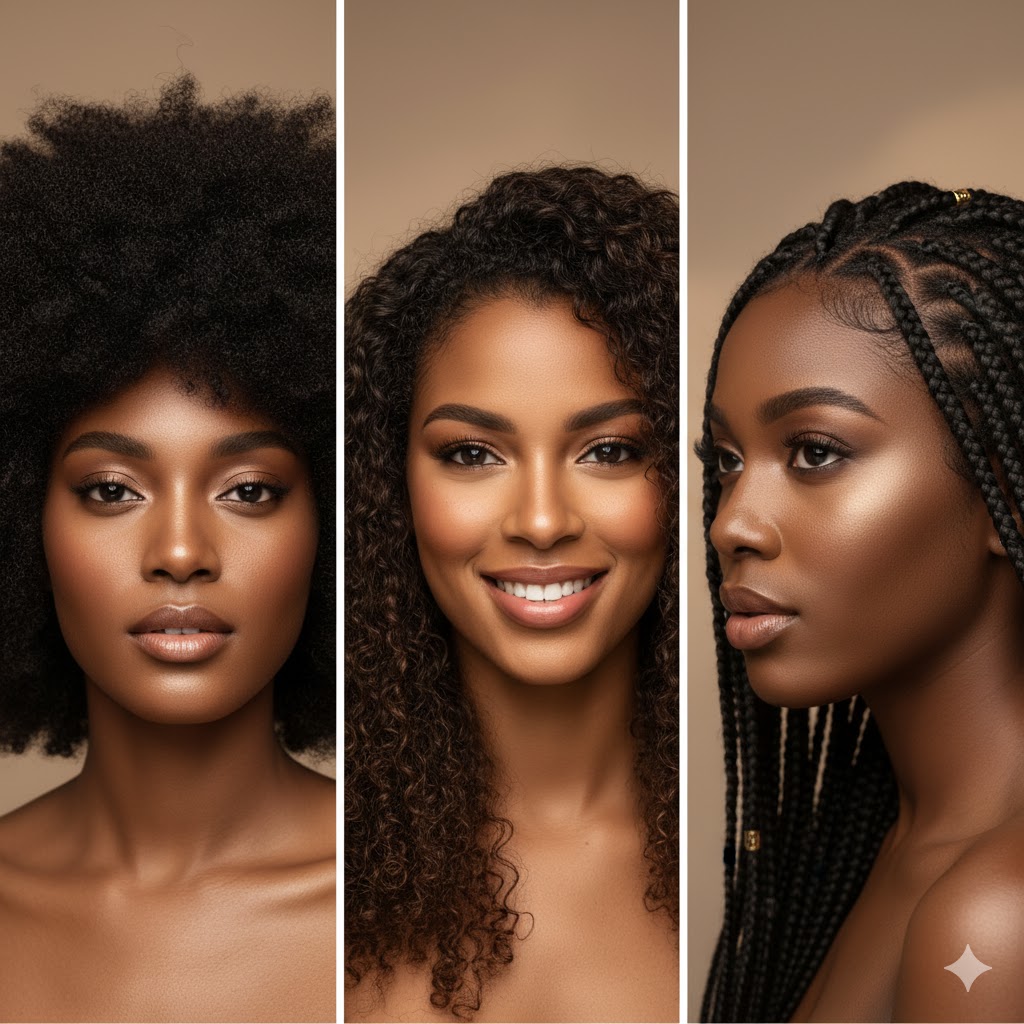
Colorism is one of the most quiet yet devastating forces shaping the self-worth of countless Brown and dark-skinned Black girls. It is a wound carried in silence, often inherited before a child even understands language. This system of shade-based hierarchy teaches girls that the deeper their melanin, the more they must fight to be seen, valued, or affirmed. The pain is subtle, but its impact echoes across generations.
From early childhood, many Brown girls absorb social cues that their beauty is conditional. Compliments often drift toward lighter-skinned peers while darker-skinned children hear words coded with pity or backhanded surprise. In playgrounds and classrooms, they learn that beauty is not simply a matter of opinion—it is a currency, unevenly distributed.
These lessons deepen as girls enter adolescence, a stage already marked by insecurity. In these years, beauty becomes entwined with belonging. But for Brown girls, their melanin can become a barrier to social acceptance. They witness the attention others receive—affection, praise, desirability—and begin to question their own worthiness. The silence around their beauty becomes a form of erasure.
Media amplifies these insecurities. Television, film, music videos, and social media frequently showcase lighter complexions as the standard of attractiveness, softness, innocence, or feminine ideal. When representation exists for darker-skinned women, it is too often caricatured, masculinized, or overshadowed by stereotypes. Brown girls internalize these images long before they can verbalize their impact.
Family environments, although meant to nurture, can sometimes reinforce these hierarchies. Casual comments about staying out of the sun, praising lighter relatives, or dismissing darker features as burdens plant seeds of self-doubt. The children who hear these remarks learn to associate their complexion with inadequacy rather than inheritance.
School environments can also intensify the pressure. Peer groups form around beauty trends shaped by mainstream standards, leaving Brown girls to navigate subtle exclusions. When crushes favor lighter companions or boys make teasing remarks about dark skin, the message is clear: some girls are deemed desirable, while others must work harder to be noticed.
Romantic dynamics further complicate the issue. Many Brown girls grow up hearing men boldly declare their preference for “light-skinned women,” often in ways that degrade darker women. These declarations become cultural scripts, encouraging girls to believe that their skin tone reduces their chances for love, admiration, or partnership.
Over time, colorism creates a psychological split within many Brown girls. Outwardly they grow strong, talented, and intelligent. Inwardly they wrestle with a sense of invisibility—feeling unseen, muted, or overshadowed. The emotional labor required to appear confident despite this silent burden can be exhausting.
Social media, while offering community, can also intensify comparison. Filters, trends, and curated beauty aesthetics favor lighter tones and Eurocentric features. Brown girls scrolling through these platforms may find themselves caught between admiration and envy, trying to reconcile their natural beauty with digitally constructed ideals.
In some cultural spaces, lighter skin is linked to opportunity. Whether in entertainment, corporate settings, or social circles, the unspoken assumption persists that lightness equates to professionalism, softness, or superiority. Brown girls learn to question whether their achievements will be recognized or overshadowed by biases beyond their control.
Colorism also impacts self-expression. Some Brown girls hesitate to wear bright colors, bold makeup, or certain hairstyles out of fear of drawing negative attention. They are taught that their beauty requires restraint, while lighter peers are granted freedom to experiment without judgment.
Friendships can become complicated terrain. Brown girls may notice that lighter friends receive favoritism, invitations, or visibility that they do not. While the affection is real, the inequity can create quiet resentment or feelings of inadequacy that are hard to articulate.
In some cases, Brown girls may feel pressure to overachieve academically or professionally to compensate for perceived deficits in beauty or social privilege. Their value becomes tied to performance rather than inherent worth. This perfectionism, though applauded, can mask internal wounds.
Colorism also infiltrates spirituality and identity. Girls raised in faith-based environments may struggle to reconcile divine love with a world that subtly devalues their physical presence. They question why God made them dark if society treats their melanin as an obstacle.
Despite the pain colorism causes, Brown girls possess remarkable resilience. Many develop a deep inner strength, self-awareness, and empathy forged through adversity. They learn to name the systems that harmed them and begin the process of reclaiming their image.
Representation is slowly improving, with more dark-skinned women in media, business, pageantry, and leadership. These images matter. When Brown girls see women who look like them celebrated for their excellence, beauty, and brilliance, a new narrative begins to form—one where their skin becomes a crown, not a curse.
Community healing is essential. Open conversations within families, churches, and social groups can dismantle generational biases. When adults acknowledge past harm and intentionally uplift Brown girls, cycles of insecurity begin to break. Healing starts with honesty.
Self-love, though often spoken as a cliché, becomes revolutionary for Brown girls. Learning to admire their complexion, their features, their heritage, and their presence is an act of defiance against systems built to diminish them. When they embrace their reflection, they reclaim their power.
Sisterhood plays a critical role in restoring confidence. When Brown girls affirm one another—celebrating beauty, talent, uniqueness, and strength—they create safe spaces where melanin is honored, not diminished. These connections reinforce identity and belonging.
Ultimately, colorism breeds self-doubt by convincing Brown girls that they are inferior. But as awareness grows and communities challenge these biases, a new truth emerges: Brown girls are radiant, deserving, worthy, and powerful. Their beauty is not muted—it is magnificent. And when they step into that truth, the silence breaks and confidence rises where insecurity once lived.
References
Bailey, T. (2021). The psychological impact of colorism on Black girls and women. Journal of Black Studies, 52(4), 335–352.
Bryant, M. (2013). Shades of difference: Why skin color matters. Stanford University Press.
Crenshaw, K. (1991). Mapping the margins: Intersectionality, identity politics, and violence against women of color. Stanford Law Review, 43(6), 1241–1299.
Hall, R. E. (2017). The melanin millennium: Skin color as the real global issue. Springer.
Hunter, M. (2007). The persistent problem of colorism: Skin tone, status, and inequality. Sociology Compass, 1(1), 237–254.
Maxwell, M. (2020). Colorism in media and popular culture: The borders of beauty. Routledge.
Monk, E. P. (2015). The cost of color: Skin color, discrimination, and health among African Americans. American Journal of Sociology, 121(2), 396–444.
Russell, K., Wilson, M., & Hall, R. (2000). The color complex: The politics of skin color among African Americans (Revised ed.). Anchor Books.
Thompson, C. (2009). Black beauty: Aesthetics, stylization, politics. Duke University Press.
Walker, A. (1982). If the present looks like the past, what does the future look like? In Search of Our Mothers’ Gardens. Harcourt, Brace, Jovanovich.
Wilder, J., & Cain, C. (2011). Teaching and learning color consciousness in Black families: Exploring family processes and women’s experiences with colorism. Journal of Family Issues, 32(5), 577–604.
Wilder, J., & Perry, S. (2020). Shades of Blackness: The effects of skin tone in the workplace. Sociology of Race and Ethnicity, 6(2), 182–197.
Discover more from THE BROWN GIRL DILEMMA
Subscribe to get the latest posts sent to your email.
 THE BROWN GIRL DILEMMA