
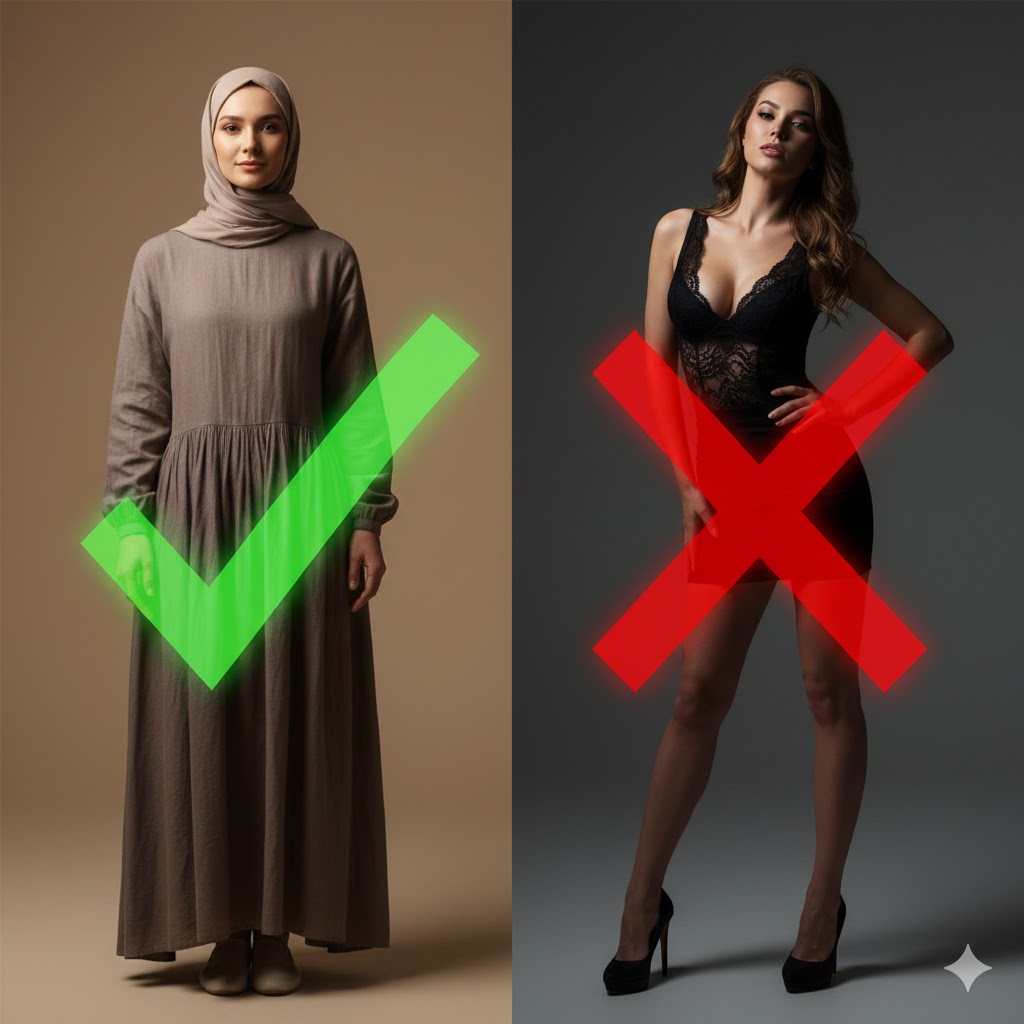
Modesty has always been a subject of moral, cultural, and spiritual reflection. Rooted in humility and self-respect, it represents a balance between outward appearance and inner virtue. In biblical terms, modesty is not merely about clothing but the posture of the heart, reflecting reverence for God and respect for oneself. Scripture reminds believers in 1 Timothy 2:9 (KJV) that women should “adorn themselves in modest apparel, with shamefacedness and sobriety,” suggesting that true modesty is both behavioral and spiritual.
In the modern era, modesty often collides with the ideals of self-expression and sexual liberation. Fashion industries and media outlets frequently glorify revealing attire as empowerment, while the ancient principle of modesty warns against the dangers of vanity and objectification. The line between confidence and immodesty becomes blurred when beauty is defined by exposure rather than elegance or character.
True modesty is never about suppression or shame; rather, it is an act of wisdom. It acknowledges that the body is sacred—a temple of the Holy Spirit (1 Corinthians 6:19–20)—and therefore worthy of honor. A modest person dresses not to hide their beauty but to express dignity, refinement, and discernment. Modesty communicates self-control and spiritual maturity.
In contrast, immodesty seeks validation through visibility. When one’s attire is designed primarily to attract sensual attention, it reflects a misplaced sense of worth. The problem lies not in fashion itself but in intention. Proverbs 31:25 describes the virtuous woman as one “clothed with strength and honour,” emphasizing internal grace over external display.
Cultural interpretations of modesty vary widely. In some societies, modest dress involves full coverage, while in others, it emphasizes simplicity and tastefulness. Yet across traditions, the essence remains consistent: modesty protects personal sanctity and commands respect. It teaches that the human form, though beautiful, should not be exploited for approval or profit.
Attitudinal modesty is just as vital as physical modesty. A person may be fully clothed yet still exude arrogance or pride. The modest spirit, however, is humble, gentle, and respectful. It does not boast of appearance, wealth, or influence. As 1 Peter 3:4 (KJV) teaches, the focus should be on “the hidden man of the heart,” a meek and quiet spirit that is precious in God’s sight.
Social media culture has complicated this message. Platforms often reward exhibitionism and self-promotion, conditioning young people to equate attention with value. Modesty, in contrast, requires self-restraint in both image and attitude—an ability to carry oneself with quiet confidence rather than overt display.
Modesty does not deny beauty; it redefines it. Beauty, when paired with modesty, becomes timeless, commanding admiration without provocation. Women like Audrey Hepburn and Cicely Tyson demonstrated how elegance can be powerful without being provocative, showing that modesty enhances allure by leaving something to the imagination.
Men, too, are called to modesty. Though often overlooked, male modesty involves both conduct and dress. Tight, flashy, or ostentatious clothing can reflect the same vanity condemned in women. A godly man dresses with respectability, decency, and restraint, recognizing that his appearance communicates his values.
The Bible consistently warns against pride in apparel. Isaiah 3:16–18 condemns the “haughty daughters of Zion” who flaunt ornaments and seductive gestures. The critique is not about fashion itself but the pride that fuels it. Likewise, Jesus condemned hypocrisy in outward appearances, urging followers to focus on inner purity.
Modern Christianity often struggles to define modesty amid evolving fashion trends. Some believers view it legalistically, turning clothing into a rigid moral code. Others dismiss modesty entirely as outdated. Yet, biblical modesty transcends rules—it’s about the reflection of the heart. The key question is: Who am I dressing for—God or the world?
Immodesty in attitude manifests through arrogance, flirtation, or entitlement. A modest person does not crave to be the center of attention but contributes to peace and order. Philippians 2:3 instructs believers to “do nothing through strife or vainglory,” highlighting the spiritual posture that undergirds modesty.
In professional and social settings, modesty earns respect and trust. Those who carry themselves with dignity and discretion often advance further because they inspire confidence rather than distraction. Modesty communicates self-awareness, while immodesty often betrays insecurity masked as confidence.
Fashion designers are increasingly rediscovering the power of modest aesthetics. The rise of “modest fashion” lines, even among major brands, shows that covering the body can still be stylish, sophisticated, and empowering. Designers like Anniesa Hasibuan and Dolce & Gabbana’s modest collections prove that modesty has modern relevance.
The psychology behind modesty reveals deep emotional intelligence. Those who value modesty tend to have strong boundaries and self-respect. They seek admiration for integrity, not sensuality. Immodesty, conversely, can arise from unhealed insecurity or a desire for affirmation, reflecting the heart’s hunger for validation.
Parents and spiritual leaders play a vital role in teaching modesty. Rather than shaming, they should model confidence, class, and self-respect. When young girls and boys see modesty as empowerment—not restriction—they learn that value comes from character, not exposure.
In marriage, modesty preserves intimacy. What is sacred should not be public. The mystery of love and attraction thrives when privacy is honored. The Song of Solomon celebrates beauty within covenant, reminding couples that intimacy was designed for sacred spaces, not public display.
Even beyond faith, modesty cultivates social harmony. It reduces competition, envy, and objectification, promoting authenticity in relationships. A modest heart elevates conversations, interactions, and environments, shifting focus from the superficial to the soulful.
Ultimately, modesty is a form of worship. It is saying to God, “I honor what You created by treating it with reverence.” It reflects holiness in both spirit and conduct, embodying grace, restraint, and strength. In a world obsessed with exposure, modesty is radical purity—a light that draws attention not to the body, but to the soul.
In conclusion, modesty in dress and attitude is not about denial but discernment. It is the art of balance between self-expression and self-control, between beauty and humility. When modesty governs both wardrobe and behavior, the result is elegance that glorifies God and dignifies the individual.
References
- The Holy Bible, King James Version. (1611). 1 Timothy 2:9; 1 Corinthians 6:19–20; Proverbs 31:25; 1 Peter 3:4; Isaiah 3:16–18; Philippians 2:3.
- Lewis, C. S. (1942). The Screwtape Letters. HarperOne.
- Clark, R. (2018). Fashion and Faith: The Meaning of Modesty in Modern Culture. Christian Press.
- Muhammad, A. (2020). Modesty and Power: Redefining Feminine Strength in Faith Communities. Journal of Religious Studies, 12(3), 145–162.
- Taylor, J. (2019). Modesty in the Modern Age: A Sociocultural Analysis of Dress and Decorum. Oxford University Press.
Discover more from THE BROWN GIRL DILEMMA
Subscribe to get the latest posts sent to your email.
 THE BROWN GIRL DILEMMA