
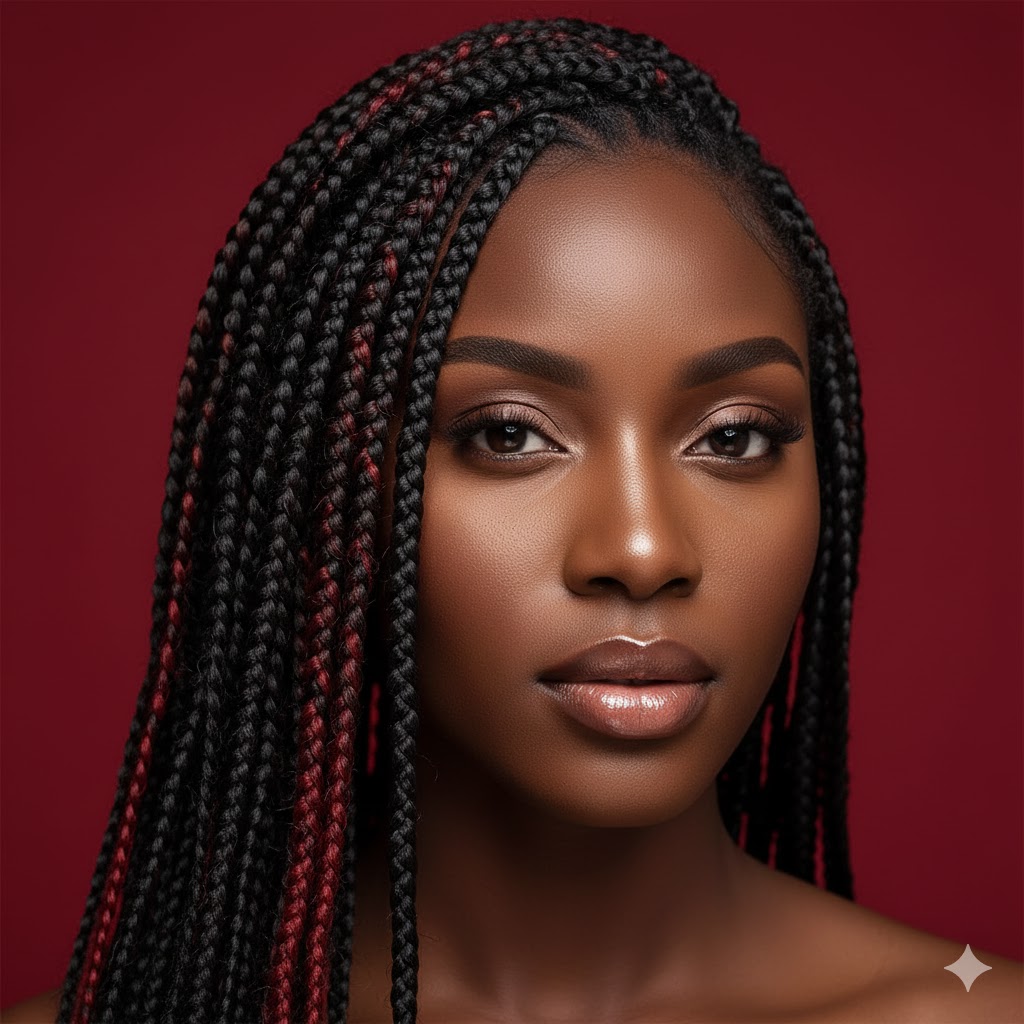
Sarah’s story begins in the quiet corners of classrooms and office hallways, where her brown skin often made her feel invisible. From an early age, she learned that the world had unspoken hierarchies: the lighter you were, the more likely you were to be seen, heard, and admired. Her rich, cocoa-toned complexion, which her family celebrated as beautiful, was often met with dismissal or subtle derision outside the home.
In school, Sarah noticed how teachers and peers unconsciously prioritized lighter-skinned girls. Compliments, opportunities to lead projects, and social inclusion seemed to favor those with golden undertones. Brown-skinned girls like her were praised for effort, rather than natural beauty or intelligence. It was the first seed of a lesson she would carry into adulthood: that society often measures worth by proximity to whiteness.
As she grew older, Sarah’s experiences in dating mirrored her school years. Men often overlooked her, gravitating toward lighter-skinned women. Subtle remarks—“You’d be prettier if your skin were lighter” or “I just prefer fair skin”—eroded her confidence. She began to internalize these biases, wondering if she was less lovable, less desirable, less enough, simply because of the hue of her skin.
The workplace proved no less challenging. Despite her qualifications and professional accomplishments, Sarah frequently encountered barriers she suspected were tied to appearance. Promotions, recognition, and networking opportunities often seemed to favor colleagues with lighter skin, more Eurocentric features, or “more approachable” aesthetics according to managers’ biases. Every overlooked achievement reinforced the cruel lesson that brown skin could be a subtle yet persistent disadvantage.
Media representation compounded the pressure. Television, films, and advertisements consistently highlighted lighter-skinned women as ideal. Sarah rarely saw women who looked like her celebrated for beauty, intellect, or power. When she did, such as Lupita Nyong’o or Viola Davis on a red carpet, it felt aspirational but also bittersweet: a reminder of how rare recognition could be.
Family and friends offered support, but society’s lens was difficult to escape. Sarah developed resilience, learning to navigate environments where her skin tone was often an unspoken barrier. She refined her personal style, cultivated skills, and asserted herself in conversations, slowly building an internal shield against pervasive colorism.
Romantic relationships were especially fraught. Potential partners, influenced by societal standards, sometimes preferred lighter-skinned women or treated her with hesitation. Comments that were casual to others—“You’d be more attractive if…”—cut deeply, shaping her perception of worth and desirability. Her heartbreaks were compounded by the realization that attraction could be clouded by prejudice rather than genuine connection.
Despite these challenges, Sarah discovered her own definition of beauty. She learned to see her brown skin as radiant, her features as distinctive and regal. High cheekbones, full lips, and rich skin tone became her markers of resilience and identity, rather than limitations. Each day of self-affirmation chipped away at the weight of societal judgment.
In her career, Sarah faced systemic hurdles but refused to let bias dictate her trajectory. She sought mentors who recognized talent beyond appearance, joined professional networks that celebrated diversity, and used setbacks as fuel for growth. Over time, her skills, intelligence, and authenticity began to command respect and recognition, proving the falsehood of superficial standards.
The journey was not linear. There were moments of doubt, tears, and frustration when mirrors and mirrors of society seemed to reflect inadequacy. Yet Sarah learned that the sunlight she chased was not external validation but self-acceptance. Beauty, competence, and worth were inherent, not conditional on societal preference for lighter skin.
Friendships with other brown and dark-skinned women became a source of strength. Shared experiences of colorism, overlooked potential, and romantic challenges created bonds of solidarity. Through community, Sarah realized she was not alone in navigating a world that often underestimated women of her shade.
Social media became both a battleground and a lifeline. While she saw persistent stereotypes online, she also found movements celebrating melanin-rich beauty, such as #MelaninPoppin and #BrownGirlMagic. These communities reinforced pride in her skin tone and offered examples of women succeeding despite systemic biases.
Sarah’s story illuminates the intersection of colorism, gender, and societal expectation. It reflects how beauty hierarchies—rooted in colonial history, media representation, and cultural bias—continue to shape opportunities in love, career, and self-perception. Her journey underscores the psychological toll of being devalued for traits intrinsic to identity.
Yet the narrative is not one of defeat. Sarah’s resilience embodies the reclamation of self-worth. Each accomplishment, each affirmation, each refusal to conform to superficial expectations represents a triumph over systemic and interpersonal bias. Her story exemplifies how internalized beauty standards can be challenged and redefined.
In love, Sarah learned to prioritize partners who saw her fully—not as an abstraction of societal ideals, but as a woman of complexity, intelligence, and radiance. Her romantic experiences shifted from seeking validation to demanding respect and authenticity. She discovered that relationships founded on bias could never satisfy the soul.
Career-wise, she became an advocate for equity, mentoring younger women and challenging organizational biases. Her brown skin, once perceived as a barrier, became a symbol of perseverance and excellence. Through her visibility and advocacy, she contributed to changing perceptions, one professional space at a time.
Sarah’s experience reflects broader societal patterns. Research shows that colorism affects hiring, promotion, dating preference, and social perception for brown and dark-skinned women globally (Hunter, 2011; Lewis & Lockwood, 2018). Her story is both personal and emblematic of structural inequities tied to historical beauty hierarchies.
The psychological impact of colorism is profound. Feelings of inadequacy, internalized bias, and social anxiety are common among women whose skin tones fall outside dominant beauty ideals (Banks, 2018). Sarah’s journey exemplifies both the challenge and the potential for reclamation through self-knowledge and supportive communities.
Over time, Sarah cultivated rituals of self-care and self-affirmation that reinforced pride in her appearance. She learned to embrace hair texture, skin tone, and facial features as elements of identity and heritage, resisting the pervasive pressure to conform to Eurocentric ideals.
The story of Sarah also illustrates intergenerational transmission of beauty values. She observed how her mother and grandmother navigated similar biases, offering lessons in resilience, self-respect, and dignity despite societal prejudice. Cultural heritage became a source of strength and grounding.
Sarah’s narrative challenges the notion that beauty is universal. It demonstrates that social standards, often influenced by race, history, and power, determine who is valued and why. Yet individual agency allows women like Sarah to define beauty on their own terms, asserting worth independent of external validation.
Community recognition, professional achievement, and personal love became Sarah’s metrics of worth. She discovered that external approval—once seen as essential—was secondary to self-respect and cultural pride. Her journey represents a broader reclamation of aesthetics for women historically devalued for melanin-rich skin.
Through advocacy, mentorship, and storytelling, Sarah contributes to reshaping societal perceptions. By publicly affirming the beauty and value of brown-skinned women, she creates space for others to see themselves as worthy, attractive, and powerful, challenging entrenched hierarchies of desirability.
Sarah’s story is also a call for systemic change. Organizations, media, and institutions must interrogate implicit bias in hiring, marketing, and representation to dismantle color-based inequities. Her journey demonstrates how personal resilience intersects with structural reform in the pursuit of equity.
Her brown skin, once a source of marginalization, becomes her signature, her identity, and her power. Every compliment, achievement, and acknowledgment she receives is now rooted in authenticity, not conditional acceptance. Sarah’s story transforms pain into pride.
In conclusion, Chasing Sunlight: A Brown Girl’s Story reflects the intersection of colorism, gender, and societal hierarchy. Sarah’s journey from feeling overlooked to embracing her worth illuminates the resilience, beauty, and power of brown-skinned women. Her story is a testament to the enduring strength of identity, culture, and self-love.
References
- Banks, Ingrid. (2018). The Melanin Millennium: African Aesthetics in the Modern World.
- Hunter, Margaret L. (2011). Buying Racial Capital: Skin-Bleaching and Cosmetic Surgery in Black and African Communities. Social Text.
- Lewis, J., & Lockwood, E. (2018). Colorism, Beauty, and Media: Social Perceptions of Black Women. Journal of African American Studies.
- Byrd, Ayana D., & Tharps, Lori L. (2014). Hair Story: Untangling the Roots of Black Hair in America. St. Martin’s Press.
- Collins, Patricia Hill. (2000). Black Feminist Thought: Knowledge, Consciousness, and the Politics of Empowerment. Routledge.
- hooks, bell. (1992). Black Looks: Race and Representation. South End Press.
Discover more from THE BROWN GIRL DILEMMA
Subscribe to get the latest posts sent to your email.
 THE BROWN GIRL DILEMMA