
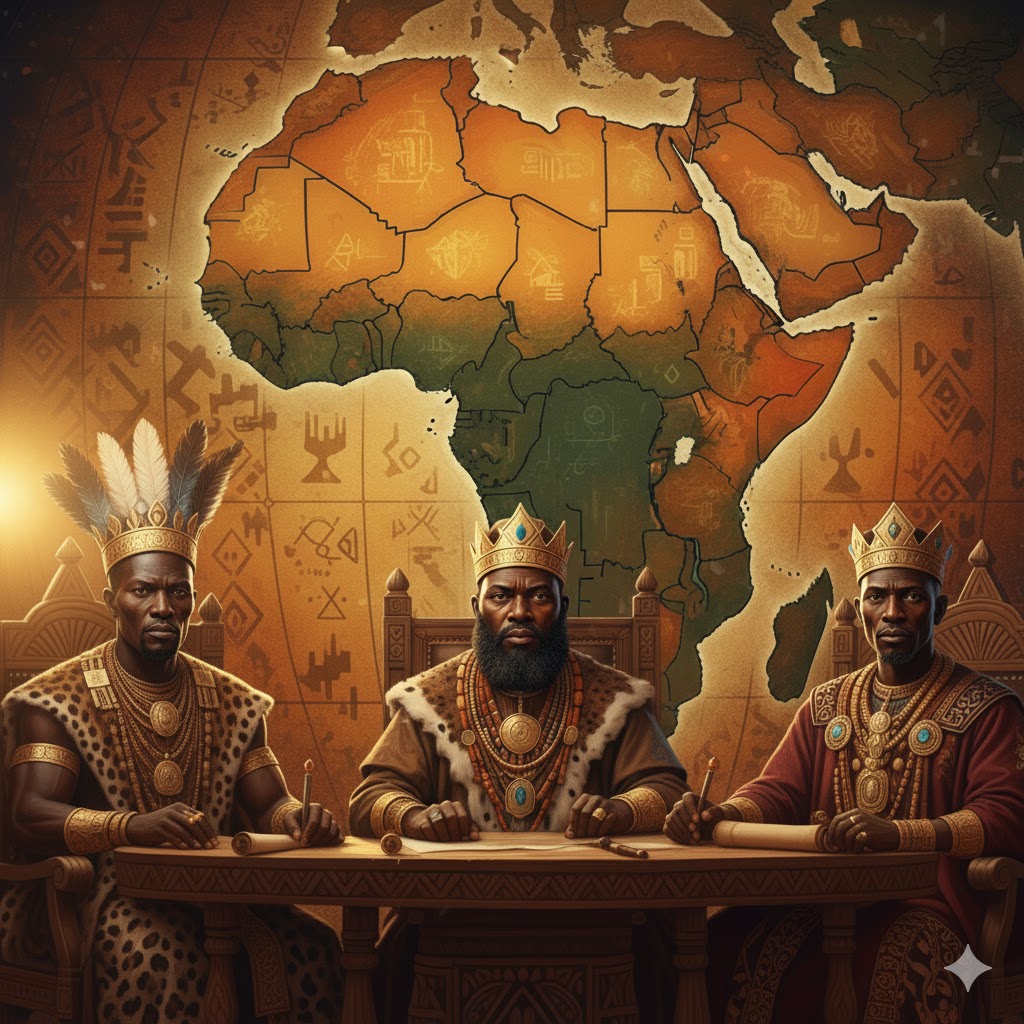
Across the tapestry of African history, the aesthetic and regal expressions of its kings reveal a profound cultural sophistication. Far more than adornment, African royal aesthetics embodied spiritual authority, political power, divine lineage, and communal identity. This legacy—rooted in ancestral dignity, biblical heritage, and sociopolitical strategy—remains etched in the memory of the African diaspora, shaping contemporary visions of beauty, pride, and leadership.
Shaka Zulu, the legendary king of the Zulu Kingdom, is often remembered for military revolution, but his visual presence was equally symbolic. His regalia—leopard skins, feathered headpieces, and the formidable iklwa spear—embodied authority and spiritual connection to ancestral power. In Zulu culture, leopard skin signified rulership and sacred status, marking Shaka as chosen by both lineage and divine purpose.
Shaka’s aesthetic choices were not mere performance. Royal attire served as psychological warfare, instilling fear in enemies and reverence among followers. His bare-chested stature, adorned in animal skins and traditional ornaments, portrayed strength, discipline, and a warrior-king archetype. This image continues to inspire modern African aesthetics rooted in courage, masculinity, and ethnic honor.
While Shaka’s visual legacy radiates martial might, Mansa Musa’s majesty reflects wealth, scholarship, and spiritual devotion. Known as the wealthiest ruler in recorded history, the emperor of Mali broadcast divine prosperity through gold-embroidered robes, luxurious fabrics, and grand caravans laden with gold during his pilgrimage to Mecca. His aesthetic was sanctified opulence—material abundance presented as a testament to divine favor.
Mansa Musa’s attire and gifts symbolized more than personal wealth; they expressed Mali’s intellectual and religious elevation. His support for Islamic scholarship and architectural development, including the famed Sankore University, reveals a king whose regal splendor mirrored cultural enlightenment. To look upon Musa was to witness the glory of a spiritually anchored kingdom infused with educational prestige.
A great king is often measured not only by wealth or war but by their ability to uplift their nation’s beauty and identity. In both Shaka and Mansa Musa’s reigns, attire communicated a message: African sovereignty was majestic, cultured, and God-ordained. Their legacy resists colonial narratives that sought to reduce African kingdoms to primitiveness.
The Menelik lineage—tracing origins to King Solomon and the Queen of Sheba—offers another dimension to African royal aesthetics: biblical legitimacy. Ethiopian emperors, believed to descend from Menelik I, carried themselves with divine authority. Crowns adorned with crosses, ceremonial robes, lion symbolism, and sacred scepters proclaimed their connection to the Lion of Judah.
This lineage grounded royal aesthetics in scripture, blending Hebraic tradition with African identity. Ethiopian kings and queens, from Menelik to Haile Selassie, wore garments that mirrored priesthood and ancient Israelite tradition—silk robes, jeweled crowns, and embroidered crosses. Their appearance declared covenant heritage and sacred kingship.
The Solomonic tradition did not merely borrow from biblical imagery; it asserted Africa’s centrality in salvation history. Through attire, ritual, and royal posture, Ethiopia preserved a visual theology: that God’s chosen lineage flowed through African bloodlines. Such aesthetics challenged Western religious narratives by rooting biblical heritage in the Black experience.
Across African kingdoms, beauty was political. Regalia conveyed legitimacy, commanded unity, and inspired resistance. It affirmed African dignity against centuries of distortion and erasure. The royal aesthetic stood as evidence that African civilization produced rulers equal to, and often surpassing, those of Europe and Asia.
Moreover, African royal aesthetics fused spirituality and statehood. Kings were more than rulers—they were shepherds, protectors, and spiritual intercessors. Whether through animal symbolism, gold ornamentation, or embroidered sacred garments, regalia reminded subjects that rulership was divine stewardship. Visual splendor communicated sacred responsibility.
Today, the aesthetic legacy of African kings influences modern fashion, leadership imagery, and cultural pride. From contemporary artists drawing inspiration from royal attire to global celebrations of African textiles, jewelry, and hairstyles, the regal memory still reigns. It informs movements reclaiming African identity from colonial distortion.
In the diaspora, this legacy also sustains psychological empowerment. Images of African kings counterbalance narratives of enslavement and inferiority. They offer icons of nobility, strength, and divine selection—foundations for renewed cultural confidence. Aesthetic tradition becomes a tool for spiritual and social restoration.
Biblically, kingship and beauty intertwine with divine covenant. The scriptures declare: “I have said, Ye are gods; and all of you are children of the most High” (Psalm 82:6, KJV). African kings embodied this truth, wearing majesty not for vanity but for sacred duty. Their appearance testified to the divine imprint upon Black identity.
Thus, the aesthetic legacies of Shaka Zulu, Mansa Musa, and the Menelik line are not relics—they are living testimonies. They call today’s generation to reclaim dignity, honor, and spiritual royalty. Through wardrobe, posture, and cultural pride, the descendants of these kingdoms continue to rise, embodying a beauty forged in history and blessed by God.
Below the surface of gold, feathers, hides, and crowns lies a fundamental truth: African kings dressed as heirs of divine promise. Their aesthetic legacy remains a spiritual inheritance—an invitation to walk in royal identity, remembering that Black majesty is not a myth but a recorded, sacred reality.
References
Boahen, A. A. (2011). African perspectives on colonialism. Diasporic Press.
Davidson, B. (1998). A history of West Africa. Longman.
Isaac, S. (2020). Ethiopia and the lineage of Solomon: An African biblical heritage. Hebraic Studies Journal, 12(3), 45–62.
Knight, I. (2015). Zulu rising: The epic story of iSandlwana and Rorke’s Drift. Macmillan.
Levtzion, N., & Hopkins, J. F. P. (Eds.). (2000). Corpus of early Arabic sources for West African history. Markus Wiener.
Trimingham, J. S. (2018). Islam in West Africa. Oxford African Texts.
Discover more from THE BROWN GIRL DILEMMA
Subscribe to get the latest posts sent to your email.
 THE BROWN GIRL DILEMMA