
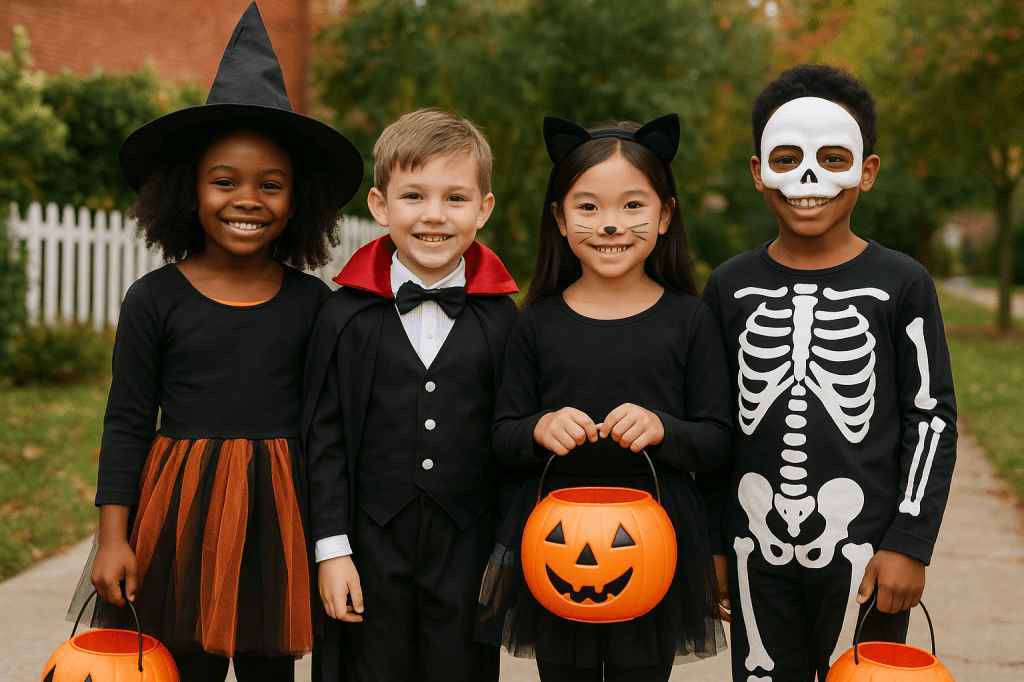
Halloween is one of the most celebrated holidays in modern America, yet few understand its true origins or the sinister spiritual meanings behind its traditions. Beneath the costumes, candy, and laughter lies a dark history rooted in ancient paganism, witchcraft, and the glorification of death. What appears to be harmless fun for children and adults alike was once a night devoted to spirits, demons, and the worship of false gods.
The origin of Halloween dates back over 2,000 years to the Celtic festival of Samhain (pronounced “Sow-en”), celebrated in what is now Ireland, Scotland, and parts of Britain. The Celts believed that on October 31st, the veil between the living and the dead was at its thinnest, allowing spirits to cross over into the mortal world (Frazer, 1922). Fires were lit, animals were sacrificed, and offerings were left out to appease the wandering dead. This festival marked the end of the harvest season and the beginning of the dark winter — symbolizing death and decay.
When the Roman Empire conquered Celtic territories, they merged Samhain with their own pagan festivals, such as Feralia, honoring the spirits of the dead, and Pomona, the goddess of fruit and trees. Pomona’s symbol was the apple, which explains the Halloween tradition of bobbing for apples — a practice originally meant to divine one’s future through witchcraft (Hutton, 1996).
Centuries later, the Roman Catholic Church attempted to Christianize these pagan rituals by introducing All Saints’ Day (November 1) and All Souls’ Day (November 2), collectively known as “All Hallows.” The night before became “All Hallows’ Eve,” which eventually evolved into “Halloween.” However, instead of erasing paganism, these efforts only blended the two worlds, creating a hybrid holiday filled with superstition, necromancy, and rebellion against the Most High.
In its original context, Halloween was a night of fear, not fun. The Celts believed that evil spirits roamed freely, bringing sickness, curses, and misfortune. To protect themselves, they disguised their appearance with animal skins, masks, and costumes to confuse or ward off the spirits. This practice of “dressing up” was born out of fear and demonic superstition — not celebration (Miles, 1912).
The tradition of trick-or-treating also emerged from dark roots. During Samhain, villagers would leave food outside their doors to appease spirits or fairies, hoping to prevent curses. Later, beggars and impersonators of the dead would go door to door asking for food or coins in exchange for prayers. If denied, they would perform mischief or invoke a curse — the origin of the phrase “trick or treat.” This was spiritual bribery masked as festivity.
Candy, now a symbol of joy, carries this same spiritual deception. Each piece of candy represents an offering to the spirits — a modern echo of ancient sacrifices. Some believe that the sweetness was meant to lure spirits and keep them from causing harm, symbolizing humanity’s attempt to pacify evil rather than resist it (Nissenbaum, 1997). It is chilling that what was once an act of appeasement has become a tradition for children, teaching them to “celebrate” the very forces Scripture warns against.
The act of carving pumpkins also has a demonic history. In Ireland, people originally carved faces into turnips or potatoes to create lanterns, known as Jack-o’-lanterns, which were said to house wandering spirits or ward them off. The legend of “Stingy Jack,” a man who tricked the devil and was condemned to roam the earth with a burning coal inside a hollowed gourd, gave rise to this eerie custom (Santino, 2014). When Irish immigrants came to America, they used pumpkins, a native fruit, and the tradition became a Halloween staple.
Throughout history, Halloween has been closely tied to witchcraft and sorcery. Witches considered October 31st one of their holiest nights, known as the Witches’ Sabbath. They believed that spirits of the dead were most active and that dark powers could be summoned more easily. The Bible strictly forbids these practices: “There shall not be found among you… an enchanter, or a witch” (Deuteronomy 18:10, KJV). Yet every year, millions unwittingly take part in the same rituals through costumes, spells, and horror-themed celebrations.
The fascination with death, skeletons, ghosts, and demons on Halloween reflects a culture obsessed with darkness. Costumes portraying monsters, witches, vampires, and devils glorify evil and desensitize people to sin. What was once feared has become entertainment. The enemy has repackaged darkness as fun, fulfilling the prophecy that people would “call evil good, and good evil” (Isaiah 5:20, KJV).
One of the most disturbing aspects of modern Halloween is the malicious practice of tampering with candy. In the late 20th century, reports surfaced of razor blades, needles, and poison being hidden in children’s treats. While some cases were exaggerated, documented incidents did occur, creating widespread fear (Best & Horiuchi, 1985). This evil act symbolizes the spiritual truth of the holiday: what appears sweet and innocent can conceal danger and destruction.
The Bible teaches that Satan disguises himself as an “angel of light” (2 Corinthians 11:14, KJV). Similarly, Halloween disguises death, fear, and demonic worship as fun and fellowship. Children, the most impressionable among us, are led to glorify darkness through costumes, horror movies, and haunted houses — practices that dull their sensitivity to evil and open spiritual doors to fear and bondage.
Why, then, do people love Halloween? The answer lies in the human heart’s attraction to rebellion and mystery. Halloween allows people to step into roles of power, fantasy, and fear — to escape moral restraint for one night. The masks symbolize hidden sin, and the darkness gives permission for indulgence. Yet Scripture reminds us: “Men loved darkness rather than light, because their deeds were evil” (John 3:19, KJV).
For many, Halloween offers a thrill — a temporary flirtation with danger. Horror movies, haunted attractions, and macabre decorations allow people to experience fear in a controlled setting. This fascination with terror feeds the flesh but starves the spirit. God did not give us the spirit of fear (2 Timothy 1:7, KJV); He calls His people to walk in light, not darkness.
The devil delights in Halloween because it normalizes what God detests. Witches, demons, and death become jokes, and children learn to celebrate rebellion. The imagery of black cats, cauldrons, and broomsticks still represents witchcraft, yet society embraces them with laughter. Through commercialization, Satan has turned his worship into a billion-dollar industry.
Halloween’s popularity also reveals a spiritual void. Many are drawn to its darkness because they lack the true Light of Christ. The night becomes an outlet for suppressed desires — lust, fear, and power — all things contrary to the fruit of the Spirit (Galatians 5:22–23, KJV). What began as pagan worship has become psychological release for a lost world.
In truth, Halloween celebrates death — the very thing Christ came to conquer. Every skull, tombstone, and ghost decoration is a mockery of resurrection. But the believer knows that “death is swallowed up in victory” (1 Corinthians 15:54, KJV). To celebrate death is to reject life; to celebrate darkness is to deny the Light.
Some Christians attempt to “reclaim” Halloween with alternative events or “harvest festivals,” yet the roots of this holiday remain unholy. The Most High commands His people to “come out from among them, and be ye separate” (2 Corinthians 6:17, KJV). There can be no fellowship between light and darkness.
Halloween’s persistence shows how deeply the world loves what God hates. It celebrates fear, lust, and rebellion, dressed up in costumes and candy. It teaches children that sin is fun, demons are funny, and death is entertaining. Yet the truth remains: this night belongs to the enemy.
For those who follow God, Halloween is a reminder to stay vigilant. We are not called to blend with the world but to stand apart from it. “And have no fellowship with the unfruitful works of darkness, but rather reprove them” (Ephesians 5:11, KJV). Instead of partaking in Halloween’s darkness, we should shine the light of truth — for only light drives out darkness.
References
Best, J., & Horiuchi, G. (1985). The Razor Blade in the Apple: The Social Construction of Urban Legends. Social Problems, 32(5), 488–499.
Frazer, J. G. (1922). The Golden Bough: A Study in Magic and Religion. Macmillan.
Hutton, R. (1996). The Stations of the Sun: A History of the Ritual Year in Britain. Oxford University Press.
Miles, C. (1912). Christmas in Ritual and Tradition, Christian and Pagan. T. Fisher Unwin.
Nissenbaum, S. (1997). The Battle for Christmas. Vintage.
Santino, J. (2014). Halloween and Other Festivals of Death and Life. University of Tennessee Press.
KJV Bible (1611/1769). Authorized King James Version.
Discover more from THE BROWN GIRL DILEMMA
Subscribe to get the latest posts sent to your email.
 THE BROWN GIRL DILEMMA