
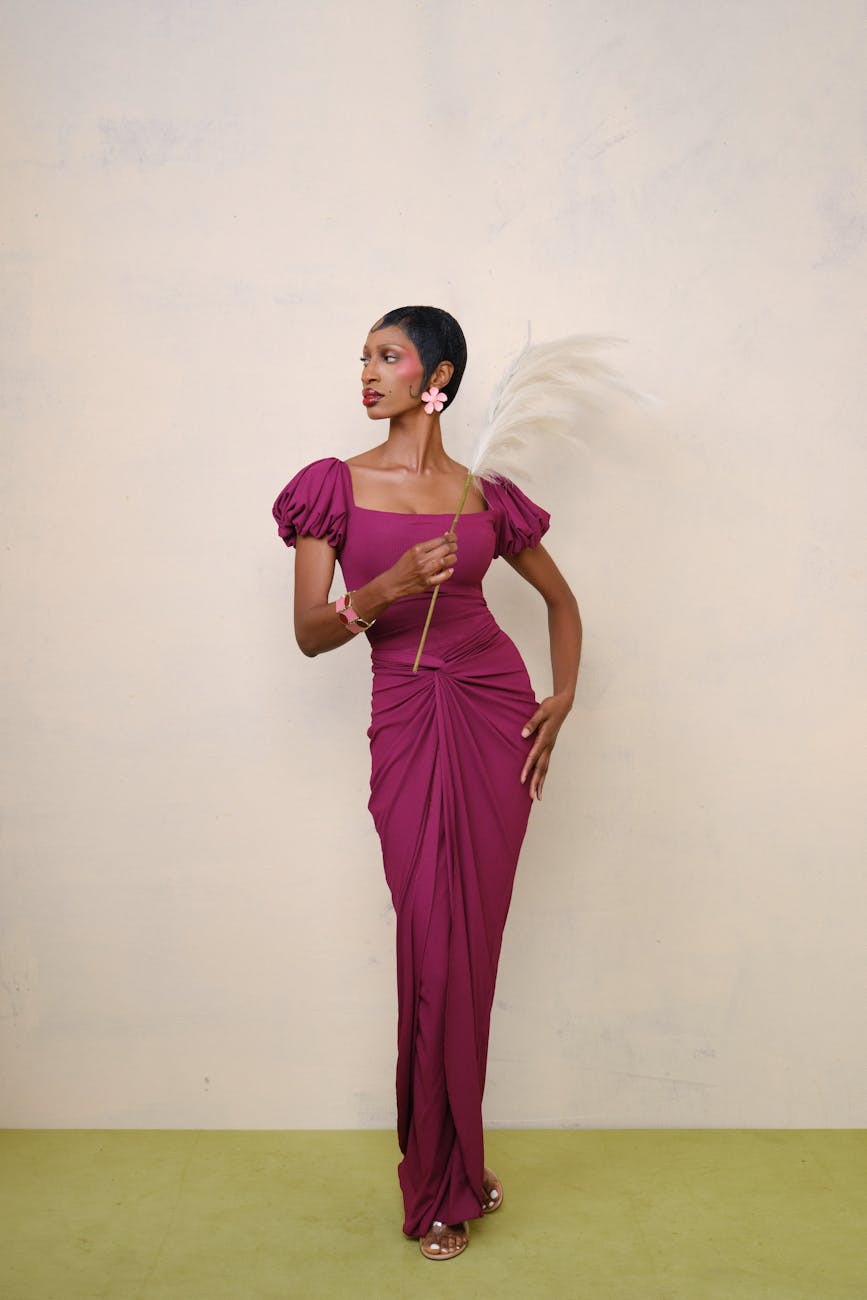
For decades, the modeling industry has been dominated by Eurocentric ideals of beauty, where light skin, straight hair, and narrow features were privileged as the standard. Within this landscape, Black women faced barriers of both racism and colorism, often excluded from mainstream campaigns and denied equal opportunities. Yet, despite these challenges, Black women have transformed modeling, reshaping global beauty standards and redefining what it means to be seen, valued, and celebrated. Their journey is not only a story of fashion but also of resilience, representation, and cultural affirmation.
The entrance of Naomi Sims in the late 1960s marked a revolutionary moment for dark-skinned Black women in fashion. As the first African American supermodel to gain international recognition, Sims broke through racial barriers when she appeared on the cover of Ladies’ Home Journal in 1968. Her success challenged the industry’s exclusionary practices and paved the way for others, such as Beverly Johnson, who became the first Black model on the cover of Vogue in 1974. These women shattered long-held myths that Black beauty could not sell magazines or luxury products, demonstrating that Blackness itself was aspirational, marketable, and worthy of celebration.
The 1970s and 1980s further opened doors for iconic models like Iman, Grace Jones, and Pat Cleveland. Each redefined beauty in unique ways—Iman with her regal East African features, Grace Jones with her bold and androgynous style, and Cleveland with her theatrical runway presence. Together, they created new aesthetic possibilities that went far beyond Eurocentric limitations. They represented a multiplicity of Black beauty—dark, angular, bold, elegant, and unapologetically different. By their very existence, they destabilized narrow ideals and demanded recognition of global, diverse standards of beauty.
Despite these advances, systemic bias and colorism persisted. Dark-skinned Black women, particularly from Africa and the Caribbean, continued to face underrepresentation well into the 1990s and early 2000s. Lighter-skinned models often received more opportunities due to the industry’s preference for proximity to whiteness. Yet, the rise of models like Alek Wek, who emerged in the 1990s with her deep ebony complexion and Sudanese features, marked another turning point. Wek’s success signaled that beauty could not be confined to a singular mold. She inspired a new generation of dark-skinned models and young Black girls who saw themselves reflected on runways and in magazines for the first time.
In the 21st century, the impact of Black women in modeling has grown exponentially. Figures like Naomi Campbell, who dominated the 1990s supermodel era, paved the way for contemporary icons such as Lupita Nyong’o, Adut Akech, Anok Yai, and Duckie Thot. These women not only dominate global campaigns but also use their platforms to speak against colorism, racism, and lack of diversity in the industry. Their voices are as revolutionary as their beauty, pushing the conversation forward and demanding structural change in fashion houses, casting agencies, and media representation.
Beyond individual representation, Black women in modeling have also changed the commercial landscape. Rihanna’s Fenty Beauty and Iman’s earlier cosmetics line demonstrated that products must reflect the wide spectrum of skin tones that Black women embody. Similarly, natural hair movements and the celebration of Afrocentric features in beauty campaigns signify a shift toward inclusivity. Where once Black women were asked to assimilate into white-centered aesthetics, today they are celebrated for bringing their authentic selves into the fashion world.
The redefinition of beauty standards by Black women in modeling is not merely about fashion—it is deeply cultural and psychological. Representation affirms identity, counters internalized racism, and dismantles harmful hierarchies of color. For Black girls and women, seeing models who look like them is transformative, affirming that their features, skin, and hair are beautiful in their own right. This shift is biblical in scope as well, reflecting Psalm 139:14 (KJV), “I will praise thee; for I am fearfully and wonderfully made.” In reclaiming beauty, Black women in modeling have not only shifted an industry but have spoken life into generations of women once told they were not enough.
Despite the progress, challenges remain. Black models still face pay disparities, tokenism, and limited opportunities compared to their white counterparts. Fashion magazines may showcase diversity on the surface while maintaining exclusionary practices behind the scenes. Yet, the trajectory is undeniable: Black women have fundamentally reshaped the narrative of beauty and continue to expand its horizons.
Ultimately, Black women in modeling represent more than just physical appearance—they embody cultural survival, creativity, and the dismantling of oppressive beauty hierarchies. Their contributions reveal that true beauty cannot be confined to one standard. Instead, beauty is expansive, global, and reflective of God’s diverse creation. Through their presence, talent, and advocacy, Black women in modeling have redefined beauty for themselves and for the world.
References
Collins, P. H. (2000). Black feminist thought: Knowledge, consciousness, and the politics of empowerment. Routledge.
Craig, M. L. (2006). Race, beauty, and the tangled knot of a guilty pleasure. Feminist Theory, 7(2), 159–177.
Hall, R. E. (2010). An historical analysis of skin color discrimination in America: Victimism among victim group populations. Springer.
Johnson, B. (2012). The face that changed it all. Atria Books.
Lewis, R., & Neal, A. (2020). Colorism and the fashion industry: Shifting standards of representation. Journal of Black Studies, 51(5), 452–469.
Nyong’o, L. (2014). Speech on beauty and representation. Essence Awards.
Tate, S. A. (2009). Black beauty: Aesthetics, stylization, politics. Ashgate.
The Holy Bible, King James Version. (1611/2017). Thomas Nelson.
Discover more from THE BROWN GIRL DILEMMA
Subscribe to get the latest posts sent to your email.
 THE BROWN GIRL DILEMMA