
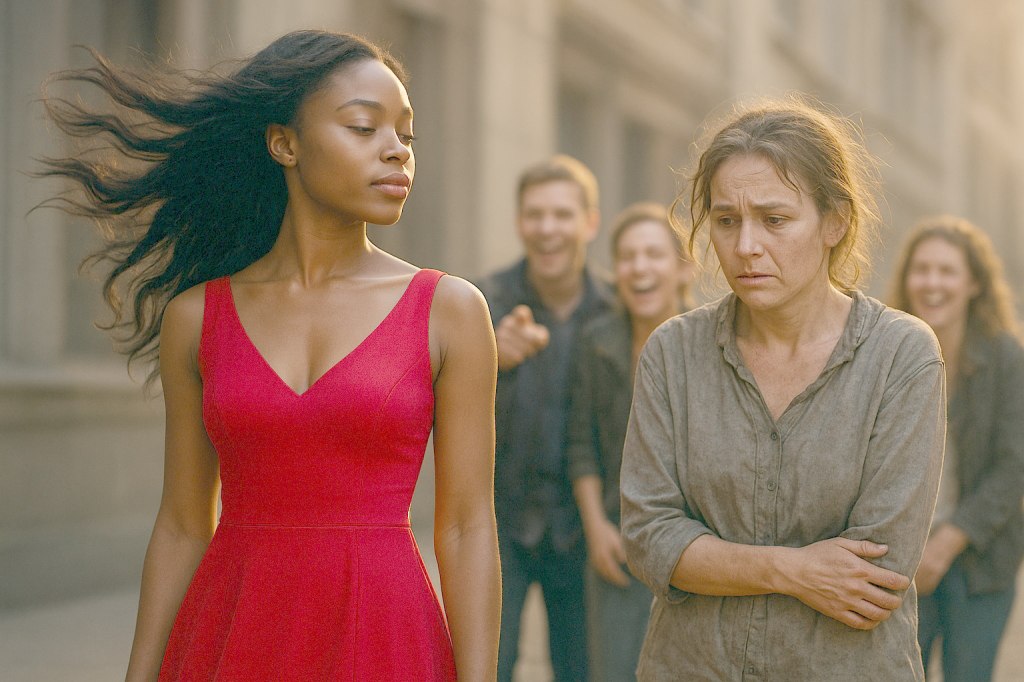
Beauty has always been more than skin deep. Across societies, the standards of attractiveness are not merely aesthetic preferences—they are mechanisms of privilege, discrimination, and social control. Those who meet societal ideals are often rewarded, while those who diverge face subtle and overt marginalization. This phenomenon, widely referred to as beauty bias, operates silently but powerfully, influencing career trajectories, social opportunities, and interpersonal relationships (Hamermesh & Biddle, 1994).
From an early age, children learn who is “desirable” and who is not. Research shows that teachers often unconsciously favor students deemed more attractive, offering them more attention and positive reinforcement (Langlois et al., 2000). This early conditioning establishes a lifelong connection between appearance and social advantage. In many ways, it mirrors the biblical admonition that God judges the heart rather than outward appearance (1 Samuel 16:7, KJV). Yet society’s persistent fixation on outward beauty undermines this spiritual principle.
In professional spaces, beauty bias manifests as a measurable advantage in hiring, promotion, and salary. Attractive individuals are often perceived as more competent, intelligent, and socially adept, even when qualifications are identical (Riniolo et al., 2006). For Black women and men, this bias is compounded by colorism, where lighter skin tones receive preferential treatment within and outside their communities (Hunter, 2007). The resulting inequity is both economic and psychological, reinforcing systemic barriers.
Media and advertising perpetuate and normalize narrow beauty standards. From fashion magazines to television commercials, the celebration of Eurocentric features marginalizes those who do not conform. These representations create a cultural hierarchy that equates beauty with moral worth and social value (Wolf, 1991). The spiritual dimension of this bias cannot be overstated: scripture repeatedly warns against superficial judgment (Matthew 23:27-28, KJV), highlighting the danger of equating external beauty with inner virtue.
The psychological toll of beauty bias is profound. Individuals who fail to meet societal ideals experience lower self-esteem, higher rates of depression, and social anxiety (Cash & Pruzinsky, 2002). For adolescents, particularly girls, these pressures intensify as social media amplifies curated images of perfection. The silent oppressor thus infiltrates the mind, shaping identity, self-perception, and life choices.
Beauty bias intersects with race, gender, and socioeconomic status. Black women, for instance, face a dual burden: discrimination based on both race and deviation from Western beauty norms. Studies indicate that darker-skinned Black women earn less and are less likely to be considered for leadership positions than lighter-skinned peers (Hannon, 2019). In workplaces, schools, and social spaces, these compounded biases reinforce cycles of marginalization.
Cultural institutions often codify beauty bias. Lawsuits against companies for discrimination based on appearance reveal a troubling reality: while race, gender, and age are protected, appearance often remains a loophole for inequity (Eagly & Makhijani, 1992). The lack of formal recognition allows beauty bias to operate invisibly, shaping lives without accountability.
Historically, beauty bias has been weaponized to enforce social hierarchies. Colonialism and slavery manipulated perceptions of beauty to privilege Eurocentric features, fostering internalized inferiority among colonized populations (Hunter, 2007). This historical layering explains why contemporary beauty bias often overlaps with colorism and racialized ideals, particularly in the African diaspora.
In religious contexts, beauty bias is also evident. The biblical story of Leah and Rachel (Genesis 29:17, KJV) reflects societal preferences for outward beauty, highlighting how cultural values can distort human relationships and worth. Rachel’s favor due to her appearance sparked envy and relational tension, mirroring modern experiences of beauty-based preferential treatment.
Social media has amplified beauty bias to unprecedented levels. Algorithms prioritize images conforming to conventional attractiveness, creating a feedback loop of validation for some and exclusion for others (Fardouly et al., 2015). The constant exposure to idealized appearances magnifies the pressure to conform, often at the expense of mental health and authentic self-expression.
Education and intervention are key to combating beauty bias. Awareness campaigns and inclusive media representation can help dismantle harmful stereotypes. Research underscores the importance of cultivating environments where competence, character, and creativity are valued over appearance (Hosoda et al., 2003). This approach aligns with spiritual teachings emphasizing inner virtue over external form (Proverbs 31:30, KJV).
Beauty bias is not limited to women. Men also face societal pressures to conform to physical ideals, affecting employment opportunities, social acceptance, and self-perception (Grammer & Thornhill, 1994). These expectations create a gendered dimension to bias, showing that societal obsession with appearance impacts everyone, albeit differently.
Consumer culture intensifies beauty bias through commodification of attractiveness. Cosmetic procedures, fashion, and fitness industries profit from insecurities created by narrow beauty ideals (Wolf, 1991). This economic exploitation transforms appearance into currency, perpetuating inequality and reinforcing the silent oppressor.
Intersectionality offers a critical lens to understand beauty bias. Kimberlé Crenshaw’s framework illustrates how overlapping identities—race, gender, age, and class—shape the intensity and impact of appearance-based discrimination (Crenshaw, 1991). Black women, low-income individuals, and non-conforming genders often face compounded pressures that limit access to opportunities and social mobility.
The workplace remains a battleground for beauty bias. Studies show that attractive employees are often evaluated more favorably during performance reviews and receive more promotions, regardless of skill level (Hamermesh & Biddle, 1994). These inequities exacerbate existing disparities in income and professional advancement, particularly for marginalized groups.
Mental health consequences extend beyond self-esteem. Individuals targeted by beauty bias may develop body dysmorphic disorder, eating disorders, and chronic stress, creating long-term psychological harm (Cash & Pruzinsky, 2002). Addressing beauty bias, therefore, is not merely an aesthetic concern but a public health imperative.
Media representation can challenge beauty bias. Initiatives highlighting diverse body types, skin tones, and features disrupt conventional hierarchies and provide validation for marginalized groups (Hunter, 2007). Representation matters because it shapes cultural norms, informs perceptions of worth, and challenges the silent oppressor embedded in social consciousness.
Biblical scripture offers guidance on resisting societal fixation on appearance. In 1 Peter 3:3-4 (KJV), the apostle emphasizes inner beauty and a gentle spirit over external adornment, urging believers to cultivate virtues that endure beyond fleeting aesthetics. Such spiritual insight directly counters the societal obsession with physical attractiveness.
Ultimately, beauty bias operates as a form of structural and cultural oppression. It silently privileges some while disadvantaging others, creating invisible barriers in education, employment, social interaction, and personal development. Recognizing and addressing this bias requires intentionality, cultural critique, and systemic intervention.
By elevating character, competence, and inner virtue over superficial standards, societies can mitigate the silent oppressor of beauty bias. Through education, media representation, and spiritual alignment with biblical principles, individuals and institutions can begin to dismantle these inequities, creating a world where worth is measured by substance rather than appearance.
References
- Cash, T. F., & Pruzinsky, T. (2002). Body image: A handbook of theory, research, and clinical practice. Guilford Press.
- Crenshaw, K. (1991). Mapping the margins: Intersectionality, identity politics, and violence against women of color. Stanford Law Review, 43(6), 1241–1299.
- Eagly, A. H., & Makhijani, M. G. (1992). Gender and the evaluation of leaders: A meta-analysis. Psychological Bulletin, 111(1), 3–22.
- Fardouly, J., Diedrichs, P. C., Vartanian, L. R., & Halliwell, E. (2015). Social comparisons on social media: The impact of Facebook on young women’s body image concerns and mood. Body Image, 13, 38–45.
- Grammer, K., & Thornhill, R. (1994). Human facial attractiveness and sexual selection: The role of symmetry and averageness. Journal of Comparative Psychology, 108(3), 233–242.
- Hamermesh, D. S., & Biddle, J. E. (1994). Beauty and the labor market. American Economic Review, 84(5), 1174–1194.
- Hannon, P. A. (2019). Colorism in the workplace: Skin tone and employment outcomes. Journal of Black Studies, 50(4), 350–372.
- Hosoda, M., Stone-Romero, E. F., & Coats, G. (2003). The effects of physical attractiveness on job-related outcomes: A meta-analysis of experimental studies. Personnel Psychology, 56(2), 431–462.
- Hunter, M. L. (2007). The persistent problem of colorism: Skin tone, status, and inequality. Sociology Compass, 1(1), 237–254.
- Langlois, J. H., Kalakanis, L., Rubenstein, A. J., Larson, A., Hallam, M., & Smoot, M. (2000). Maxims or myths of beauty? A meta-analytic and theoretical review. Psychological Bulletin, 126(3), 390–423.
- Riniolo, T. C., Johnson, K. D., Sherman, S. J., & Trezza, G. (2006). Is beauty best? Physical attractiveness and the accumulation of social resources. Personality and Social Psychology Bulletin, 32(9), 1157–1169.
- Wolf, N. (1991). The beauty myth: How images of beauty are used against women. HarperCollins.
Discover more from THE BROWN GIRL DILEMMA
Subscribe to get the latest posts sent to your email.
 THE BROWN GIRL DILEMMA