
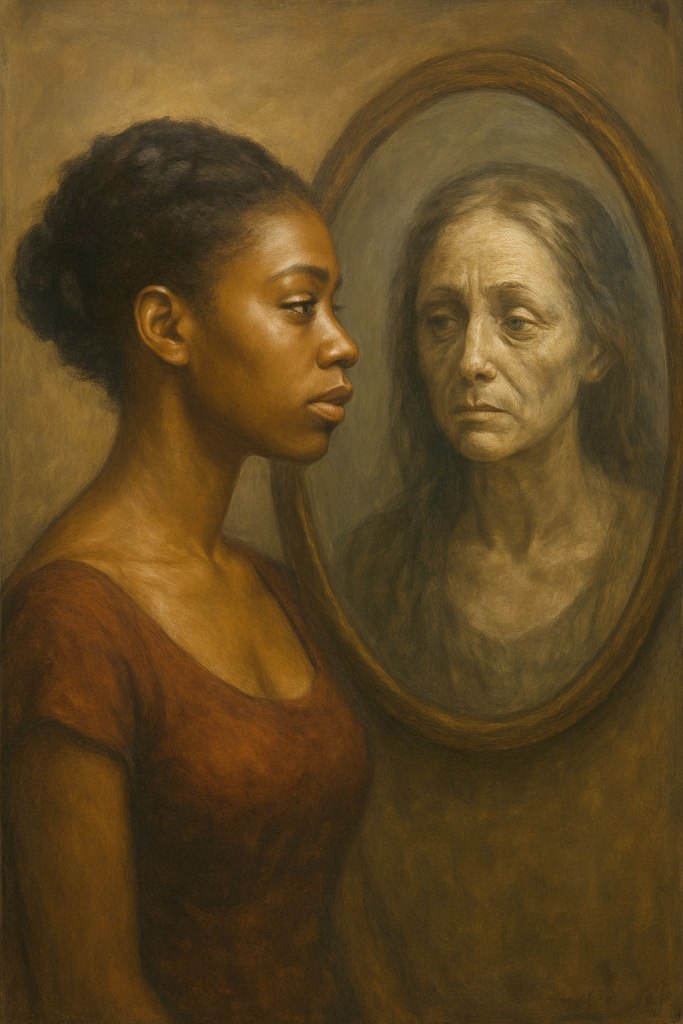
When a brown girl stands before the mirror, she is not merely gazing at her reflection — she is confronting centuries of history, identity, and perception layered upon her skin. Her reflection is more than flesh and bone; it is the embodiment of resilience, survival, and beauty shaped by ancestral struggle and divine design. Yet for many, the mirror has been weaponized, transformed into a site of doubt, comparison, and internalized pain. The question, “What do you see?” becomes both a challenge and a call to reclaim the sacredness of one’s image in a world that often denies its worth.
The mirror tells stories that society refuses to hear. Through colonial legacies, colorism, and Eurocentric beauty standards, the brown girl has been taught that her value is conditional — that lighter is better, straighter is prettier, and proximity to whiteness equals worth. These distorted messages have shaped her psyche, leaving many to struggle with self-acceptance. Yet, every reflection of melanin is a testimony of divine artistry — “I will praise thee; for I am fearfully and wonderfully made” (Psalm 139:14, KJV). The mirror, when reclaimed, becomes an altar of affirmation, not condemnation.
The brown girl’s image has often been policed, fetishized, or erased. From the historical denigration of African features to the commercialization of beauty that imitates them, she lives within a paradox of being both desired and devalued. The lips, hips, and skin once mocked are now monetized, while the original bearers of these traits are left fighting for recognition. This paradox breeds confusion and spiritual exhaustion, forcing her to navigate an identity that is both celebrated and shamed.
To look in the mirror and see beauty is therefore an act of rebellion. It is a spiritual reclamation that defies centuries of psychological conditioning. When a brown girl declares herself beautiful, she is not practicing vanity — she is practicing healing. She is rewriting the narrative imposed upon her, aligning her reflection with God’s original intention, not man’s limited imagination. “For man looketh on the outward appearance, but the LORD looketh on the heart” (1 Samuel 16:7, KJV).
From early childhood, brown girls receive messages that shape how they perceive themselves. Dolls, media, and social standards subtly reinforce a hierarchy of beauty where darker tones are placed at the bottom. This conditioning embeds itself into the subconscious, leading to internalized colorism and self-doubt. But through self-awareness and spiritual renewal, she can learn to see herself through God’s eyes — radiant, royal, and redeemed.
The mirror reflects more than appearance; it reveals internal wounds. A brown girl’s relationship with her reflection often mirrors her journey of healing from rejection, abandonment, and societal erasure. The mirror becomes a witness to her silent battles — with self-worth, comparison, and belonging. Yet, through grace and truth, she can transform that space into a sanctuary of empowerment. The woman in the mirror becomes a warrior, no longer a captive to lies about her worth.
In Scripture, mirrors are symbolic of reflection and revelation. James 1:23–24 (KJV) describes the one who hears the word but does not act as a man who “beholdeth his natural face in a glass” and forgets who he is. Likewise, when the brown girl forgets her divine origin, she risks adopting a counterfeit identity. But when she remembers that she was made in the image of God (Genesis 1:27), her reflection shifts from insecurity to sacredness.
The journey to self-love for the brown girl is not about arrogance but about restoration. It is about healing generational trauma and rejecting the lie that she must conform to be accepted. Her melanin, her texture, her features — all speak the language of creation’s diversity. She is the living canvas of God’s brilliance, carrying in her complexion the warmth of the earth and the fire of the sun.
The mirror also challenges her to ask: What kind of beauty do I chase? The world glorifies vanity, filters, and digital perfection, but godly beauty radiates from character, wisdom, and grace. “Favour is deceitful, and beauty is vain: but a woman that feareth the LORD, she shall be praised” (Proverbs 31:30, KJV). The brown girl’s glow is not cosmetic; it is spiritual. Her shine comes from within — from peace, purpose, and divine presence.
Society often fears the confident brown girl because she defies stereotypes. When she stands unapologetically in her power, she disrupts systems built on inferiority complexes. Her confidence is not arrogance — it is awareness of who she is and Whose she is. Every time she looks in the mirror and smiles, she is dismantling centuries of lies that told her she wasn’t enough.
Yet, this journey requires community. The brown girl must surround herself with affirming voices — sisters who reflect her light back to her when she forgets. Together, they create mirrors of truth, reminding one another that they are daughters of royalty, not remnants of oppression. This sisterhood of reflection becomes the foundation of healing and liberation.
Media and culture play a profound role in shaping how brown girls view themselves. Representation matters. When they see women of their hue and texture portrayed with dignity, it expands their vision of beauty. From Lupita Nyong’o’s grace to Viola Davis’s power, these reflections in media serve as counter-narratives to centuries of invisibility. The mirror begins to tell new stories — stories of visibility, pride, and victory.
Faith also redefines beauty for the brown girl. When she sees herself through the lens of scripture, she no longer measures herself against impossible standards. Instead, she embraces her divine essence, knowing that God’s definition of beauty transcends culture and trend. “Thou art all fair, my love; there is no spot in thee” (Song of Solomon 4:7, KJV) becomes not just poetry, but prophecy — a declaration over every brown girl who ever doubted her reflection.
Even in pain, her beauty persists. The brown girl’s reflection carries history — of mothers who survived, of daughters who dreamed, and of generations that refused to disappear. Her scars do not diminish her beauty; they sanctify it. The mirror becomes a sacred archive of endurance, showing that true beauty is not in flawlessness, but in faith that endures through adversity.
To teach brown girls to love themselves is to undo centuries of psychological bondage. It means equipping them with the spiritual and emotional tools to reject harmful narratives. It means teaching them to look into the mirror and see divinity — not deficiency. Through this, the next generation of brown girls will stand taller, speak louder, and shine brighter.
In relationships, careers, and faith, how the brown girl sees herself determines how she moves through the world. When she views herself as lesser, she settles; when she views herself as divine, she ascends. Her reflection dictates her standard. Therefore, self-knowledge becomes sacred — a form of worship, because knowing herself honors the God who made her.
The mirror, once a site of comparison, can become a place of communion. When the brown girl prays before her reflection, she reclaims that space as holy ground. She learns to affirm: “I am enough. I am loved. I am created with purpose.” These declarations become spiritual warfare, dismantling every lie whispered by a society afraid of her power.
Ultimately, the mirror reflects not what she sees, but what she believes. If her heart is rooted in God’s truth, her reflection will radiate confidence and peace. Her worth is not measured by societal approval but by divine affirmation. She is a masterpiece — not because of what she wears or how she looks, but because of the Spirit that dwells within her.
So, brown girl, when you look in the mirror, see not what the world says you are, but what God declares you to be: chosen, beloved, royal, and radiant. Let your reflection remind you of the light within. For the mirror does not define you — it only reveals the glory already placed inside you by the Creator.
References (KJV):
- Psalm 139:14
- 1 Samuel 16:7
- Genesis 1:27
- Proverbs 31:30
- James 1:23–24
- Song of Solomon 4:7
- Ecclesiastes 3:11
- 1 Peter 3:3–4
- Romans 12:2
- 2 Corinthians 3:18
Discover more from THE BROWN GIRL DILEMMA
Subscribe to get the latest posts sent to your email.
 THE BROWN GIRL DILEMMA