
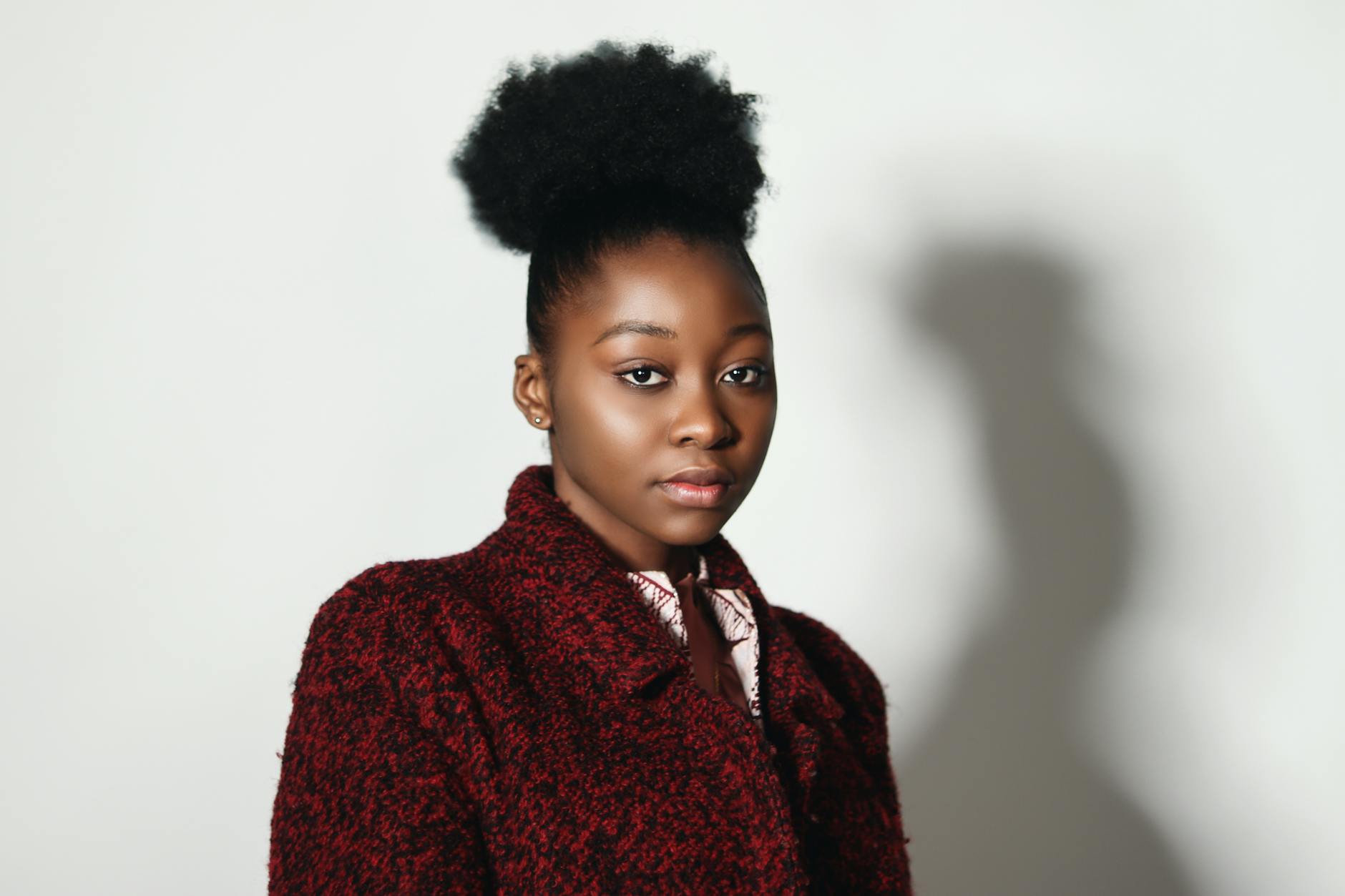
The concept of beauty has long been weaponized as a tool of domination and exclusion. For people of African descent, beauty has been historically defined through Eurocentric lenses that sought to invalidate African features, skin tones, and hair textures. This distortion of aesthetics served colonial and psychological purposes—reinforcing systems of white supremacy and dehumanization. Yet, amid this oppression, the African diaspora has continuously resisted, reclaimed, and redefined beauty through self-love, creativity, and cultural expression.
From the transatlantic slave trade to modern globalization, the manipulation of Black beauty has been integral to controlling identity. European colonizers constructed racial hierarchies that associated whiteness with purity and civilization, while blackness was linked to savagery and inferiority. These narratives became embedded in social, political, and religious ideologies, influencing how the world viewed—and how Black people came to view—themselves. This internalized oppression still manifests today in colorism, hair discrimination, and beauty bias within and outside the Black community.
Resistance to these narratives began as early as slavery itself. Enslaved Africans braided maps into their hair, wore headwraps as acts of pride, and sang spirituals affirming divine identity. These practices were not mere survival mechanisms but subtle assertions of self-worth. By reclaiming control over their bodies and appearances, Africans in the diaspora asserted, “We are still human.” This quiet defiance evolved into a cultural aesthetic that would later inspire entire movements of liberation.
The Harlem Renaissance marked a turning point in redefining Black beauty and identity. Figures like Zora Neale Hurston, Langston Hughes, and Josephine Baker challenged the notion that Black culture needed white validation. Their art celebrated dark skin, natural hair, and sensual expression, reclaiming the very traits society had demeaned. The phrase “Black is Beautiful,” born from this era and later popularized in the 1960s, became both a political slogan and a spiritual affirmation.
The Black Power movement of the 1960s and 1970s elevated aesthetics into activism. The afro became a crown of resistance, symbolizing freedom from assimilation. Black models like Beverly Johnson and Naomi Sims graced magazine covers once closed to women of their complexion, forcing the fashion world to confront its biases. Through photography, music, and protest, Black people around the world began to reassert the value of their image.
In the African diaspora, beauty and identity are deeply intertwined with spirituality. Ancient African civilizations revered the human form as divine art—sculptures from Nok, Benin, and Kemet celebrated symmetry, strength, and melanin as reflections of the Creator. This spiritual understanding of beauty counters the Western tendency to commodify and sexualize. The African aesthetic is holistic, connecting inner virtue with outer form—a principle still visible in African diasporic faiths like Yoruba and Rastafari.
Media representation remains one of the battlegrounds for beauty reclamation. For decades, film and advertising industries portrayed Eurocentric features as universal ideals. However, with the rise of digital media, Black creators began shaping new narratives. Platforms like YouTube and Instagram became spaces for natural hair tutorials, melanin-positive campaigns, and discussions about shadeism. This digital renaissance democratized visibility and dismantled the monopoly of Western beauty standards.
In contemporary times, artists like Lupita Nyong’o, Viola Davis, and Michaela Coel have redefined what global beauty looks like. They embody confidence rooted in authenticity rather than conformity. Their visibility challenges centuries of erasure, reminding the world that African beauty is not a trend—it is foundational. Each image, each role, becomes a mirror through which the diaspora can see itself with dignity and love.
Colorism, however, continues to plague the diaspora, a lingering scar of colonialism and slavery. Light skin often remains associated with privilege, while darker complexions are marginalized. This phenomenon fractures communities and perpetuates hierarchies of desirability. Yet, new generations are confronting these wounds head-on through documentaries, essays, and online activism—demanding that every shade of melanin be honored equally.
The reclamation of African aesthetics extends beyond physical features—it encompasses fashion, language, and ritual. African print clothing, protective hairstyles, and ancestral jewelry have become emblems of identity. What was once mocked or banned in workplaces is now worn proudly on global runways. The diaspora’s embrace of traditional aesthetics is not merely nostalgic—it is revolutionary, asserting that African heritage is modern, relevant, and eternal.
Psychologically, reclaiming beauty is an act of healing. Centuries of racial trauma have distorted self-perception, leading to generational insecurities. Scholars like bell hooks and Frantz Fanon have discussed the colonization of the mind and the struggle to love oneself under oppressive gaze. To look in the mirror and find beauty in one’s reflection is therefore a radical act of resistance, one that dismantles the psychological remnants of enslavement.
Black beauty movements have also intersected with gender liberation. Black women, historically hypersexualized or desexualized, have reclaimed agency over their image. Movements like #MelaninMagic and #BlackGirlMagic celebrate diverse forms of femininity—powerful, intellectual, sensual, and sacred. Similarly, Black men are confronting toxic stereotypes that equate masculinity with aggression, finding beauty in vulnerability and self-expression.
The global spread of African aesthetics—from music videos to fashion weeks—illustrates how the diaspora has transformed pain into power. Afrobeats, hip-hop, and soul music have carried messages of pride, resilience, and beauty to every corner of the world. The rhythm of resistance lives in every hairstyle, every dance, every melody that celebrates Blackness unapologetically.
Educational institutions and media organizations are beginning to recognize the importance of diverse representation. Curriculums now explore African art history, and museums exhibit African beauty traditions once labeled “primitive.” This reclamation of space in academia and culture is crucial—it ensures that future generations inherit a fuller, truer reflection of themselves.
In theology, the reclamation of beauty challenges centuries of Eurocentric religious imagery. Depictions of a white Messiah and angels have been replaced in many circles with images that reflect the original people of the Bible. The rise of Afrocentric theology reaffirms that divinity does not belong to one race or culture. The beauty of the Creator is reflected in the diversity of creation itself.
Art remains one of the most powerful vehicles for this transformation. Painters, photographers, and filmmakers across the diaspora are crafting new visual languages that honor melanin, texture, and form. Fine art portraiture—like the works of Kehinde Wiley or Awol Erizku—reimagines classical European iconography through an African lens, restoring Black presence to the historical canvas.
Beauty, in its truest sense, is more than aesthetics—it is liberation. When Black people embrace their natural selves, they reject the lie that they must change to be worthy. This acceptance becomes an act of spiritual sovereignty, echoing the biblical declaration that we are “fearfully and wonderfully made” (Psalm 139:14, KJV).
The mirror, once a symbol of distortion, now becomes a site of truth. It reflects not the colonizer’s image, but the Creator’s craftsmanship. To reclaim the mirror is to reclaim narrative power—to define beauty not by borrowed standards, but by ancestral wisdom. Every curl, curve, and hue tells a story of endurance, divinity, and rebirth.
Ultimately, the reclamation of beauty in the African diaspora is about freedom—the freedom to exist without apology, to see oneself as whole and holy. It is about transforming generations of shame into songs of pride and turning reflection into revolution. Through art, faith, and community, the descendants of Africa continue to rise, reminding the world that the most powerful form of beauty is self-acceptance rooted in truth.
References
Baker, J. (2017). The politics of Black beauty. Oxford University Press.
Davis, A. Y. (1981). Women, race, & class. Random House.
Fanon, F. (1952). Black skin, white masks. Grove Press.
hooks, b. (1992). Black looks: Race and representation. South End Press.
Hunter, M. (2007). The persistent problem of colorism: Skin tone, status, and inequality. Sociology Compass, 1(1), 237–254.
Mercer, K. (1994). Welcome to the jungle: New positions in Black cultural studies. Routledge.
Mills, C. W. (1997). The racial contract. Cornell University Press.
Nyong’o, L. (2014). Lupita Nyong’o’s speech on beauty and self-love [Video]. Essence Black Women in Hollywood.
Walker, A. (1983). In search of our mothers’ gardens: Womanist prose. Harcourt Brace Jovanovich.
Wiley, K. (2018). Reclaiming beauty: African aesthetics in modern art. Yale University Press.
Wilkerson, I. (2020). Caste: The origins of our discontents. Random House.
Wynter, S. (2003). Unsettling the coloniality of being/power/truth/freedom. The New Centennial Review, 3(3), 257–337.
Yaba Blay, Y. (2017). Pretty. Period.: The politics of being Black and beautiful. Blackprint Press.
Bryant-Davis, T. (2007). Healing requires recognition: The case for race-based traumatic stress. The Counseling Psychologist, 35(1), 135–143.
Johnson, K. (2021). Beauty in resistance: Black aesthetics and cultural power. Duke University Press.
Lewis, R. (2011). Afrocentric identity and the politics of beauty. Routledge.
Morrison, T. (1992). Playing in the dark: Whiteness and the literary imagination. Vintage Books.
Nash, J. C. (2019). Black feminism reimagined: After intersectionality. Duke University Press.
Tate, S. (2016). Black beauty: Aesthetics, stylization, politics. Routledge.
Thompson, C. (2009). Black women, beauty, and hair as resistance. Journal of Pan African Studies, 3(2), 97–108.
Discover more from THE BROWN GIRL DILEMMA
Subscribe to get the latest posts sent to your email.
 THE BROWN GIRL DILEMMA