
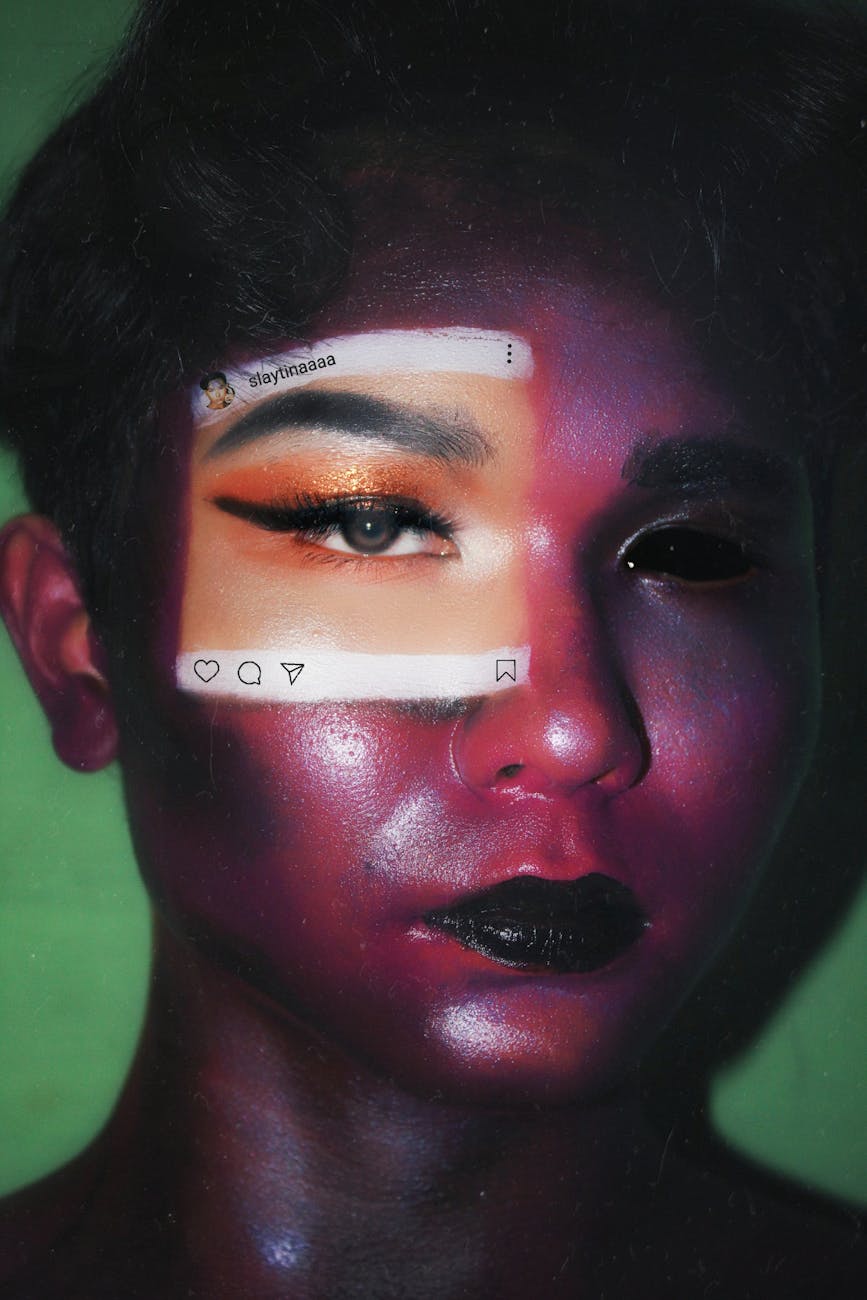
Beneath the smooth surface of brown skin lies a world of stories untold—pain, pride, shame, resilience, and divine reflection. For centuries, people of African descent have carried not only the richness of their melanin but the weight of a world that often refuses to see its beauty. “Beneath the Brown” is not simply about color—it is about the sacred and psychological journey toward self-love in a society that profits from self-rejection.
To be brown or Black in a color-coded world is to inherit both beauty and burden. From the moment of birth, many are taught that their skin is a symbol of survival rather than celebration. The narratives of inferiority—constructed through slavery, colonialism, and media—whisper lies into young minds before they even speak. To peel back these lies is to uncover the trauma embedded in the flesh, and to begin the healing that self-love demands.
Historically, the body of the Black person has been treated as both spectacle and property. Enslaved Africans were displayed, dissected, and dehumanized to justify economic greed and white supremacy (Fanon, 1952; Davis, 1981). The very skin that now inspires fashion trends and cultural envy was once deemed evidence of subhuman status. This contradiction still lingers in modern beauty culture, where brown skin is fetishized but not fully valued.
Within the African diaspora, colorism has perpetuated this violence from within. The colonial system created hierarchies based on proximity to whiteness—privileging light skin while marginalizing darker tones. Families passed down this bias like an inheritance, often unconsciously. Many learned early that “pretty for a dark girl” was a backhanded compliment, a reminder that beauty was conditional. The internalization of such lies created generations of hidden wounds beneath the brown.
Beneath those wounds, however, is survival. Black and brown bodies have resisted centuries of erasure through art, faith, and self-definition. The skin that endured the lash now shines as a symbol of divine craftsmanship. To love brown skin is therefore an act of rebellion—a refusal to believe the colonial mirror. As bell hooks (1992) wrote, self-love among the oppressed is a political act. It is the reclamation of a truth that systems of power sought to destroy.
The secrets beneath the brown often begin in childhood. Many recall the sting of teasing, the denial of dolls that looked like them, or the subtle ways teachers favored lighter peers. Such moments shape the subconscious, teaching self-doubt before self-knowledge. Healing begins when those memories are named, grieved, and reframed through truth. One cannot heal what one refuses to confront.
For women, particularly, the politics of color intersect with the politics of desirability. The world often celebrates the features of Black women only when detached from Blackness—curves, lips, and hairstyles are glorified on non-Black bodies. This theft of aesthetic without acknowledgment perpetuates the lie that brownness is beautiful only by imitation. Beneath this injustice lies the call to affirm that Black beauty is not a trend but a testimony.
Men, too, carry their own secrets beneath the brown. They are often objectified as symbols of physicality but denied emotional depth. Their darkness is read as threat instead of tenderness. Many learn to mask pain with pride, to armor vulnerability with silence. Yet authentic self-love for Black men requires dismantling this emotional armor and allowing softness to coexist with strength.
Religion and spirituality play complex roles in this journey. For many in the diaspora, Christianity was both a tool of oppression and a source of liberation. Yet within the same Bible once used to justify slavery lies a truth that dismantles all inferiority: “I am fearfully and wonderfully made” (Psalm 139:14, KJV). To believe this as a brown-skinned person is to reclaim divine authorship over one’s body and story.
The struggle for self-love is not vanity—it is restoration. It is about seeing God’s fingerprint in every shade, curl, and contour. The hue of the skin is not a mark of curse but of covenant. The sun does not burn the brown; it blesses it. In a spiritual sense, melanin becomes metaphor—absorbing light, transforming it into strength, echoing the Creator’s power to turn pain into purpose.
Cultural movements like “Black is Beautiful,” “My Black is Bold,” and “Melanin Poppin’” represent modern rituals of reclamation. They are public declarations against centuries of psychological colonization. Each natural hair twist, each unfiltered selfie, each affirmation whispered in the mirror is a small revolution. These acts rewire the mind to see beauty not as comparison, but as confirmation of divine design.
Still, beneath the celebration remains a quieter truth—healing is not instant. Many who proclaim self-love still wrestle with internalized doubt. The mirror can be both friend and foe, reflecting what society once told us to hate. Real self-love is not about always feeling beautiful; it is about choosing truth over deception, grace over guilt, and faith over fear.
Self-love for the brown body also means confronting how systems profit from insecurity. The beauty, fashion, and cosmetic industries thrive by turning self-doubt into sales (Wolf, 1991; Kilbourne, 1999). The darker the skin, the more the market tempts with “lightening,” “brightening,” or “correcting” products. These linguistic traps are reminders that capitalism depends on colorism’s endurance. Awareness is resistance.
Healing the secrets beneath the brown requires both individual reflection and collective transformation. Families must unlearn inherited biases; media must reflect true diversity; faith leaders must affirm that Blackness is sacred, not sinful. This reclamation is not about excluding others but about restoring balance to a narrative long distorted by whiteness.
The beauty of brownness lies not just in pigment, but in history, creativity, and endurance. The same skin that endured chains also birthed jazz, gospel, hip-hop, and liberation theology. It carries the memory of ancestors who loved themselves even when the world refused to. That legacy lives in every melanin-rich face that dares to smile unapologetically.
In the end, the greatest secret beneath the brown is not pain, but power. It is the quiet knowledge that to be Black, to be brown, to be full of melanin is to embody sunlight made flesh. The world may deny it, distort it, or desire it—but it cannot destroy it. Self-love becomes not an act of ego, but an act of worship.
To love oneself beneath the brown is to say: I am enough. I am seen. I am divine. That is not arrogance—it is alignment. It is the restoration of the imago Dei that was always there, hidden beneath history’s lies, waiting to be remembered. And once remembered, that love radiates outward, transforming not only the self but the world that once taught us to hide.
References
Blay, Y. (2017). Pretty. Period.: The politics of being Black and beautiful. Blackprint Press.
Davis, A. Y. (1981). Women, race, & class. Random House.
Fanon, F. (1952). Black skin, white masks. Grove Press.
hooks, b. (1992). Black looks: Race and representation. South End Press.
Kilbourne, J. (1999). Can’t buy my love: How advertising changes the way we think and feel. Touchstone.
Walker, A. (1983). In search of our mothers’ gardens: Womanist prose. Harcourt Brace Jovanovich.
Tate, S. (2016). Black beauty: Aesthetics, stylization, politics. Routledge.
Wilkerson, I. (2020). Caste: The origins of our discontents. Random House.
Wolf, N. (1991). The beauty myth: How images of beauty are used against women. HarperCollins.
The Holy Bible, King James Version. (1611). Thomas Nelson.
West, C. (1993). Race matters. Beacon Press.
Wynter, S. (2003). Unsettling the coloniality of being/power/truth/freedom. The New Centennial Review, 3(3), 257–337.
Johnson, K. (2021). Beauty in resistance: Black aesthetics and cultural power. Duke University Press.
Discover more from THE BROWN GIRL DILEMMA
Subscribe to get the latest posts sent to your email.
 THE BROWN GIRL DILEMMA