
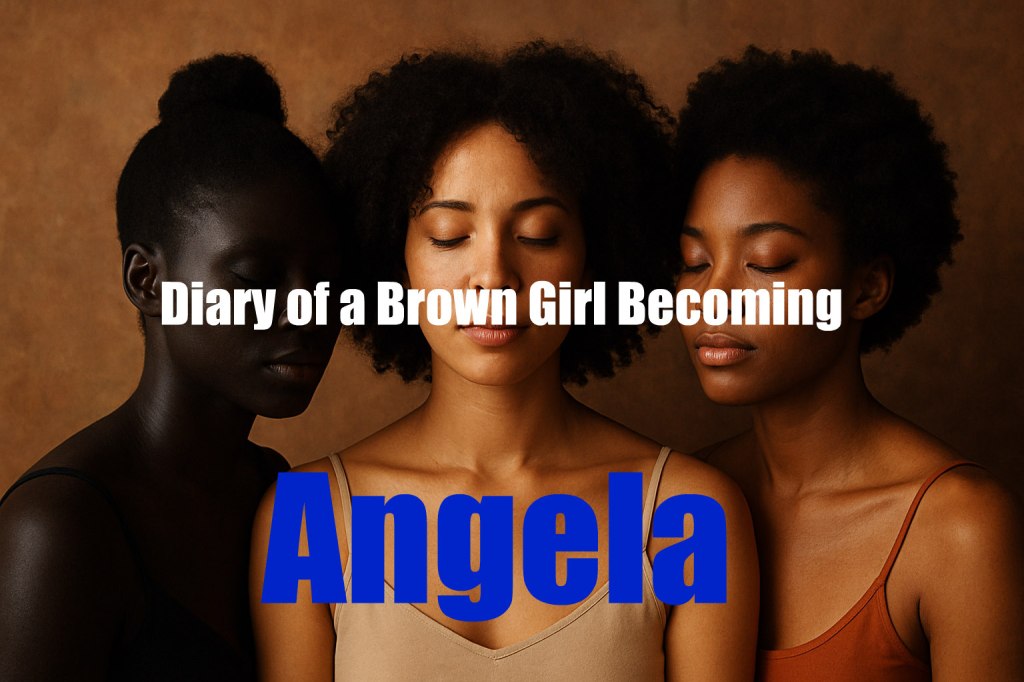
Angela grew up in a world that measured beauty with a narrow ruler, one that often excluded the richness of her brown skin. From an early age, she noticed how lighter faces were praised while hers seemed to absorb shadows in spaces that celebrated whiteness. The mirror became both friend and foe, reflecting the contradictions of pride and self-doubt.
Her childhood was filled with stories of her ancestors, tales of resilience whispered between the cracks of slavery and colonization. They were strong, courageous, and unapologetically beautiful in ways society often refused to acknowledge. Angela clung to these narratives, even when the world outside questioned the worth of her hue.
School became a battleground for identity. Angela learned to navigate the subtle hierarchy of complexion and the unspoken preference for European features. Teachers, peers, and media reinforced these ideals. The pain of comparison gnawed at her, but it also planted seeds of resistance.
She remembers the first time someone called her “exotic.” Though meant as a compliment, it made her feel like a specimen rather than a person. She began to dissect her features, questioning which were assets and which were liabilities. Angela started a silent dialogue with herself, seeking the beauty that history seemed intent on denying her.
Television screens and magazine covers rarely reflected faces like hers. She noticed the patterns: brownness was either fetishized, caricatured, or erased altogether. Yet in her family, brown skin was celebrated for its depth, its connection to roots, and its story of survival. These dual narratives shaped Angela’s understanding of the world.
Adolescence brought a heightened awareness of colorism within her community. The unspoken hierarchy of light versus dark created tensions and insecurities among peers. Angela observed how her lighter-skinned friends often received attention and opportunities more easily, while girls with darker skin had to fight harder for recognition.
Despite these challenges, she cultivated a sense of pride. Angela immersed herself in literature, history, and art that celebrated brownness. From Toni Morrison to Zora Neale Hurston, from the Harlem Renaissance to contemporary Black artists, she discovered that her skin tone carried a lineage of creativity, power, and beauty.
Her relationship with hair mirrored her journey with skin. Angela learned to appreciate the versatility of her texture, experimenting with styles that honored her heritage rather than conforming to Eurocentric standards. Every braid, twist, and coil became an assertion of identity, a declaration of belonging to a legacy that endured despite oppression.
She began keeping a diary, writing candidly about her experiences, fears, and triumphs. It became a space to explore the contradictions of desire and self-acceptance. In its pages, Angela could reconcile the tension between wanting to fit in and yearning to stand out authentically.
Love and relationships complicated her understanding of self. Angela noticed how society and culture influenced attraction, favoring lighter complexions and certain features. These patterns were not universal, but they shaped how she viewed herself in the mirror and how others perceived her.
Social media became a double-edged sword. On one hand, it allowed Angela to see faces like hers celebrated globally. On the other, it highlighted the persistent bias toward light skin and European features. She learned to curate her feed, choosing inspiration over comparison, empowerment over envy.
College opened new horizons. Angela met brown girls from diverse backgrounds who embraced their skin with courage. Their shared experiences created bonds rooted in understanding and affirmation. They spoke openly about colorism, representation, and the politics of identity, reinforcing the notion that brownness was a spectrum, each shade deserving celebration.
Professional life brought its own set of challenges. Bias and microaggressions tested Angela’s confidence. At times, her capabilities were underestimated or overlooked because of the color of her skin. Yet she discovered that excellence could be a form of resistance, a way to redefine the narrative about brown girls in historically unwelcoming spaces.
She embraced spirituality as a grounding force. Scripture, meditation, and ancestral wisdom reminded Angela that her worth was not dictated by societal standards but by a divine design. Her skin became a canvas of history, a symbol of endurance and hope that transcended mere appearance.
Travel allowed Angela to witness the global diaspora of brownness. From African cities to Caribbean islands, she saw beauty celebrated in its natural state. These encounters expanded her vision, teaching her that brown skin carries stories of migration, adaptation, and resilience that are both universal and profoundly personal.
Motherhood—real or symbolic in her nurturing of community—taught Angela the importance of modeling self-love. She wanted the next generation of brown girls to see themselves reflected not as anomalies but as embodiments of strength, intelligence, and grace. This responsibility shaped her daily choices and interactions.
Art and creative expression became sanctuaries. Painting, photography, and poetry allowed Angela to externalize her journey, to give form to the invisible struggles of growing up brown in a world obsessed with lighter shades. Each creation was a testament to survival, pride, and the beauty of becoming.
Friendship revealed mirrors of self-acceptance. Surrounding herself with brown girls who celebrated authenticity helped Angela dismantle lingering insecurities. Their laughter, shared stories, and communal validation created a counter-narrative to societal rejection, affirming that beauty and value are inherent, not granted.
As she reflects on this journey, Angela recognizes the power of narrative. Writing her diary has been an act of reclamation—transforming shame into pride, doubt into confidence, and invisibility into presence. Each entry affirms that becoming is not linear but a layered, ongoing process.
Now, as a brown woman fully embracing her skin, features, and heritage, Angela understands that her story is both personal and collective. It is the story of countless girls who came before her and those who will follow. Her skin, her features, her history are not deficits to overcome but treasures to honor.
In becoming, Angela has learned that brownness is not a limitation but a lens—a way to see the world, understand its complexities, and assert a presence that is unapologetic, radiant, and transformative. Her diary will continue as long as there is growth, reflection, and the beauty of embracing the journey.
Discover more from THE BROWN GIRL DILEMMA
Subscribe to get the latest posts sent to your email.
 THE BROWN GIRL DILEMMA