
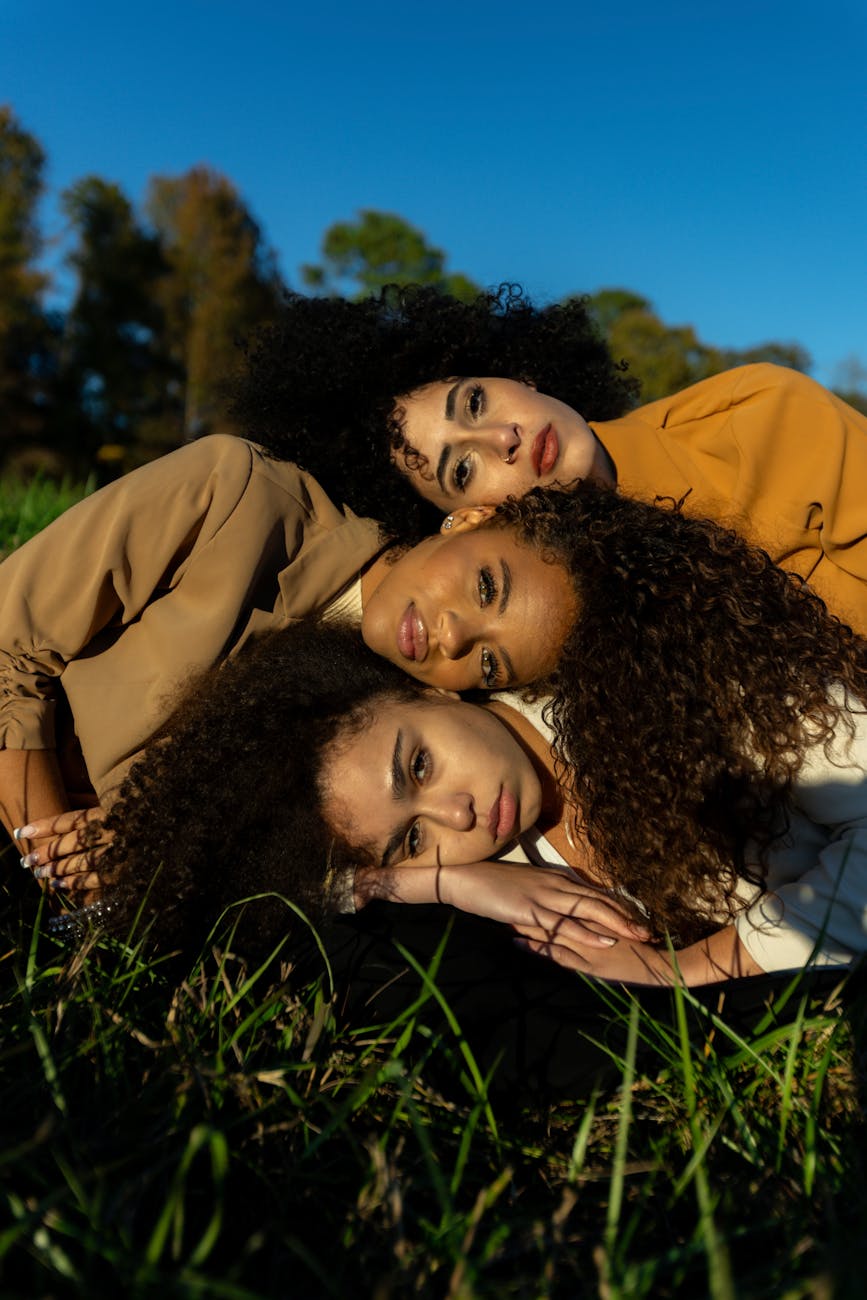
The concept of “pretty privilege” is often tied to Eurocentric beauty standards, where lighter skin is unconsciously, and sometimes consciously, elevated above darker complexions. In the Black community, this privilege traces back to the historical context of colonization and slavery. Being light-skinned often meant proximity to whiteness, and by extension, to power, resources, and favor. This historical backdrop created a social hierarchy that continues to influence Black experiences and perceptions of beauty today (Hunter, 2007).
During the transatlantic slave trade, many light-skinned children were the offspring of enslaved African women and their European masters. These children were frequently given preferential treatment—sometimes educated, occasionally freed, and often placed in domestic roles rather than forced into field labor (Williams, 1987). This division sowed discord between darker and lighter enslaved Africans, setting the stage for intraracial tension that persists to this day.
The privileges of lighter skin became institutionalized during slavery and Reconstruction. Light-skinned Black people often formed elite social clubs, fraternities, and sororities that were closed to darker-skinned individuals. These groups developed a “paper bag test,” which only allowed members whose skin was lighter than a brown paper bag (Russell, Wilson, & Hall, 2013). This practice not only excluded darker-skinned individuals but also perpetuated an internalized belief that lighter meant better.
In the early 20th century, colorism influenced career opportunities for Black entertainers. Many early Black actors and actresses in Hollywood were light-skinned because they were considered more “palatable” to white audiences. Actresses like Lena Horne openly discussed how Hollywood would cast her as an exotic beauty but deny roles to darker-skinned women who were equally talented (Horne, 1965). This further reinforced the idea that lighter skin was a ticket to visibility and success.
Music history reflects a similar pattern. Jazz clubs in the Harlem Renaissance often hired “high yellow” performers, favoring those who had more European features. Billie Holiday and other artists faced discrimination based on skin tone, shaping the narrative of who could be considered beautiful and worthy of fame. This stratification reinforced a hierarchy even within the cultural spaces designed to uplift African Americans (Neal, 2013).
Psychologically, light-skinned privilege has been a double-edged sword. While it offered access to education, jobs, and status in certain contexts, it also came with suspicion and accusations of betrayal from within the Black community. Lighter-skinned individuals were sometimes perceived as “not Black enough,” straddling the line between two worlds but never fully accepted in either (Hall, 1992).
Post-slavery, light-skinned individuals often became the leaders of the Black elite. This phenomenon can be seen in the development of HBCUs, where early presidents and administrators were disproportionately lighter-skinned. This was not simply coincidence—it reflected the biases of the time, as lighter-skinned leaders were seen as more acceptable to white donors and society at large (Brown, 2005).
The dark history of being light-skinned also intersects with colorism in romantic relationships. Studies show that lighter-skinned women are often perceived as more attractive, desirable, and “marriageable” (Wilder, 2010). This dynamic has led to social tensions, with darker-skinned women sometimes excluded from spaces of desirability and intimacy.
Black men have historically been pressured, subtly or overtly, to choose lighter-skinned partners as a way to “improve the race”—a concept rooted in both colonialism and eugenics. This phrase reflected a misguided belief that lighter offspring would face fewer barriers in a racist society, inadvertently perpetuating the cycle of color preference (Maddox & Gray, 2002).
The media plays a critical role in continuing the privilege of light skin. Magazine covers, music videos, and advertisements have overwhelmingly featured light-skinned Black women as the standard of beauty. Today, celebrities like Beyoncé, Zendaya, and Meghan Markle are frequently celebrated as representations of “Black excellence,” but their acceptance often comes in part because their lighter complexions are perceived as more universal or “marketable.” In contrast, actresses like Lupita Nyong’o and Viola Davis have had to fight for recognition, proving that darker-skinned women can embody beauty and sophistication.
Biblically, this issue can be framed as a distortion of God’s creation. Scripture reminds believers that all people are “fearfully and wonderfully made” (Psalm 139:14, KJV). Elevating one skin tone over another disrupts the divine equality intended by the Creator. Such preferences echo James 2:9, which warns that showing partiality is sin. Colorism thus becomes not only a social issue but also a moral and spiritual one.
Despite its privileges, being light-skinned has also meant being fetishized. Light-skinned women, in particular, have been hypersexualized, seen as exotic, and used as a bridge between Blackness and whiteness in the American imagination. This exoticism places a burden on light-skinned women to constantly validate their Black identity while resisting objectification (Bryant, 2017).
The “tragic mulatto” stereotype, popularized in literature and film, portrays light-skinned individuals as doomed to suffer because of their mixed heritage. This trope further complicates the psychology of being light-skinned, suggesting that privilege comes at the cost of belonging and peace (Bogle, 2016).
Economic data reveals that lighter-skinned Black individuals still earn more on average than darker-skinned peers, even when education and experience are held constant (Goldsmith, Hamilton, & Darity, 2006). This statistic highlights that light-skinned privilege remains an active force in contemporary society, not just a relic of the past.
Nevertheless, the “privilege” is not without its psychological price. Many light-skinned individuals express guilt over benefits they did not ask for but still receive. This creates an internal struggle, where identity becomes fraught with questions of authenticity and complicity (Monk, 2014).
Conversations about pretty privilege must also address skin bleaching, a dangerous practice that underscores the global preference for lighter skin. In Africa, celebrities like Dencia have been criticized for promoting skin-lightening creams, while artists like Burna Boy have openly condemned the practice, calling for pride in natural melanin. This shows the tension between profit and empowerment (Charles, 2003).
Today, the natural hair movement and campaigns like #MelaninPoppin and #BlackGirlMagic have sought to reclaim and celebrate darker skin tones, challenging centuries-old hierarchies. Lupita Nyong’o’s children’s book Sulwe is an example of using art to teach young girls that dark skin is beautiful and worthy of love (Tate, 2016).
Education is key to deconstructing these hierarchies. When Black history is taught in its fullness—including the painful legacies of colorism—communities can begin to heal. Documentaries like Dark Girls and Light Girls have opened dialogue around these issues, allowing space for honesty and empathy.
Ultimately, the dark history of being light-skinned calls for a return to valuing all Blackness equally. Healing will require repentance for internalized biases and an intentional effort to dismantle the false hierarchies that have divided the community for centuries. Only then can pretty privilege lose its power and allow for true equity and solidarity among all shades of Blackness.
References
- Bogle, D. (2016). Toms, Coons, Mulattoes, Mammies, and Bucks: An Interpretive History of Blacks in American Films. Bloomsbury.
- Brown, N. (2005). The Brown Paper Bag Test: The History of Colorism in America. Routledge.
- Bryant, C. (2017). Fetishization and Identity: Mixed Race Women in Popular Culture. Journal of Black Studies, 48(3), 215–229.
- Charles, C. (2003). Skin Bleaching, Self-Hate, and Black Identity in Jamaica. Journal of Black Studies, 33(6), 711–728.
- Goldsmith, A., Hamilton, D., & Darity, W. (2006). Shades of Discrimination: Skin Tone and Wages. American Economic Review, 96(2), 242–245.
- Hall, R. E. (1992). Bias Among African Americans Regarding Skin Color: Implications for Social Work Practice. Research on Social Work Practice, 2(4), 479–486.
- Hill, M. (2002). Skin Color and the Perception of Attractiveness Among African Americans. Social Psychology Quarterly, 65(1), 77–91.
- Horne, L. (1965). In Person: Lena Horne. Stein and Day.
- Hunter, M. (2007). The Persistent Problem of Colorism: Skin Tone, Status, and Inequality. Sociology Compass, 1(1), 237–254.
- Maddox, K., & Gray, S. (2002). Cognitive Representations of Black Americans: Reexploring the Role of Skin Tone. Personality and Social Psychology Bulletin, 28(2), 250–259.
- Monk, E. P. (2014). Skin Tone Stratification among Black Americans, 2001–2003. Social Forces, 92(4), 1313–1337.
- Neal, M. A. (2013). What the Music Said: Black Popular Music and Black Public Culture. Routledge.
- Russell, K., Wilson, M., & Hall, R. (2013). The Color Complex: The Politics of Skin Color Among African Americans. Anchor Books.
- Tate, S. (2016). Black Beauty: Aesthetics, Stylization, Politics. Routledge.
- Wilder, J. (2010). Revisiting “Color Names and Color Notions”: A Contemporary Examination of the Language and Attitudes of Skin Color among Young Black Women. Journal of Black Studies, 41(1), 184–206.
- Williams, E. (1987). Capitalism and Slavery. UNC Press.
Discover more from THE BROWN GIRL DILEMMA
Subscribe to get the latest posts sent to your email.
 THE BROWN GIRL DILEMMA