
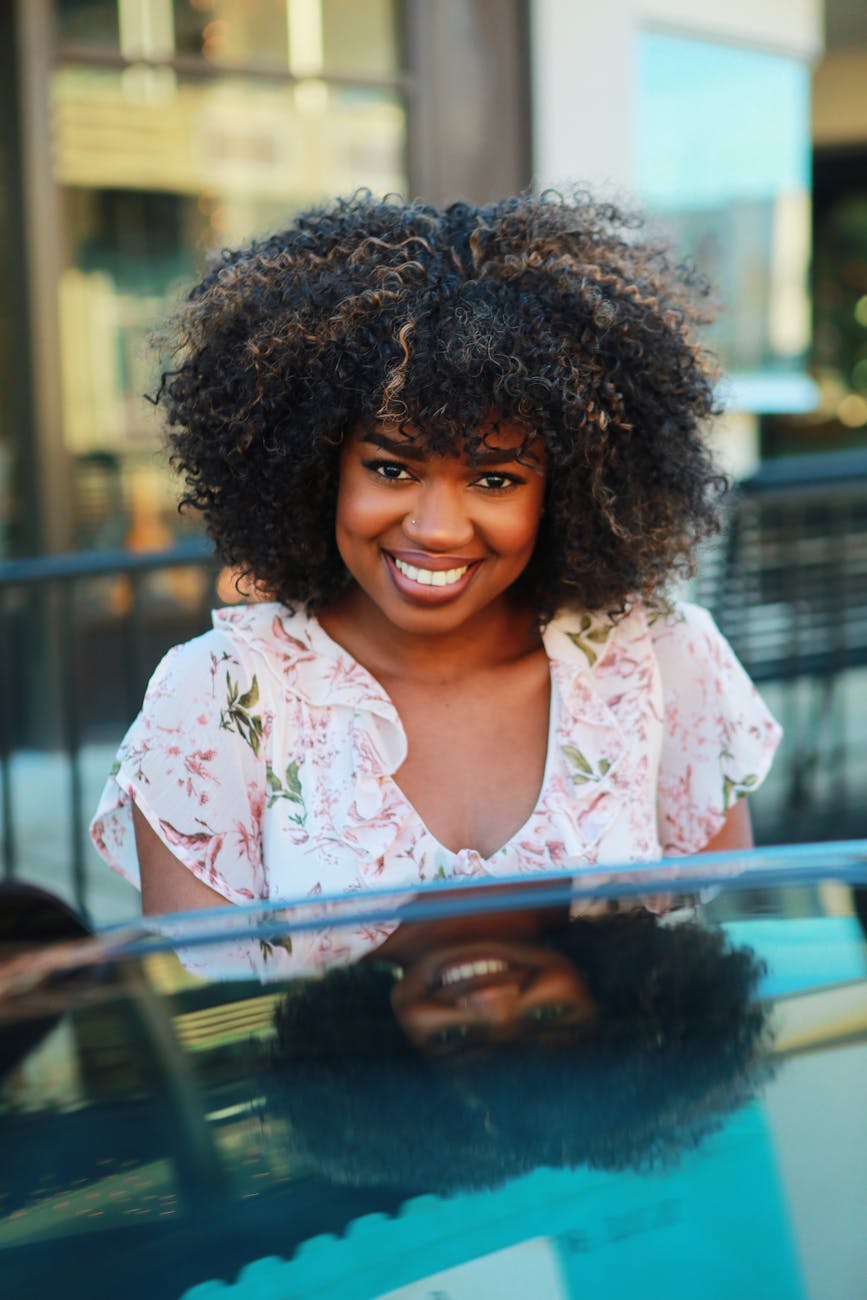
To be a brown girl is to live at the intersection of visibility and marginalization. Melanin is both a marker of beauty and a marker of difference—something celebrated in cultural slogans like “Black don’t crack,” yet stigmatized in institutions that uphold Eurocentric standards. The margins become the lived space of brown girls: not fully erased, but rarely centered; present, but often tokenized. Navigating identity within these boundaries requires both resistance and reinvention.
Melanin is not merely pigment; it is history embedded in the body. It carries the legacy of Africa, of ancestors who endured enslavement, colonialism, and displacement. It symbolizes resilience, survival, and cultural inheritance. Yet, within a world dominated by whiteness, melanin has been treated as deficiency rather than dignity. This contradiction defines much of the brown girl dilemma. Identity becomes fractured—formed in pride for one’s roots but tested by social systems that punish proximity to Blackness.
Psychologically, this tension can manifest in identity confusion and internalized colorism. Studies show that young women of color often struggle with self-esteem when their physical features do not align with mainstream ideals (Walker, 1983; Thompson & Keith, 2001). Brown girls are too often told they are “too dark” to be beautiful, or conversely, exotified as “rare” when their features align with fetishized versions of “ethnic beauty.” Such conflicting messages leave them oscillating between invisibility and hyper-visibility, both of which deny the fullness of their humanity.
Yet, brown girls are not passive subjects of this narrative; they actively navigate and redefine it. Identity becomes a form of resistance. From natural hair movements to social media campaigns celebrating melanin, brown girls are reclaiming space in cultures that once excluded them. Digital platforms have become arenas of empowerment, where brown women showcase their beauty, talent, and intellect without waiting for validation from mainstream gatekeepers (Nash, 2019). This reclamation is not just aesthetic—it is political, dismantling centuries of imposed inferiority.
Faith and spirituality also provide a critical foundation in identity navigation. Scriptures like Genesis 1:27 remind brown girls that they are made in the image of God, a truth that affirms dignity beyond social constructs. The declaration of the Shulammite woman in Song of Solomon 1:5—“I am black, but comely”—resonates across centuries as a proclamation of self-acceptance and divine affirmation. In this light, melanin is not a margin but a manifestation of sacred design.
The margins, however, are not only spaces of oppression; they are also spaces of creativity and vision. As bell hooks (1984) reminds us, the margin can be a site of resistance, a place from which the oppressed can critique the center and reimagine new possibilities. Brown girls learn to turn marginalization into mastery—transforming the weight of stereotype into platforms of voice, scholarship, artistry, and activism.
Thus, the brown girl identity is not defined by deficit but by duality: the struggle of navigating marginalization and the strength of transforming it into power. Melanin, once used to exclude, becomes the very marker of pride and resistance. The brown girl dilemma is not an endpoint but a journey—a pilgrimage through bias, beauty, and belief that ultimately leads to the discovery of self.
Brown girls are not only surviving on the margins; they are redrawing the map.
References
- hooks, b. (1984). Feminist theory: From margin to center. South End Press.
- Nash, J. C. (2019). Black feminism reimagined: After intersectionality. Duke University Press.
- Thompson, M. S., & Keith, V. M. (2001). The Blacker the berry: Gender, skin tone, self-esteem, and self-efficacy. Gender & Society, 15(3), 336–357.
- Walker, A. (1983). In search of our mothers’ gardens: Womanist prose. Harcourt.
- The Holy Bible, King James Version.
Discover more from THE BROWN GIRL DILEMMA
Subscribe to get the latest posts sent to your email.
 THE BROWN GIRL DILEMMA