
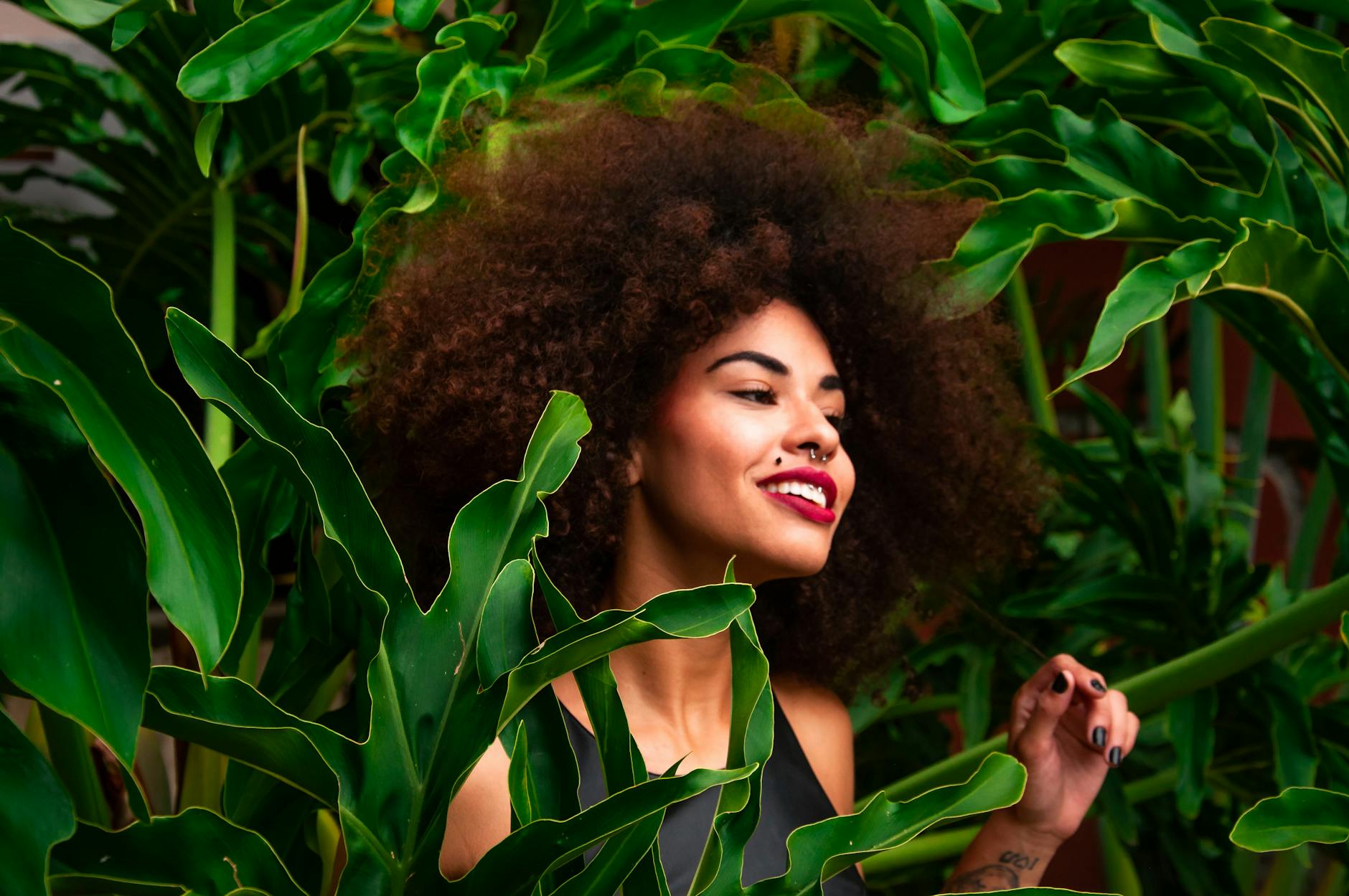
Beauty has never been a neutral concept. It has always been political, deeply intertwined with power, race, and identity. For the Brown girl, beauty is not simply a matter of style or preference—it is a site of negotiation, resistance, and survival. Living in a world where Eurocentric standards dominate, the Brown girl’s face, hair, and skin are often scrutinized, diminished, or exoticized. To be considered “pretty” in this context is not a simple compliment; it is a measure shaped by systemic bias, cultural narratives, and centuries of colonial influence.
The phrase “politics of pretty” captures the social and cultural forces that determine which bodies are valued and which are marginalized. For Brown girls—women of darker complexions, textured hair, and features often dismissed by dominant culture—beauty becomes less about personal choice and more about fitting into or rejecting the molds society constructs. Being told one is “pretty for a dark-skinned girl” is a backhanded compliment that reveals how beauty is still filtered through racial hierarchies. Such comments reinforce the notion that prettiness is not expected of the Brown girl but rather an exception to a biased rule.
Psychologically, these beauty politics can carry heavy consequences. Studies on colorism reveal how internalized bias leads to lower self-esteem, body image struggles, and even strained relationships among women of color (Hunter, 2007). The Brown girl may feel pressure to straighten her hair, lighten her skin, or alter her features to align more closely with accepted ideals. These acts are not merely aesthetic—they reflect deep systemic forces that punish authenticity while rewarding conformity. Yet, despite these pressures, many Brown girls have chosen reclamation over assimilation, celebrating melanin, curls, and natural features as radical acts of self-love.
Culture and media play central roles in shaping how the Brown girl is seen. Hollywood, fashion industries, and social media influencers often perpetuate narrow standards of beauty, elevating lighter skin, looser curls, and Eurocentric features. When Brown girls do appear, they are frequently cast as exotic, hypersexualized, or secondary characters. However, the rise of movements such as #MelaninMagic and #BlackGirlMagic has shifted this narrative, carving space for Brown girls to redefine “pretty” on their own terms. These campaigns celebrate diverse shades, textures, and features, challenging the idea that beauty must fit within Eurocentric boundaries.
Biblically, the politics of beauty are also addressed. Scripture reminds us that true worth is not measured by outward appearance but by the heart: “Whose adorning let it not be that outward adorning of plaiting the hair, and of wearing of gold, or of putting on of apparel; But let it be the hidden man of the heart” (1 Peter 3:3–4, KJV). For the Brown girl, this message affirms that while society may politicize her body and her beauty, her value in God’s eyes is rooted in character, wisdom, and faith. This spiritual truth provides a counterweight to cultural lies, offering grounding in divine affirmation.
The politics of pretty also extend into economics and social mobility. Research shows that lighter-skinned women often receive preferential treatment in hiring, salary, and even dating markets (Hersch, 2006). For Brown girls, this creates an additional layer of struggle: their looks can impact not only their social experiences but also their material opportunities. This demonstrates how beauty standards are not superficial but structurally impactful. They determine access, privilege, and even wealth distribution.
Yet within these struggles lies a profound resilience. Brown girls have historically been at the forefront of cultural innovation, from music and dance to style and language. What was once mocked or dismissed—from full lips to natural hairstyles—has often been appropriated and celebrated when adopted by others. This irony highlights the cultural hypocrisy of beauty politics, where features belonging to Brown girls are simultaneously devalued and commodified. Despite this, the Brown girl continues to set trends and reshape culture, forcing society to confront its contradictions.
The healing journey for the Brown girl involves unlearning toxic beauty scripts and embracing authenticity. Psychology emphasizes the importance of positive identity formation, affirmations, and community support (Cross, 1991). Spiritually, it involves resting in God’s truth rather than society’s approval. Culturally, it means celebrating diversity and rejecting monolithic beauty standards. When the Brown girl embraces her radiance, she not only heals herself but also challenges a system that has historically sought to erase her.
In the end, the politics of pretty reveals more about society than it does about the Brown girl. It exposes racialized hierarchies, systemic inequities, and cultural insecurities. Yet the Brown girl stands as a living testimony to resilience, creativity, and grace. She is not “pretty for a dark-skinned girl.” She is beautiful, period—because her beauty transcends comparison, rooted in history, faith, and the fullness of her identity.
The task for all of us is not to reshape the Brown girl to fit beauty politics, but to reshape politics to honor her as she is. When society expands its definition of beauty, it creates space for truth, healing, and justice. Until then, the Brown girl will continue to resist, radiate, and redefine what it means to be “pretty” on her own terms.
📖 References
Cross, W. E. (1991). Shades of Black: Diversity in African-American identity. Temple University Press.
Hersch, J. (2006). Skin tone effects among African Americans: Perceptions and reality. American Economic Review, 96(2), 251–255.
Hunter, M. L. (2007). The persistent problem of colorism: Skin tone, status, and inequality. Sociology Compass, 1(1), 237–254.
The Holy Bible, King James Version. (1769/2017). Cambridge University Press.
Discover more from THE BROWN GIRL DILEMMA
Subscribe to get the latest posts sent to your email.
 THE BROWN GIRL DILEMMA