
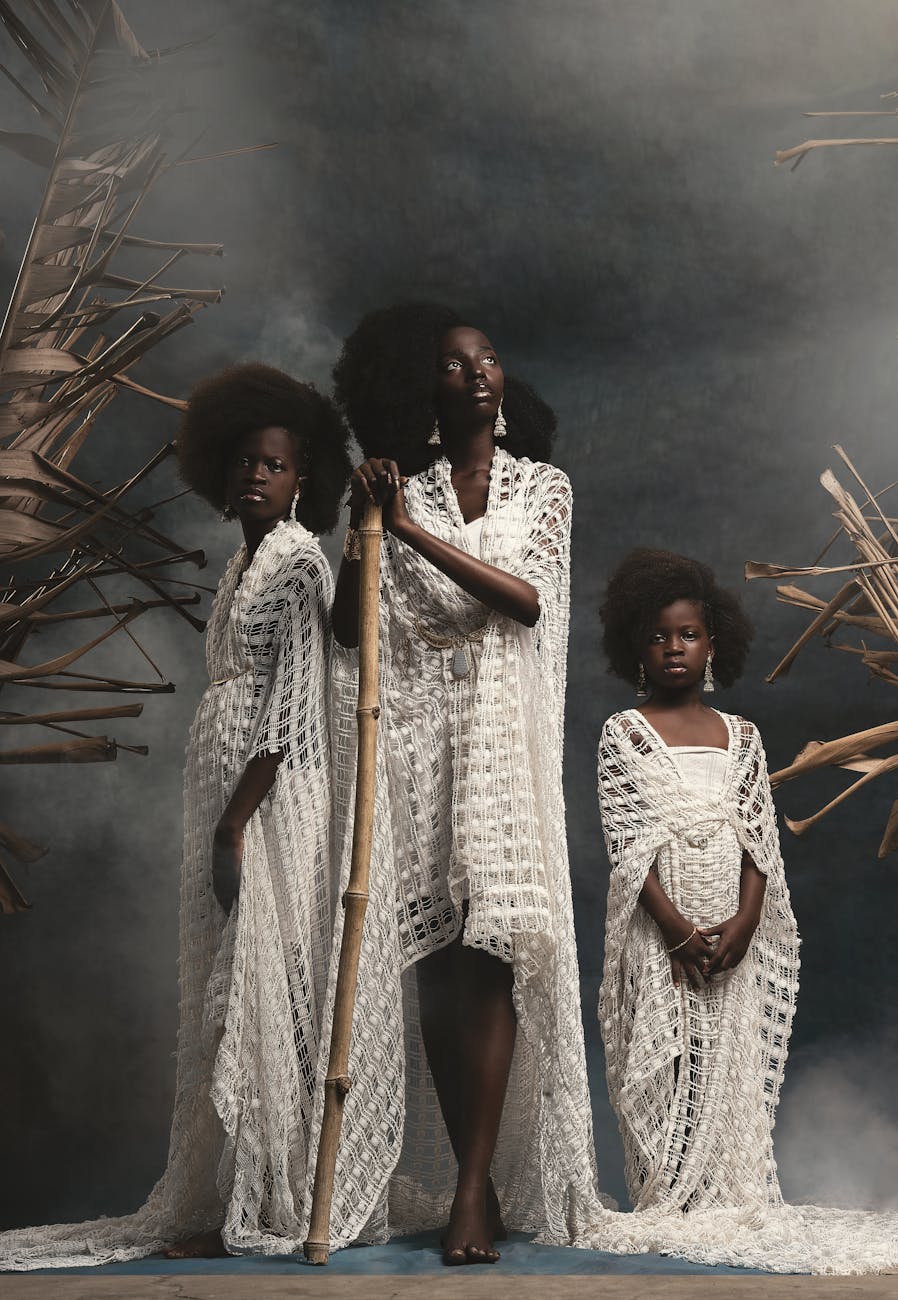
For Brown girls, beauty is a double-edged sword. While admired for its uniqueness, it often comes with a price—a cost dictated by society’s biased standards, historical oppression, and internalized hierarchies of skin tone. To inhabit a Brown body is to navigate admiration and marginalization simultaneously. Beauty becomes not only a source of pride but also a measure by which judgment, expectation, and limitation are applied.
Historically, the beauty of Black and Brown women has been shaped and constrained by colonialism, slavery, and colorism. Lighter-skinned women were often privileged, both socially and economically, while darker-skinned women were devalued or overlooked (Hunter, 2007). Even today, media representation favors fairer skin tones, subtly signaling that beauty is conditional. Brown girls inherit these standards and are taught, often unconsciously, that their worth is tied to their ability to conform to narrow ideals of attractiveness.
Psychologically, this burden manifests in multiple ways. Colorism and appearance-based discrimination can lower self-esteem, foster anxiety, and contribute to body dissatisfaction (Keith & Herring, 1991). Brown girls may internalize the notion that their natural features—curly hair, darker skin, fuller lips—are obstacles to acceptance, causing them to expend time, money, and energy attempting to align with socially sanctioned beauty ideals. The cost of beauty, therefore, is not simply cosmetic; it is emotional, mental, and relational.
The Bible, however, offers a radical redefinition of beauty. “Charm is deceitful, and beauty is vain: but a woman that feareth the Lord, she shall be praised” (Proverbs 31:30, KJV). True beauty, scripture asserts, is measured by character, virtue, and godly fear—not complexion or features. For Brown girls, embracing this biblical standard becomes a form of resistance against society’s shallow metrics. Their worth is divinely ordained, independent of external validation.
Yet, navigating the social cost of beauty is unavoidable. Brown girls often encounter fetishization, exoticization, or sexualized attention that commodifies their bodies. They may face scrutiny in professional spaces where their appearance is judged more harshly than competence. In relationships, they can confront bias or preference that favors lighter skin, reflecting lingering legacies of racism and colonialism. In every context, the Brown body becomes both celebrated and policed.
Despite these challenges, Brown girls are cultivating empowerment. Movements like natural hair pride, melanin positivity campaigns, and cultural affirmation initiatives teach girls to reclaim their bodies as sources of strength rather than shame. Psychologists note that embracing one’s authentic appearance strengthens self-esteem, fosters resilience, and reduces vulnerability to external biases (Neff, 2011). By redefining beauty on their own terms, Brown girls resist societal prescriptions while creating new norms of acceptance.
Families and communities play a pivotal role in mitigating the cost of beauty. When parents, mentors, and churches affirm the value of natural features and melanin-rich skin, they help Brown girls internalize messages of self-worth. Psalm 139:14 (KJV) reminds us, “I will praise thee; for I am fearfully and wonderfully made: marvellous are thy works; and that my soul knoweth right well.” Spiritual and cultural affirmation provides protection against the subtle violence of societal standards.
Tips for Beauty in a Brown Body
- Embrace Your Skin Tone
- Celebrate your melanin. Know that your skin is beautiful, radiant, and historically significant. Affirm yourself daily with positive statements.
- Care for Your Hair Naturally
- Learn to love and maintain your natural hair texture. Protective styles, natural oils, and gentle care honor your roots and cultural heritage.
- Practice Self-Love and Confidence
- Stand tall in your body. Confidence is magnetic. Avoid comparing yourself to Eurocentric beauty standards.
- Set Healthy Boundaries
- Protect your energy in relationships, social media, and environments where your worth might be questioned or undermined.
- Educate Yourself on Colorism
- Understand historical and modern colorism. Awareness empowers you to challenge biases and make informed choices.
- Choose Affirming Communities
- Surround yourself with people who celebrate you—friends, mentors, and spaces that uplift rather than criticize your natural beauty.
- Wear What Makes You Feel Powerful
- Fashion and style are forms of self-expression. Choose clothing, accessories, and makeup that reflect your personality and culture.
- Prioritize Mental Health
- Seek therapy, journaling, or spiritual guidance to process colorism, trauma, or societal pressures. Emotional wellness strengthens your resilience.
- Celebrate Your Cultural Heritage
- Learn your history, traditions, and ancestry. Cultural pride reinforces self-worth and connects you to a legacy of resilience.
- Use Your Voice
- Speak out against discrimination, colorism, or microaggressions. Advocacy and dialogue can empower you and others around you.
- Focus on Spiritual Growth
- For faith-centered Brown girls, prayer, scripture, and spiritual reflection provide grounding, purpose, and confidence in your identity.
- Practice Gratitude for Your Body
- Your body is a vessel for life, creativity, and experience. Honor it through healthy food, exercise, rest, and positive affirmations.
Ultimately, the cost of beauty in a Brown body is high, but it is not insurmountable. Brown girls learn to navigate admiration and bias, to protect their hearts while embracing their appearance, and to define beauty on their own terms. Through psychological resilience, spiritual grounding, and community support, the Brown body becomes not a burden to bear but a crown to celebrate—a testament to survival, legacy, and divine design.
References
- Hunter, M. (2007). The persistent problem of colorism: Skin tone, status, and inequality. Sociology Compass, 1(1), 237–254.
- Keith, V., & Herring, C. (1991). Skin tone and stratification in the Black community. American Journal of Sociology, 97(3), 760–778.
- Neff, K. D. (2011). Self-compassion: The proven power of being kind to yourself. HarperCollins.
- The Holy Bible, King James Version.
Discover more from THE BROWN GIRL DILEMMA
Subscribe to get the latest posts sent to your email.
 THE BROWN GIRL DILEMMA