
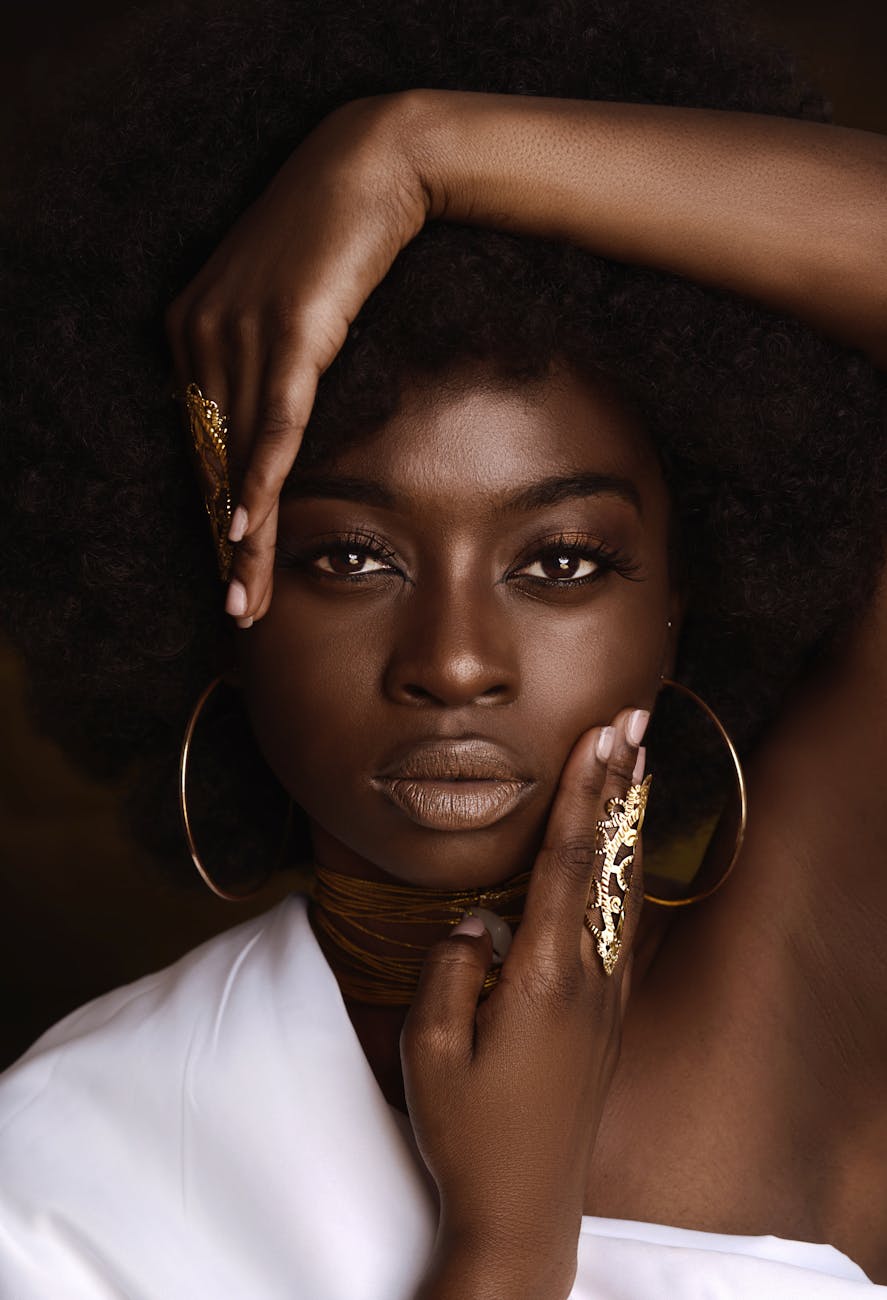
The beauty of people of African descent has long been both celebrated and contested, occupying a complex intersection of biology, culture, and politics. Black beauty is not simply a matter of outward appearance, but a profound embodiment of resilience, history, and spiritual depth. It reflects evolutionary intelligence, psychological endurance, and cultural resistance. Understanding the “science of Black beauty” requires examining its genetic foundations, the psychology of beauty perception, the historical weight of colonialism and slavery, and the spiritual dimension that has sustained Black people across centuries. In this sense, Black beauty radiates not only from the body, but also from the survival of a people who have redefined beauty against all odds.
Evolutionary and Biological Foundations of Black Beauty
Human variation is shaped by adaptation, and the physical features commonly associated with African ancestry bear witness to millennia of survival in diverse ecological environments. Skin pigmentation is one of the most visible markers. Deeply pigmented skin, rich in eumelanin, developed as an evolutionary shield against ultraviolet (UV) radiation. This adaptation protected folate—essential for reproduction and fetal development—while still permitting sufficient vitamin D synthesis near the equator (Jablonski & Chaplin, 2010). Thus, the very darkness of African skin is not only an aesthetic trait but also a marker of evolutionary fitness and resilience.
Hair texture provides another example of adaptation. Afro-textured hair, with its tightly coiled structure, plays a thermoregulatory role, shielding the scalp from intense sunlight while allowing airflow to cool the head (Robins, 2009). This unique adaptation highlights the functionality and beauty embedded within African biology. Similarly, fuller lips, broader noses, and other phenotypic features often stigmatized under Eurocentric ideals were evolutionary responses to environment and climate, rather than biological deficiencies.
Genetics further demonstrates the diversity within African-descended populations. Africa possesses the greatest genetic variation of any continent, meaning that Black beauty cannot be reduced to a monolith but must be understood as a spectrum of phenotypes, from ebony to bronze skin tones, from tightly coiled to loosely curled hair textures (Tishkoff et al., 2009). This genetic diversity underscores that Black beauty is vast, multifaceted, and scientifically foundational to humanity itself.
The Psychology of Black Beauty and Self-Perception
While biology provides the framework, psychology reveals how beauty is experienced and valued. For centuries, Eurocentric beauty standards have dominated the global imagination, leading to colorism and internalized oppression within Black communities (Hunter, 2007). Skin tone hierarchies, hair texture bias, and the devaluation of African features created psychological scars that persist today.
Psychological studies show that exposure to Eurocentric ideals negatively impacts self-esteem among Black girls and women, often leading to increased anxiety, depression, and identity struggles (Thompson & Keith, 2001). The infamous “doll test” conducted by Kenneth and Mamie Clark in the 1940s revealed that Black children preferred white dolls over Black dolls, associating whiteness with goodness and beauty while internalizing negative views of their own Blackness.
Yet psychology also highlights resilience. The “Black is Beautiful” movement of the 1960s was a revolutionary act of cognitive reframing, challenging dominant standards and affirming Black self-worth (Byrd & Tharps, 2014). Today, the natural hair movement, the rise of melanin pride campaigns, and the increasing visibility of dark-skinned models and actresses reflect an ongoing psychological resistance to internalized colonial narratives. These cultural shifts affirm that Black beauty is not fragile—it is resilient, continuously redefining itself in ways that nurture self-love and communal pride.
Cultural Representation and the Politics of Beauty
Beauty is never neutral; it is political. For centuries, the exclusion of Black women and men from mainstream beauty standards reinforced structures of racial hierarchy. Dark skin was demonized, kinky hair was stigmatized, and African facial features were caricatured or erased from media representation. When Black bodies did appear in art, literature, or film, they were often exoticized, fetishized, or portrayed as subhuman.
This exclusion was not accidental but deeply rooted in colonial projects that sought to dehumanize African people while upholding whiteness as the pinnacle of beauty and civilization (Craig, 2006). In this context, to affirm Black beauty was to resist systemic erasure. Icons such as Nina Simone, Angela Davis, and Cicely Tyson redefined beauty through their unapologetic embrace of natural hair and African aesthetics, disrupting dominant cultural narratives.
In contemporary culture, representation has expanded. Lupita Nyong’o’s global influence as a dark-skinned actress and advocate for young Black girls challenges colorism. Rihanna’s Fenty Beauty brand revolutionized the cosmetics industry by offering foundation shades across the spectrum of skin tones, addressing the long-standing exclusion of darker complexions (Tate, 2009). These shifts reveal that beauty is not just personal—it is structural, reshaping industries and social perceptions.
Spiritual and Historical Dimensions of Black Beauty
Beyond biology and psychology, Black beauty possesses a spiritual and historical dimension. The transatlantic slave trade, colonialism, and systemic racism sought to strip African people of dignity, yet inner beauty and resilience endured. Enslaved women, denied adornments or agency, still braided hair in intricate styles that carried cultural meaning and even mapped escape routes (Byrd & Tharps, 2014). Beauty became an act of survival, a hidden language of strength.
The Bible, too, speaks of beauty in terms deeper than physical appearance. “Whose adorning let it not be that outward adorning of plaiting the hair, and of wearing of gold… but let it be the hidden man of the heart” (1 Peter 3:3–4, KJV). This verse affirms that true beauty is rooted in spirit, dignity, and virtue rather than external adornment. For Black communities, beauty has always transcended surface features—it is found in resilience, faith, and the radiance of survival through centuries of oppression.
Resilience and Radiance in the Modern Era
Today, Black beauty radiates globally, shaping fashion, music, film, and art. Afrocentric hairstyles influence global trends, African skin tones are celebrated on runways, and hip-hop culture redefines aesthetics worldwide. Yet challenges remain: colorism, Eurocentric bias in corporate beauty industries, and the commodification of Black aesthetics without proper respect for Black creators (Patton, 2006).
Nevertheless, Black beauty continues to redefine itself as a site of resistance and radiance. It is a reminder that beauty is not static but evolving, deeply intertwined with survival and identity. In both science and spirit, Black beauty testifies to the resilience of a people who refused to be erased, radiating strength that shines across generations.
Conclusion
The science of Black beauty demonstrates that it is both biological and transcendent. Evolutionary biology reveals its brilliance in adaptation. Psychology uncovers both the wounds of imposed Eurocentric standards and the resilience of self-love movements. Culture illustrates the politics of representation and the revolutionary act of embracing melanin and natural aesthetics. Spiritually, Black beauty is inseparable from dignity, survival, and divine worth.
In this light, Black beauty is not fragile—it is radiant because it endured. It is resilience written into skin, hair, and spirit. It is science fused with history, and history fused with faith. Black beauty is not merely seen; it is survived, celebrated, and sacred.
References
- Byrd, A., & Tharps, L. (2014). Hair story: Untangling the roots of Black hair in America. St. Martin’s Press.
- Craig, M. L. (2006). Race, beauty, and the tangled knot of a guilty pleasure. Feminist Theory, 7(2), 159–177.
- Hunter, M. (2007). The persistent problem of colorism: Skin tone, status, and inequality. Sociology Compass, 1(1), 237–254.
- Jablonski, N. G., & Chaplin, G. (2010). Human skin pigmentation as an adaptation to UV radiation. Proceedings of the National Academy of Sciences, 107(Suppl 2), 8962–8968.
- Patton, T. O. (2006). Hey girl, am I more than my hair? African American women and their struggles with beauty, body image, and hair. NWSA Journal, 18(2), 24–51.
- Robins, A. H. (2009). Biological perspectives on human pigmentation. Cambridge University Press.
- Tate, S. A. (2009). Black beauty: Aesthetics, stylization, politics. Ashgate.
- Thompson, M. S., & Keith, V. M. (2001). The Blacker the berry: Gender, skin tone, self-esteem, and self-efficacy. Gender & Society, 15(3), 336–357.
- Tishkoff, S. A., et al. (2009). The genetic structure and history of Africans and African Americans. Science, 324(5930), 1035–1044.
Discover more from THE BROWN GIRL DILEMMA
Subscribe to get the latest posts sent to your email.
 THE BROWN GIRL DILEMMA