
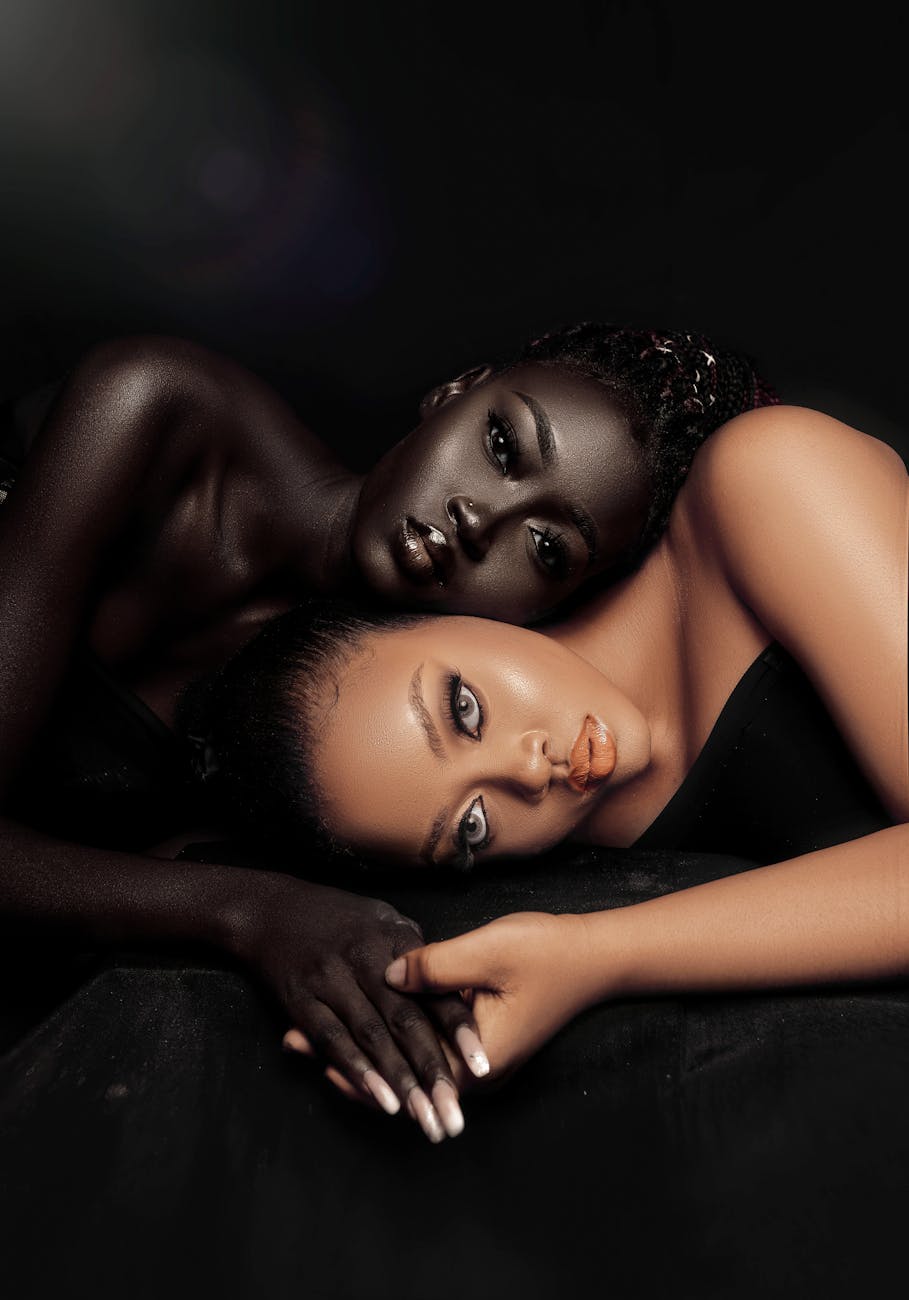
Beauty, often seen as a source of admiration and power, has a dark side when filtered through systems of racial hierarchy. For Black women in particular, beauty is not just about personal appearance but about social acceptance, economic opportunity, and psychological well-being. Within this context, colorism—preferential treatment based on skin tone—and Eurocentrism—the elevation of European features as the standard of attractiveness—create a rigid beauty hierarchy that disadvantages those with darker complexions. This dynamic reflects centuries of colonialism and slavery, where proximity to whiteness became a marker of value (Hunter, 2007).
Colorism emerged as a direct byproduct of slavery and colonial rule. During enslavement, lighter-skinned Black people, often the mixed-race children of enslaved women and white masters, were sometimes given preferential treatment, lighter work, or even opportunities for education. This fostered a social divide that persists today, manifesting in stereotypes that depict lighter skin as more refined or desirable while darker skin is associated with inferiority (Glenn, 2008). This artificial hierarchy continues to influence perceptions of beauty, love, and even employment opportunities in contemporary society.
Eurocentrism deepens the wound by setting white or European features—straight hair, thin noses, light eyes, and pale skin—as the “universal” ideal. Media, advertising, and Hollywood have historically reinforced these ideals, casting white women as leading symbols of femininity and beauty while relegating Black women to marginal or exotic roles. The outcome is a systematic erasure of African aesthetics and a psychological pressure for Black women to conform through skin-lightening, hair-straightening, or even surgical alteration (Russell, Wilson, & Hall, 2013).
The consequences of this hierarchy are profound. Studies show that darker-skinned Black women are more likely to face hiring discrimination, receive harsher prison sentences, and are less likely to be married than lighter-skinned Black women (Maddox & Gray, 2002). These outcomes demonstrate that beauty bias is not superficial but deeply intertwined with structural racism and sexism. In this sense, beauty becomes political—a mechanism through which inequality is reproduced.
Psychologically, colorism and Eurocentrism damage self-esteem, body image, and mental health. Internalized racism leads many Black women to devalue their natural features, creating a cycle of insecurity and shame. The “hierarchy of pretty” conditions individuals to associate lighter skin with worthiness and darker skin with deficiency, echoing the “doll tests” of the 1940s, in which Black children often chose white dolls as “pretty” and “good” while rejecting dolls that looked like themselves (Clark & Clark, 1947). This internalized bias demonstrates how deeply beauty hierarchies infiltrate self-perception.
Resistance, however, is emerging through movements like #BlackGirlMagic, the natural hair movement, and broader global calls for inclusivity in fashion and media. By celebrating diverse representations of Blackness—dark skin, natural hair, African facial features—these movements seek to dismantle Eurocentric beauty norms. Social media has amplified these efforts, giving Black women a platform to assert their own narratives and aesthetics, counteracting centuries of erasure.
Biblically, worth is not found in skin tone or physical beauty but in the character and spirit of an individual. Scripture reminds us that “man looketh on the outward appearance, but the Lord looketh on the heart” (1 Samuel 16:7, KJV). This teaching directly challenges the superficial hierarchies of society, encouraging a return to valuing substance over appearance. When understood in this light, overcoming colorism requires both spiritual reorientation and social change—rejecting man-made hierarchies for divine truth.
Ultimately, the dark side of “pretty” exposes how beauty standards are neither innocent nor universal but constructed tools of power. Colorism and Eurocentrism have entrenched damaging hierarchies that oppress Black women, especially those with darker skin. The way forward lies in cultural resistance, psychological healing, and a biblical reclaiming of worth beyond appearances. True beauty, when stripped of colonial and racial distortions, is diverse, multifaceted, and rooted in the dignity of every human being created in the image of God.
📚 References
- Clark, K. B., & Clark, M. P. (1947). Racial identification and preference in Negro children. Readings in Social Psychology.
- Glenn, E. N. (2008). Yearning for lightness: Transnational circuits in the marketing and consumption of skin lighteners. Gender & Society, 22(3), 281–302.
- Hunter, M. (2007). The persistent problem of colorism: Skin tone, status, and inequality. Sociology Compass, 1(1), 237–254.
- Maddox, K. B., & Gray, S. A. (2002). Cognitive representations of Black Americans: Reexploring the role of skin tone. Personality and Social Psychology Bulletin, 28(2), 250–259.
- Russell, K., Wilson, M., & Hall, R. (2013). The color complex: The politics of skin color among African Americans. Anchor Books.
Discover more from THE BROWN GIRL DILEMMA
Subscribe to get the latest posts sent to your email.
 THE BROWN GIRL DILEMMA