
Black girl, rise, you are the dawn,
Your skin is sunlight, rich and strong.
With coils that crown like royal thrones,
You carry beauty all your own.
No measure made by foreign eyes,
Can shrink the truth your soul implies.
You are the art, the song, the pearl—
The blueprint of a brighter world.
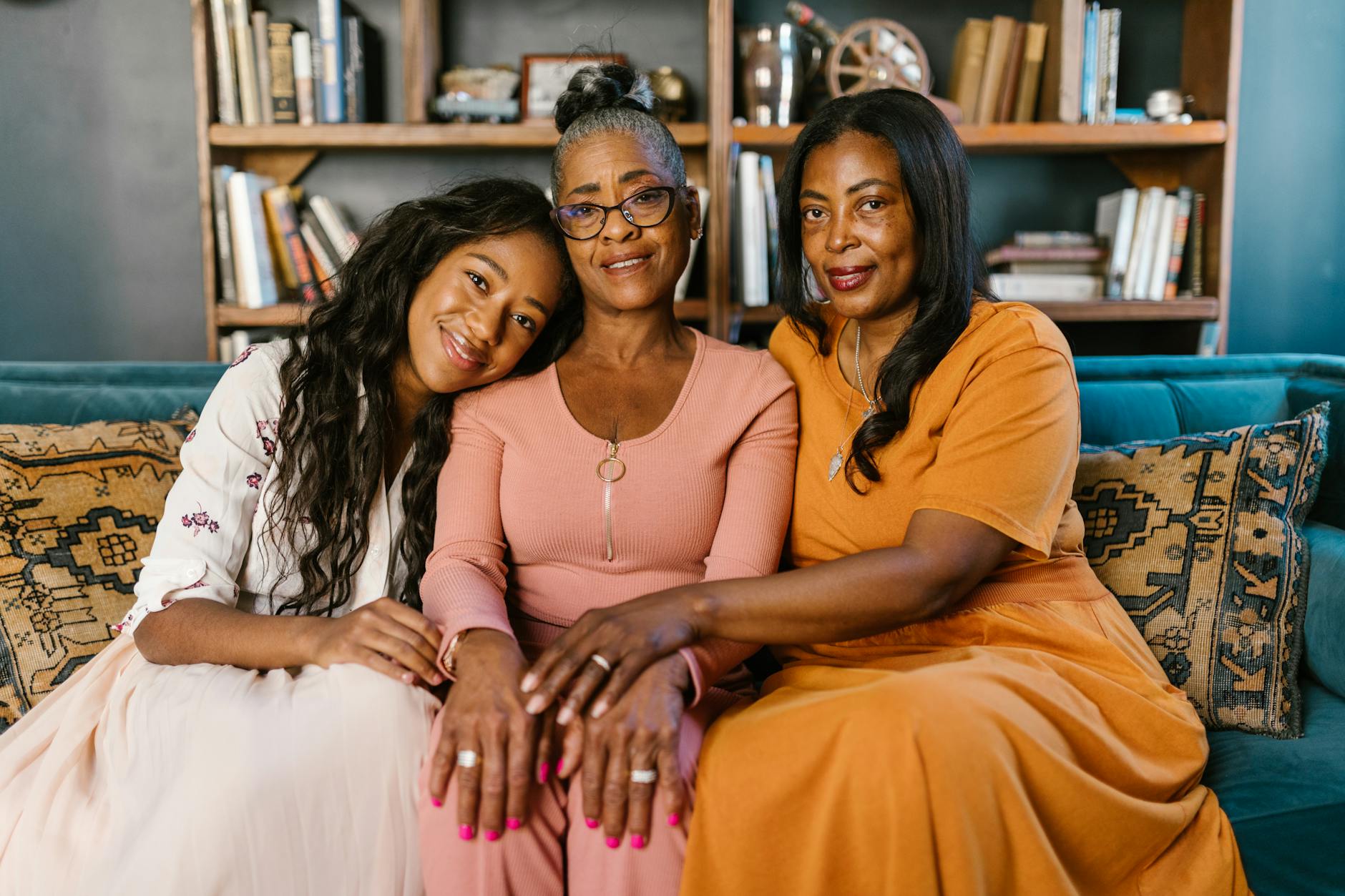
For generations, Black women have been subjected to the backhanded compliment: “You’re pretty for a Black girl.” Though cloaked in admiration, these words reveal deep prejudice. From schoolyards to Hollywood casting rooms, Black women have heard variations of this phrase: “You’re cute for a dark-skinned girl,” “You’re attractive, but not like most Black girls,” or “I don’t usually like Black women, but you’re different.” These comments expose a painful truth—society has long devalued Black femininity, suggesting that beauty is an exception rather than the norm within Blackness.
Other Backhanded Compliments Black Women Have Heard
“You’re attractive for a dark-skinned girl.”
“You’re pretty… are you mixed?”
“You’re exotic looking.”
“You’re cute, but not like most Black girls.”
“I don’t usually like Black women, but you’re different.”
“You’re beautiful… for a natural hair girl.”
The History and Motive Behind the Comment
This backhanded compliment has roots in white supremacy and colorism. During slavery, lighter-skinned women were often positioned as “desirable” due to proximity to whiteness, while darker-skinned women were degraded and caricatured (Hunter, 2007). Mainstream media reinforced these ideas through films, magazines, and advertisements that excluded or exoticized Black women (Craig, 2006). The motive behind such statements is to uphold Eurocentric beauty standards—suggesting that Black women can only be beautiful when they resemble white ideals. Thus, “pretty for a Black girl” is not praise; it is an insult wrapped in condescension.
Psychology of the Backhanded Compliment
Psychologically, backhanded compliments operate as microaggressions, subtle forms of racism that undermine self-worth (Sue et al., 2007). They communicate that beauty is unusual among Black women, reinforcing stereotypes and internalized oppression. For the speaker, such comments often serve as a way to elevate themselves within racial hierarchies, consciously or unconsciously. For the recipient, the effect is cumulative, eroding confidence and perpetuating the false idea that Black beauty is inferior or rare.
The Bible and the Black Community’s Response
The Bible offers a powerful counter-narrative to these lies. In Song of Solomon, the Shulamite woman declares, “I am black, but comely, O ye daughters of Jerusalem” (Song of Solomon 1:5, KJV). This affirmation reminds us that Blackness and beauty are not opposites—they coexist by divine design. Within the Black community, responses to such backhanded compliments have ranged from frustration to defiance. Movements celebrating natural hair, melanin, and diverse body types testify to the resilience of Black women reclaiming their beauty.
Racism and the Burden of Beauty
The phrase “pretty for a Black girl” cannot be separated from systemic racism. It reveals how Black women are measured against white standards rather than appreciated within their own cultural aesthetics. Racism constructed a false hierarchy of beauty, portraying Black women as either hypersexual or unattractive (Collins, 2000). This has left Black women carrying a double burden: to resist these stereotypes while affirming their rightful place in the spectrum of human beauty. Changing this narrative requires dismantling racist ideologies in media, education, and daily interactions.
Conclusion: Breaking the Cage of Backhanded Compliments
Affirmations for the Black Girl Crown
- I am not “pretty for a Black girl.”
- I am pretty, period.
- My skin is not a limitation; it is liberation.
- My melanin is poetry written by God’s own hand.
- My hair is not “too much” — it is a crown of glory.
- I am not “different”; I am divine.
- I am not an exception; I am the example.
- My beauty does not need comparison; it is complete on its own.
- I am fearfully and wonderfully made (Psalm 139:14, KJV).
- My Blackness is not a burden; it is brilliance.
- I am the standard, not the stereotype.
- I am the dream and the proof that beauty is infinite.
The burden of these comments has weighed heavily on Black women for generations, but the response has been powerful. From Dorothy Dandridge to Lupita Nyong’o, Black women continue to redefine beauty and challenge racist narratives. To change this, society must confront the racism and colorism behind these words and uplift Black women’s beauty in its full diversity. Silence in the face of these insults only continues the cycle; speaking truth, celebrating diversity, and rooting identity in God’s Word breaks the chains.
References
- Collins, P. H. (2000). Black feminist thought: Knowledge, consciousness, and the politics of empowerment. Routledge.
- Craig, M. L. (2006). Race, beauty, and the tangled knot of a guilty pleasure. Feminist Theory, 7(2), 159–177.
- Hunter, M. (2007). The persistent problem of colorism: Skin tone, status, and inequality. Sociology Compass, 1(1), 237–254.
- Sue, D. W., Capodilupo, C. M., Torino, G. C., Bucceri, J. M., Holder, A. M., Nadal, K. L., & Esquilin, M. (2007). Racial microaggressions in everyday life: Implications for clinical practice. American Psychologist, 62(4), 271–286.
Discover more from THE BROWN GIRL DILEMMA
Subscribe to get the latest posts sent to your email.
 THE BROWN GIRL DILEMMA