
W. E. B. Du Bois (1868–1963) was a pioneering African American scholar, sociologist, historian, author, and civil rights activist whose work transformed the intellectual and political landscape of the 20th century. Born in Great Barrington, Massachusetts, Du Bois was one of the first Black Americans to grow up in a predominantly white community with access to integrated schools. He went on to become the first Black person to earn a Ph.D. from Harvard University, later studying at the University of Berlin. A tireless advocate for racial equality, Du Bois challenged systemic racism through groundbreaking scholarship and bold public advocacy. His landmark 1903 work, The Souls of Black Folk, introduced the concept of double consciousness and called for the political, educational, and social uplift of African Americans. Du Bois co-founded the NAACP and used the power of the pen and protest to fight lynching, segregation, and disenfranchisement. His light skin, though sometimes noted by others, never distracted from his unwavering commitment to Black liberation; he used his voice, platform, and brilliance not for personal elevation but to awaken the conscience of a nation and demand justice for his people. Throughout his life, Du Bois remained a fierce critic of racism and an uncompromising advocate for the dignity, intellect, and future of Black humanity worldwide.
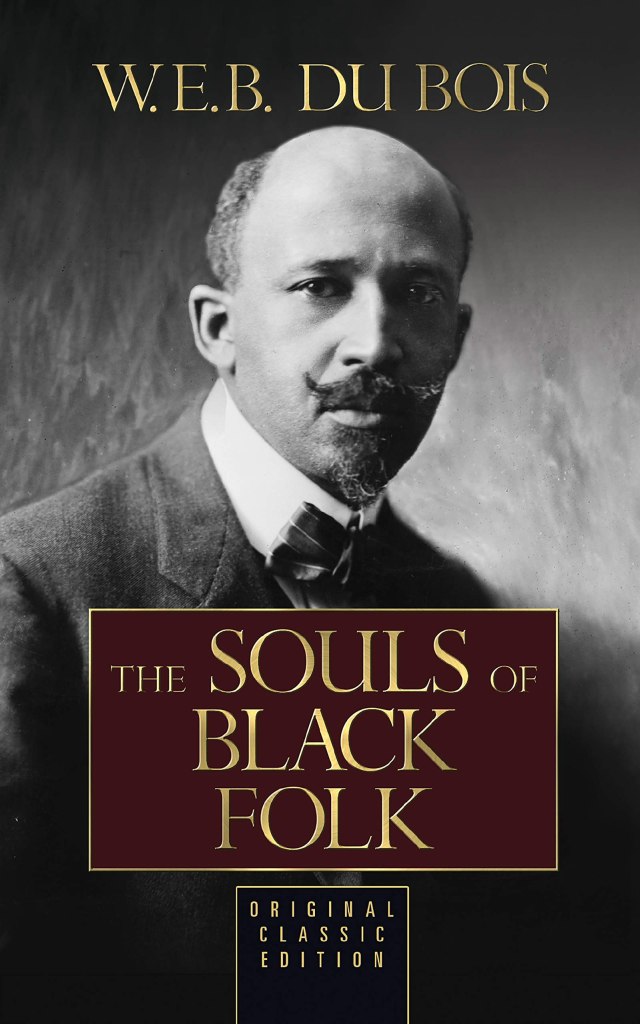
📚 Book Review — The Souls of Black Folk by W. E. B. Du Bois
Rating: ⭐⭐⭐⭐⭐
Published: 1903
Premise & Overview
A foundational collection of essays introducing his theory of double consciousness—the enduring inner conflict experienced by Black Americans: “two souls, two thoughts… two warring ideals in one dark body” Owlcation+15Encyclopedia Britannica+15Biography+15. Du Bois rejects the philosophy of accommodation promoted by Booker T. Washington and calls for full civil rights, higher education, and leadership from the Black “Talented Tenth” Wikipedia+14Encyclopedia Britannica+14PBS+14.
Key Themes and Impact
- Double Consciousness: The psychological toll of seeing oneself through white society’s contempt, leading to internal division Encyclopedia Britannica.
- Critique of Washington’s Strategy: Du Bois charged that Washington “practicably accepts the alleged inferiority of the Negro races,” arguing that his approach would perpetuate submission The New Yorker+15Encyclopedia Britannica+15Wikipedia+15.
- Higher Education & Political Rights: He championed classical education and equal voting rights to produce leaders who could uplift the race Biography+2Reddit+2Reddit+2.
- Pan-African Vision: Du Bois writes about a global color line and anticipated colonial revolutions and Pan-African unity Wikipedia.
How It Changed Black Lives
- Served as the intellectual bedrock of the NAACP and the civil rights movement, providing theoretical clarity and radical urgency Encyclopedia BritannicaPBS.
- Spurred the rise of the Black middle class via legitimizing higher education and civic activism Wikipedia.
- Became a founding text of Black protest literature, galvanizing generations of activists and scholar-intellectuals Reddit+2Reddit+2Reddit+2.
Celebration & Reception
- Created a critical rift within Black leadership, polarizing Du Bois supporters vs. Washington’s conservatives Reddit+15Encyclopedia Britannica+15Reddit+15.
- Praised by intellectuals and activists; Saunders Redding noted its connection to the Montgomery bus boycott movement decades later Wikipedia+2Wikipedia+2The New Yorker+2.
Awards and Honors
- The book itself did not win contemporary awards, but it has been honored as a cornerstone of Black literature and thought.
- The two-volume biography of Du Bois by David Levering Lewis won Pulitzer Prizes in 1993 and 2000 AP News+1TIME+1.
🔑 What Did Du Bois Advocate?
- Political agitation and protest—not silence or submission.
- Development of the Talented Tenth—educated Black leaders to guide the masses and achieve justice WikipediaWikipedia+2PBS+2Reddit+2.
- A refusal to “put further dependence on the help of the whites” and a call for self-reliant organization and nationalist thinking Wikipedia.
🌍 Historical Legacy
- Du Bois changed American history by legitimizing Black intellectual power, clarifying racial injustice as a national crisis, and fueling the NAACP’s civil rights agenda.
- His concept of double consciousness is foundational to race and identity studies today.
- His insistence on education, political rights, and fuller participation transformed prospects for generations of Black Americans.
Conclusion
The Souls of Black Folk is a masterwork—part sociological insight, part moral manifesto, part spiritual meditation. It demanded dignity, equality, and intellectual excellence. W. E. B. Du Bois stood as the voice of Black reason and rebellion. His legacy continues to inspire those who believe in the power of truth, education, and uncompromising justice.
Discover more from THE BROWN GIRL DILEMMA
Subscribe to get the latest posts sent to your email.
 THE BROWN GIRL DILEMMA