
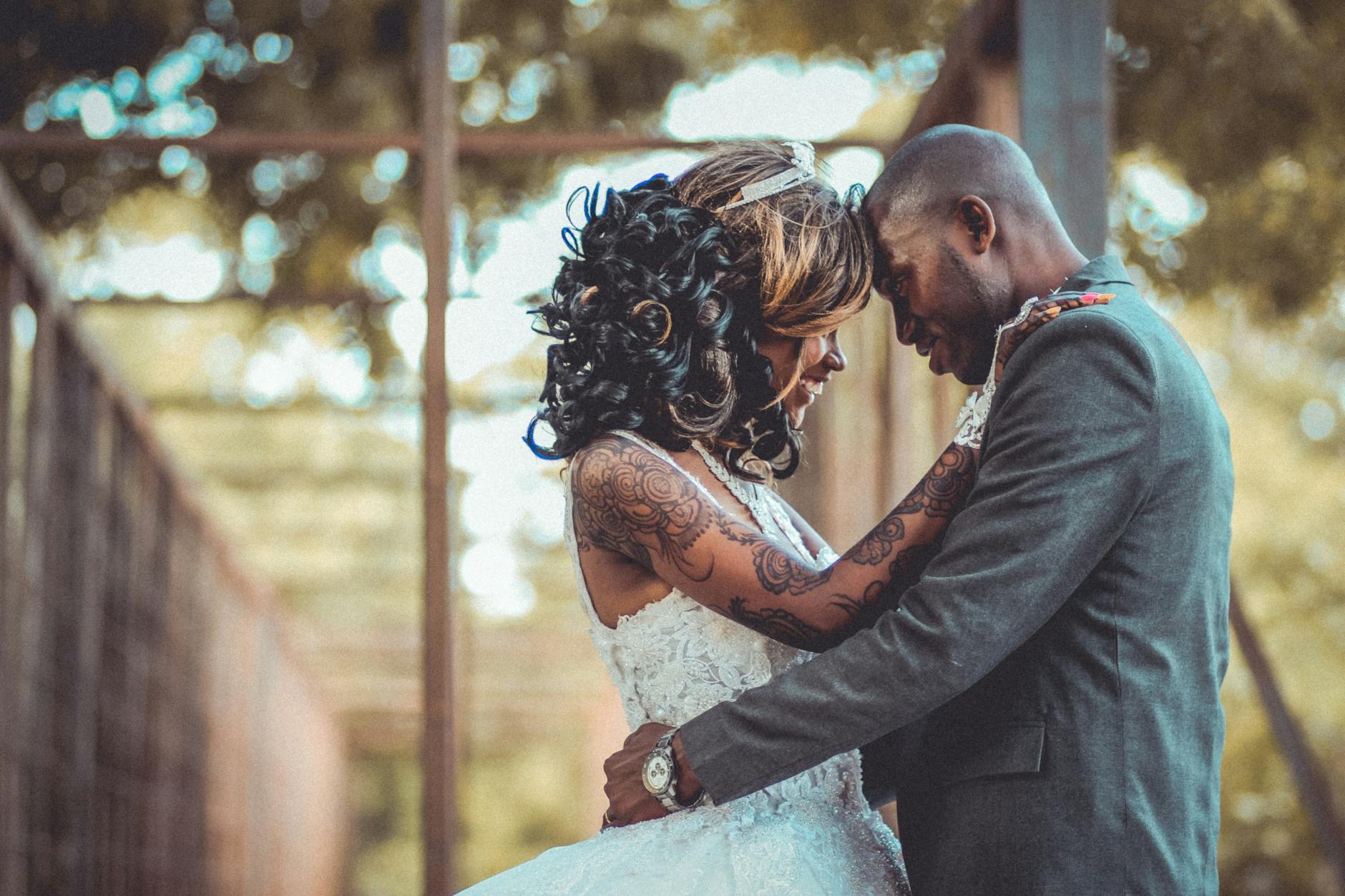
The Search for a Good Man: Black Women, Marriage, and the Complexities of Modern Love
💍💍💍
“Whoso findeth a wife findeth a good thing, and obtaineth favour of the Lord.”
—Proverbs 18:22 (KJV)
Marriage remains a central social and spiritual institution in human society. For Black women, however, marriage patterns in the United States reveal complex dynamics. According to U.S. Census Bureau data, approximately 26% of Black women are married, compared to 46% of White women (U.S. Census Bureau, 2022). Inversely, about never-married Black women outnumber never-married Black men (47% vs. 36%) (Pew Research Center, 2019). These disparities have spurred scholarly inquiry into why marriage rates among Black women are significantly lower. Biblically, Proverbs 18:22 declares, “Whoso findeth a wife findeth a good thing, and obtaineth favour of the Lord” (KJV), framing marriage as a man’s pursuit of divine favor. Psychologically and socially, the challenge lies in distinguishing between men of character and those who embody destructive traits, and in navigating a dating culture that complicates authentic connections.
The Typologies of Men in Contemporary Relationships
Women searching for suitable partners must navigate a landscape of varied male typologies. The cheater or adulterer undermines covenantal trust, directly contradicting the biblical prohibition: “Thou shalt not commit adultery” (Exodus 20:14, KJV). The fornicator embodies sexual impulsivity without commitment, ignoring Paul’s admonition to “flee fornication” (1 Corinthians 6:18, KJV). The narcissist, often described in psychological literature as possessing inflated self-importance and lack of empathy (American Psychiatric Association, 2013), emotionally manipulates women who seek validation. By contrast, the provider offers material stability but may lack emotional or spiritual leadership. The rare godly man mirrors Ephesians 5:25: “Husbands, love your wives, even as Christ also loved the church, and gave himself for it” (KJV). This typology underscores the biblical model of selfless love and spiritual leadership.
Why Women Struggle to Find a Good Man
The difficulty of finding a good man is rooted in intersecting cultural, psychological, and spiritual factors. First, structural issues such as mass incarceration and economic disparities disproportionately limit the pool of available Black men (Alexander, 2010). Psychologically, many men wrestle with commitment avoidance, stemming from fear of responsibility or unresolved childhood trauma (Levine & Heller, 2010). Spiritually, the erosion of biblical morality normalizes fornication, adultery, and dishonor toward women. Women, in turn, may compromise standards out of loneliness, desperation, or low self-esteem, exposing themselves to unhealthy relationships. Proverbs 31:10 raises the question, “Who can find a virtuous woman? for her price is far above rubies” (KJV)—a reminder that the search for virtue applies to both genders.
The Dangers of Dating Apps and Digital Courtship
The rise of dating apps has introduced new challenges to relational stability. Psychologists describe these platforms as “paradox of choice environments,” where endless swiping fosters superficial attraction and decision fatigue (Finkel et al., 2012). Statistically, while 30% of U.S. adults report using dating apps, only 12% of app users enter long-term marriages or partnerships (Pew Research Center, 2020). For Black women, these platforms often exacerbate racial biases, as studies indicate they are rated less favorably in dating algorithms compared to other racial groups (Robnett & Feliciano, 2011). Biblically, this environment mirrors the warning in 2 Timothy 3:6–7 about being “led away with divers lusts.” Digital dating frequently emphasizes lust-driven choice over spiritual discernment, making it a “cesspool” of temporary encounters rather than covenantal unions.
What is a Good Man?
From a biblical perspective, a “good man” embodies righteousness, faith, and stability. Psalm 37:23 declares, “The steps of a good man are ordered by the Lord” (KJV), implying spiritual alignment and divine guidance. In psychological terms, a good man demonstrates emotional intelligence, empathy, responsibility, and consistent character (Goleman, 1995). He is capable of both providing for and nurturing his partner, balancing strength with gentleness. In marital context, a good husband aligns with Ephesians 5:28: “So ought men to love their wives as their own bodies. He that loveth his wife loveth himself” (KJV). Thus, the definition of a good man transcends financial provision—it requires integrity, emotional maturity, and godliness.
Why Some Black Women Remain Unmarried
Despite their achievements, many Black women struggle to marry due to structural and personal barriers. Sociologists note that Black women are the most educated group of women in the United States, yet higher educational attainment narrows their pool of potential Black male partners (U.S. Department of Education, 2021). Additionally, many women are caught in cycles of unhealthy attachment—dating married men or narcissists—leading to psychological harm. Research shows that women involved in affairs with married men often suffer depression, shame, and prolonged low self-esteem due to secrecy and lack of commitment (Glass & Wright, 1992). Spiritually, such entanglements are destructive: Hebrews 13:4 warns that “whoremongers and adulterers God will judge” (KJV).
Where and How Women Can Position Themselves to Be Found
Proverbs 18:22 underscores that marriage is not about women chasing men but about men, under God’s guidance, finding wives. This principle challenges modern culture where women often pursue men directly. Instead, women should position themselves by cultivating virtue, wisdom, and godliness, much like Ruth did in the fields where Boaz noticed her (Ruth 2). Psychology supports this: individuals with secure attachment styles are more likely to form healthy, lasting marriages (Mikulincer & Shaver, 2016). Thus, women must develop spiritual grounding, self-respect, and patience, trusting that the right man will pursue them in alignment with God’s order.
Hope and Solutions
Though modern dating culture presents obstacles, hope remains. A return to biblical principles of courtship, virtue, and male spiritual leadership provides a framework for healthy marriages. Women can protect themselves by setting boundaries, avoiding desperation, and seeking partners in godly environments—such as churches, community service, and faith-based networks—rather than solely through dating apps. The solution lies not in lowering standards but in elevating expectations to align with God’s design for marriage. In doing so, women increase the likelihood of encountering men who embody godliness, responsibility, and true love. Ultimately, the promise of Jeremiah 29:11 reassures, “For I know the thoughts that I think toward you, saith the Lord, thoughts of peace, and not of evil, to give you an expected end” (KJV).
References
- Alexander, M. (2010). The new Jim Crow: Mass incarceration in the age of colorblindness. New Press.
- American Psychiatric Association. (2013). Diagnostic and statistical manual of mental disorders (5th ed.). APA.
- Finkel, E. J., Eastwick, P. W., Karney, B. R., Reis, H. T., & Sprecher, S. (2012). Online dating: A critical analysis from the perspective of psychological science. Psychological Science in the Public Interest, 13(1), 3–66.
- Glass, S. P., & Wright, T. L. (1992). Justifications for extramarital relationships: The association between attitudes, behaviors, and gender. Journal of Sex Research, 29(3), 361–387.
- Goleman, D. (1995). Emotional intelligence. Bantam Books.
- Levine, A., & Heller, R. (2010). Attached: The new science of adult attachment and how it can help you find—and keep—love. TarcherPerigee.
- Mikulincer, M., & Shaver, P. R. (2016). Attachment in adulthood: Structure, dynamics, and change. Guilford Press.
- Pew Research Center. (2019). Marriage and cohabitation in the U.S.
- Pew Research Center. (2020). The virtues and downsides of online dating.
- Robnett, B., & Feliciano, C. (2011). Patterns of racial-ethnic exclusion by gender on online dating sites. Social Forces, 89(3), 807–828.
- U.S. Census Bureau. (2022). Current Population Survey, Annual Social and Economic Supplement.
- U.S. Department of Education. (2021). Condition of Education.
Discover more from THE BROWN GIRL DILEMMA
Subscribe to get the latest posts sent to your email.
 THE BROWN GIRL DILEMMA