
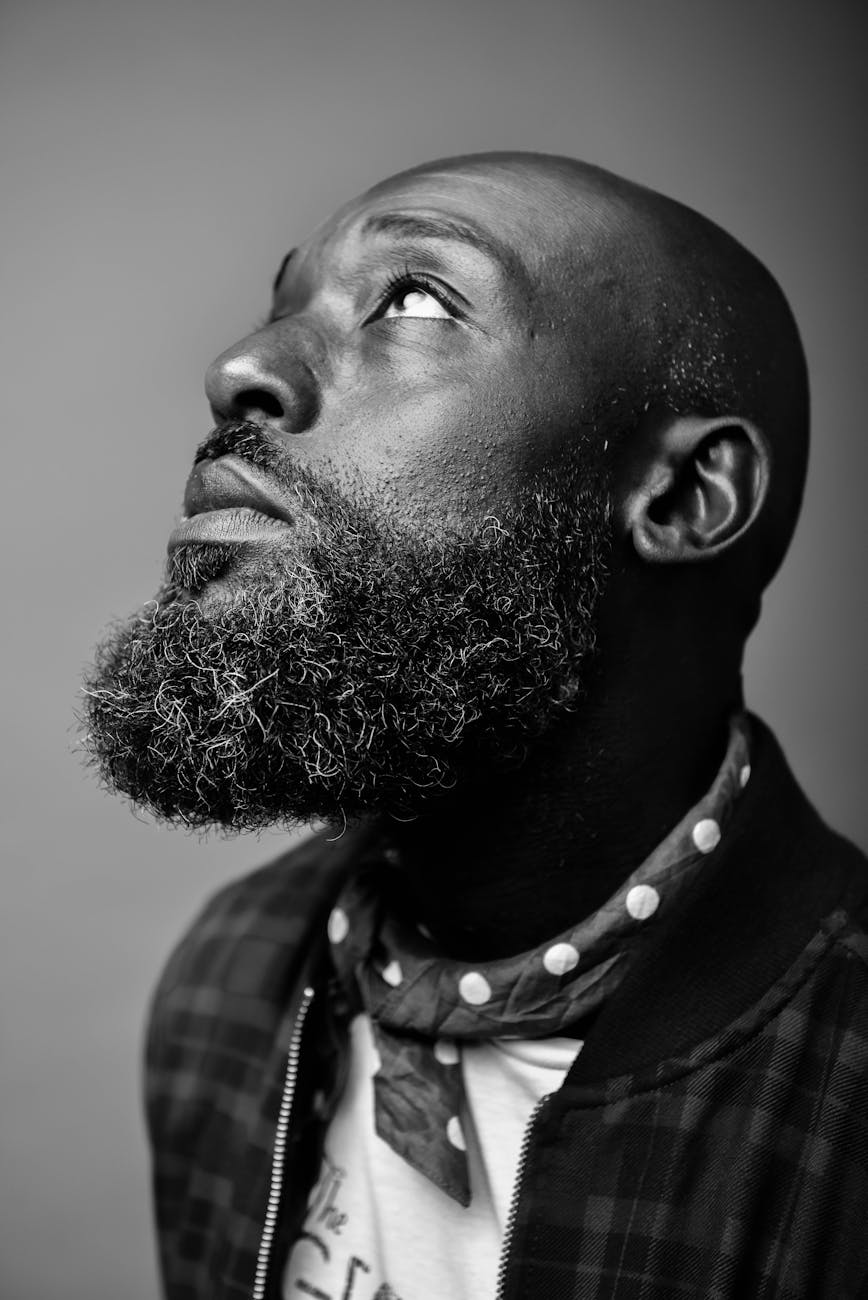
“Black brother, strong brother, there is no one above ya” — Angie Stone, Brotha (2001)
Emotional expression refers to the outward communication of one’s internal emotional state—through words, facial expressions, tone, and body language. For Black men, this expression is often constrained by cultural, historical, and societal expectations that demand strength at the expense of vulnerability. Stoicism, in its original philosophical sense, teaches emotional restraint and rational control. However, in the context of Black masculinity, it has often been twisted into an unhealthy suppression of feelings, rooted in survival strategies dating back to slavery and reinforced by modern racism. As Ecclesiastes 3:4 (KJV) reminds us, there is “a time to weep, and a time to laugh; a time to mourn, and a time to dance.” Yet for too many Black men, the “time to weep” is denied in public life.
Historically, the stoic posture of Black men in America can be traced to the plantation era, where emotional displays could be perceived as weakness and invite punishment or exploitation. During slavery, the ability to mask fear, pain, or grief became a survival mechanism—what psychologists today would call emotional numbing. Frederick Douglass (1845) wrote of witnessing the brutal whipping of his aunt and the necessity of learning to conceal his own terror in order to endure. This learned restraint did not vanish with emancipation. The Jim Crow era reinforced the necessity of composure; Black men’s very survival often depended on their ability to appear non-threatening and emotionally controlled in the face of racial aggression.
From a psychological perspective, stoicism in Black men today reflects both resilience and risk. The American Psychological Association (2019) notes that emotional suppression can lead to increased rates of depression, anxiety, cardiovascular disease, and substance abuse. Black men, compared to Black men in African or Caribbean nations, often navigate a uniquely racialized landscape in the United States—where systemic oppression is compounded by media stereotypes portraying them as hyper-aggressive or emotionally detached. In contrast, while colorism and colonial influence exist globally, Black men in countries like Ghana, Nigeria, or Jamaica may face less daily exposure to white-dominated cultural narratives that frame their masculinity as threatening.
Upbringing plays a crucial role in shaping emotional expression. Many Black boys in America are socialized from a young age to “man up,” “stop crying,” or “be strong,” messages passed down from fathers and grandfathers who themselves were taught that vulnerability invites danger. This intergenerational transmission of stoicism—similar to generational trauma—has deep roots in both historical necessity and the internalization of white supremacist standards of manhood. In psychology, this is known as emotional socialization, and it explains why many Black men may default to guardedness even in safe, intimate spaces. Proverbs 17:22 (KJV) teaches, “A merry heart doeth good like a medicine: but a broken spirit drieth the bones.” Yet for too many, the broken spirit is left untreated because society demands they remain stoic.
Breaking the chains of stoicism requires both cultural and systemic shifts. Black men must be empowered to see emotional expression not as a threat to their masculinity but as an essential part of their humanity. Community-based mental health programs, representation of emotionally vulnerable Black men in media, and faith-based teachings that affirm God’s concern for the whole person—mind, body, and soul—are vital. Historically, movements like the Harlem Renaissance and the speeches of leaders like Martin Luther King Jr. modeled emotional depth without weakness. In reclaiming the full range of emotional expression, Black men honor both their ancestral resilience and their right to live fully, without the burden of a mask.
References
- American Psychological Association. (2019). APA guidelines for psychological practice with boys and men. https://www.apa.org
- Douglass, F. (1845). Narrative of the Life of Frederick Douglass, an American Slave. Anti-Slavery Office.
- The Holy Bible, King James Version.
- Stone, A. (2001). Brotha [Song]. J Records.
Discover more from THE BROWN GIRL DILEMMA
Subscribe to get the latest posts sent to your email.
 THE BROWN GIRL DILEMMA