
Soul on the Rise: The Short Life and Eternal Legacy of Otis Redding
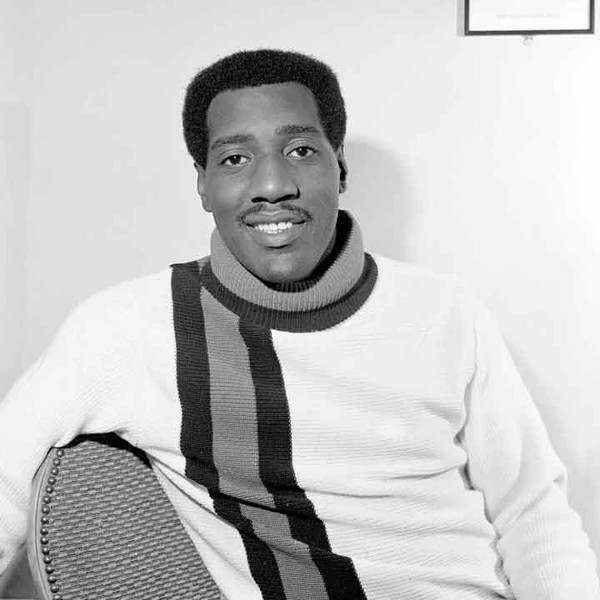
“If I die tomorrow, I’ve had a beautiful life because I’ve touched souls.”
— Otis Redding
Otis Redding, often hailed as the “King of Soul,” was a tall, dark, and handsome force whose voice could simultaneously stir the depths of sorrow and ignite the heights of joy. Though his life was tragically brief, ending at just 26 years old, his impact on the music industry is profound, enduring, and soul-shaking. With a voice that exuded wisdom far beyond his years, Redding became a symbol of raw emotion, authenticity, and artistic excellence. He was an old soul in a young man’s body—seasoned with gospel, rooted in rhythm and blues, and shaped by the Southern experience.
Early Life and Musical Genesis
Otis Ray Redding Jr. was born on September 9, 1941, in Dawson, Georgia, and raised in Macon. He was the son of Otis Sr., a sharecropper and later a military base worker, and Fannie Mae Redding, a devout woman who raised him in the church. Otis began singing in the Vineville Baptist Church choir, where his vocal power was first recognized. Deeply influenced by Little Richard (another Macon native), Sam Cooke, and Ray Charles, Redding took to the stage in his teens and began competing in local talent shows—often winning multiple times. He dropped out of school at age 15 to support his family, working odd jobs while pursuing his passion for music.
Rise to Fame: The Bar-Kays and Stax Records
Redding’s big break came when he was working as a driver and occasional singer for guitarist Johnny Jenkins. A fateful trip to Stax Records in Memphis in 1962 allowed Redding to cut a few tracks during downtime, including the now-iconic “These Arms of Mine.” The single exploded regionally, showcasing the aching soulfulness of his voice and launching his relationship with Stax.
The Bar-Kays, a talented group of Memphis musicians, soon became Redding’s backup band. Their chemistry electrified live audiences and studio recordings alike, giving birth to classics such as “Try a Little Tenderness,” “Respect,” and his posthumous mega-hit “(Sittin’ On) The Dock of the Bay.”
A Voice Like No Other
Otis Redding’s voice was often described as gravel mixed with honey—gritty yet deeply melodic. Critics and fans alike marveled at his dynamic vocal phrasing, emotional urgency, and soul-baring delivery. He had an extraordinary ability to infuse each lyric with heart-wrenching sincerity, whether he was pleading in love or lamenting loss. Music historian Peter Guralnick once wrote, “Otis could take the ordinary and make it sacred.”
Legacy and Sudden Tragedy
On December 10, 1967, Otis Redding’s life was tragically cut short when his Beechcraft plane crashed into Lake Monona near Madison, Wisconsin. He and six members of the Bar-Kays were killed. Redding had just recorded his defining song, “(Sittin’ On) The Dock of the Bay,” days before the crash. It was released posthumously and became the first posthumous number-one single on the Billboard Hot 100.
At the time of his death, Redding had accumulated significant wealth and owned his own publishing and production company—a rarity for Black artists of his era. He left behind his wife, Zelma Redding, and four children. One of his sons, Otis Redding III, carried the musical torch with the group The Reddings, echoing his father’s legacy with pride and reverence. Zelma once said in an interview, “Otis always believed his children would carry on his mission of spreading love through music. That was his heartbeat.”
Rumors and Controversy
While Redding’s death was officially deemed an accident due to engine failure, it has not escaped whispers of controversy. Some speculated sabotage or questioned the rushed investigation. However, no substantial evidence ever surfaced, and the tragedy has remained an unresolved wound in soul music history.
Cultural Reverberation
Redding’s influence has spanned genres and generations. Aretha Franklin, who turned his song “Respect” into an anthem of empowerment, praised him as a genius. Mick Jagger and the Rolling Stones were early admirers, and Jay-Z, Kanye West, and Beyoncé have all sampled or cited him as a foundational influence. His songs have been covered by hundreds of artists, and he was inducted into the Rock and Roll Hall of Fame in 1989.
A Lasting Impact
Otis Redding’s music remains timeless because it speaks to the human experience—love, longing, heartbreak, and hope. He defied racial and musical boundaries, uniting listeners through the sheer power of soul. In an age of digital perfection, his analog authenticity is more cherished than ever.
As music critic Dave Marsh once said, “Otis Redding didn’t just sing soul. He was soul.”
Select References:
- Guralnick, P. (1986). Sweet Soul Music: Rhythm and Blues and the Southern Dream of Freedom. Back Bay Books.
- Wald, E. (2004). How the Beatles Destroyed Rock ’n’ Roll. Oxford University Press.
- Otis Redding Foundation. (n.d.). https://otisreddingfoundation.org
- Rock & Roll Hall of Fame Biography – Otis Redding.
- Zelma Redding interview, NPR’s Fresh Air, 1998.
Discover more from THE BROWN GIRL DILEMMA
Subscribe to get the latest posts sent to your email.
 THE BROWN GIRL DILEMMA