
🌟🌟🌟🌟🌟 5/5
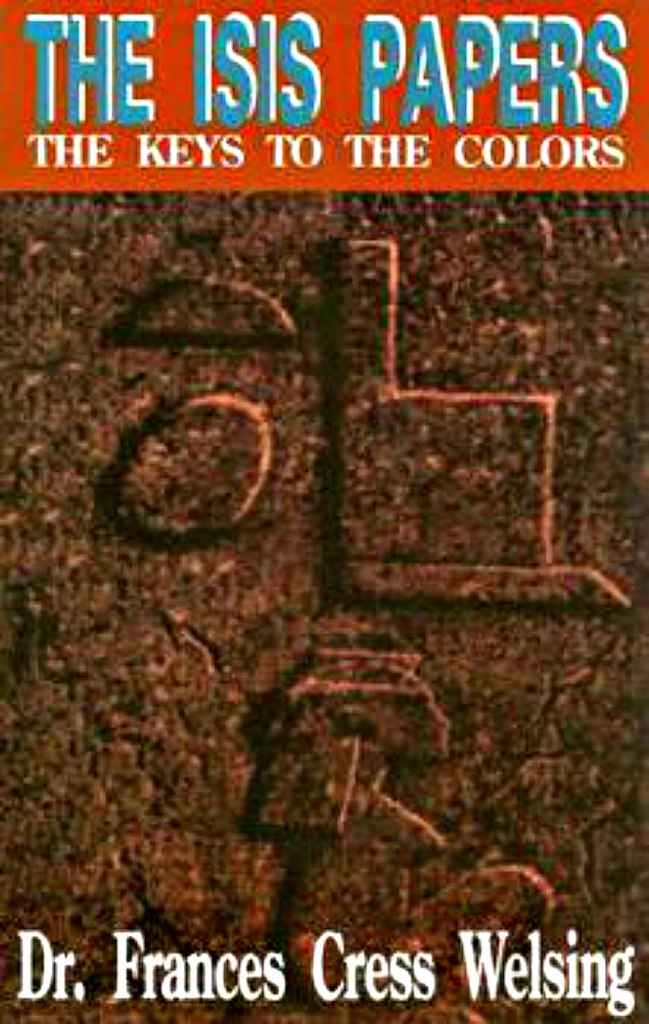
Book Review & Tribute: The Isis Papers by Dr. Frances Cress Welsing
A Five-Star Masterpiece of Black Consciousness and Psychological Liberation
About the Author: Who Was Dr. Frances Cress Welsing?
Dr. Frances Cress Welsing was a woman of extraordinary depth, towering intellect, and unwavering moral clarity—whose life and work reshaped the landscape of Black consciousness and psychological liberation. With the precision of a trained psychiatrist and the soul of a revolutionary, she confronted the global system of white supremacy with fearless analysis and compassionate truth-telling. Her book, The Isis Papers: The Keys to the Colors, stands as a timeless masterpiece that examines racism not merely as a social problem, but as a psychological imperative rooted in genetic fear. Welsing’s activism, deeply grounded in scholarship and service, transformed countless lives and awakened a generation to the psychological warfare waged against people of African descent. Through her unshakable modesty, disciplined intellect, and spiritual courage, she became one of the most consequential Black women of the 20th and 21st centuries—a seer, healer, and teacher whose legacy continues to reverberate in the hearts and minds of all who seek liberation.

Dr. Frances Cress Welsing (1935–2016) was an esteemed psychiatrist, scholar, and public intellectual who made an indelible mark on the field of Black psychology and social analysis. Born in Chicago, Illinois, Welsing came from a lineage of educated and socially conscious Black professionals. She earned her bachelor’s degree from Antioch College and went on to receive her M.D. from Howard University College of Medicine, where she later served as a professor.
Though she never married and did not have children, she became a mother to the minds of a generation—a guiding figure in the intellectual liberation of African-descended people worldwide. Her work combined clinical psychiatry with Afrocentric theory, crafting a new framework through which Black people could analyze their oppression with clarity, dignity, and strategy.
Her Life’s Work and Philosophy
Dr. Welsing dedicated her career to understanding and addressing the psychological effects of racism, particularly on Black communities. She believed that the root of global white supremacy was a deep-seated fear of Black genetic dominance, a thesis that she introduced in her groundbreaking 1974 paper, The Cress Theory of Color-Confrontation. This theory became the foundational framework for her most influential book, The Isis Papers: The Keys to the Colors (1991).
Her unique contribution was the use of psychoanalysis and medical science to explain the hidden motivations behind racism, aggression, and systemic oppression. She frequently argued that white supremacy is a system driven by survival anxiety, stemming from the biological inability of white people to produce melanin-dominant (Black) offspring.
Quote from Dr. Welsing
“Black people are the only people who can genetically annihilate white people… and this is the fear that informs the system of racism.”
—Dr. Frances Cress Welsing, The Isis Papers
This quote captures the essence of her central argument—that racism is not merely prejudice or ignorance, but a biogenetic strategy for white survival in a world where Black genetic dominance is inevitable.
The Premise and True Meaning of The Isis Papers
Named after the ancient African goddess Isis, a symbol of divine Black womanhood, wisdom, and regeneration, The Isis Papers is a compilation of essays that analyze racism through symbols, sports, language, media, religion, and even the subconscious drives of Western culture.
Welsing argued that everything from ball games to military strategy, from consumer marketing to television programming, is saturated with subconscious white fear of Black power and Black fertility. She interpreted items such as guns, balls, and cigars as phallic symbols representing white anxiety about genetic survival and impotence.
Her approach was both clinical and cultural, unapologetically Afrocentric, and deeply rooted in ancient African spirituality and psychology. She urged Black people to understand themselves not as victims, but as the targets of a fear-based global system—and then to rise with knowledge, unity, and self-control.
Her Activism and Service to the Community
Though not affiliated with political movements in the traditional sense, Dr. Welsing was an activist of the mind. She gave countless lectures at Black colleges, community centers, and national conferences, challenging audiences to think critically about race, power, and self-worth. She also appeared on major television programs such as The Phil Donahue Show and was a regular on Black media platforms.
At Howard University Hospital, she served the D.C. community as a psychiatrist, particularly focusing on Black youth, and was known for her compassionate but bold truth-telling. She mentored generations of Black scholars, including in the field of Afrocentric psychiatry and Pan-African analysis.
Why White America Hated Her
Dr. Welsing’s work was controversial and deeply unsettling to mainstream academia and white society. She unapologetically exposed the psychological underpinnings of white supremacy, going beyond polite liberalism or reform-based rhetoric. She accused white supremacy of being a survival-based system of genetic warfare, and she did so with academic rigor and prophetic boldness.
Her refusal to back down, even under criticism and intellectual exile, made her a pariah to some, and a prophet to others. The truth she revealed—layered, uncomfortable, and piercing—challenged the very identity of whiteness itself.
Why She Was Respected
Despite opposition, Dr. Frances Cress Welsing was deeply revered in the global African community for her intellectual courage, clarity, and service. She gave language to the rage and confusion many Black people felt about systemic oppression. She empowered Black minds to see beyond the surface of racism and into its biological, economic, and spiritual roots.
She is considered a pioneer in Black psychology, alongside scholars like Dr. Na’im Akbar and Dr. Amos Wilson, and continues to influence activists, psychologists, and scholars worldwide. Her work remains central to discussions around Afrocentric mental health, systemic racism, and Black cultural empowerment.
Final Verdict: A Timeless Masterwork
The Isis Papers is a five-star masterpiece of revolutionary thought. It is essential reading for anyone seeking to understand the system of white supremacy and how it functions globally. Dr. Frances Cress Welsing was not only a writer but a healer, teacher, and warrior of the mind. Her legacy lives on in every Black person awakened to truth, dignity, and purpose.
References
- Welsing, F. C. (1991). The Isis Papers: The Keys to the Colors. Third World Press.
- Welsing, F. C. (1974). The Cress Theory of Color-Confrontation. Black Scholar.
- Horne, G. (2015). Race War! New York: NYU Press.
- Karenga, M. (1993). Introduction to Black Studies. Los Angeles: University of Sankore Press.
Discover more from THE BROWN GIRL DILEMMA
Subscribe to get the latest posts sent to your email.
 THE BROWN GIRL DILEMMA