
South Asian women have long occupied a complicated space in global beauty culture—simultaneously admired, stereotyped, and under-represented. The idea of the “Indian doll” does not symbolize artificial imitation, but rather a woman whose aesthetics appear richly crafted, emotionally expressive, culturally rooted, and globally captivating. Priyanka Chopra Jonas embodies radiant, healthy skin and facial sculpting that reads as cinematic perfection. Deepika Padukone brings a commanding, statuesque elegance—runway poise blended with emotional vulnerability and strength. Aishwarya Rai Bachchan’s green-blue colored eyes make her instantly recognizable in the Indian community. Together, these women represent cultural range, ancestral depth, family stability, global success, and physical beauty that still feels human and warm, a spectrum that modern South Asian girls can both aspire to and see themselves in.
They are a powerful representation of Indian “doll” imagery because:
- Their beauty is distinct, not uniform
- They reflect mixed influences from colonization, migration, and heritage without losing their Indianness
- They succeeded in global media without abandoning marriage, motherhood, or cultural identity
- They entered Hollywood and international cinema as fully formed stars, not novelties
- They shifted the lens from “exotic stereotype” to “global admiration.”
Priyanka Chopra Jonas — The Exotic Global Doll with Glowing Skin
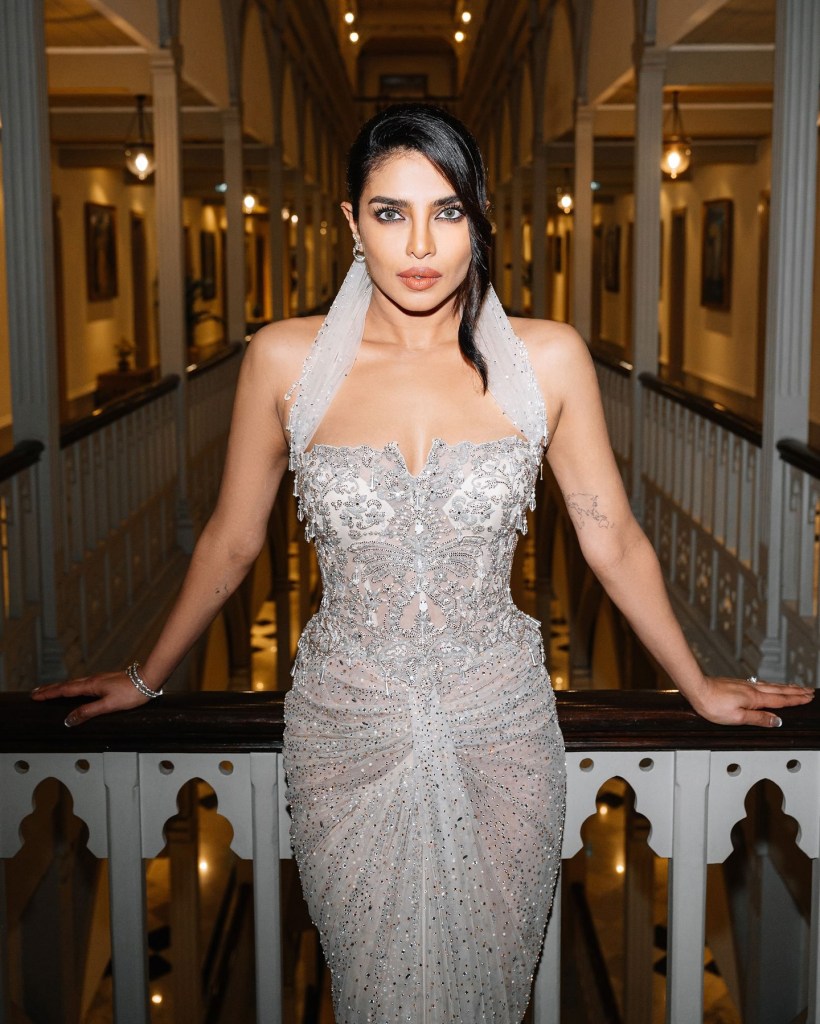
Early Life & Family
- Born July 18, 1982, in Jamshedpur, Jharkhand, India
- Parents: Dr. Ashok Chopra and Dr. Madhu Chopra, both physicians in the Indian Army
- Frequent relocation during childhood due to military assignments gave her exposure to multilingual and multicultural environments
- Attended school in India and the United States
- At age 13, she lived in the U.S. for studies before returning to India to complete her education
Ethnicity / Race
- She is Indian (South Asian), primarily of Punjabi descent
- Identifies culturally as Desi and maintains a strong affiliation with Indian identity despite a global career trajectory
Marriage & Children
- Married American singer/actor Nick Jonas in December 2018
- Child: Malti Marie Chopra Jonas (born January 2022 via surrogate)
- Priyanka and Nick have displayed a public narrative of cross-cultural admiration, blended tradition, and committed partnership, including a Hindu and Christian wedding celebration
Career Beginnings & Hollywood Entry
- Crowned Miss World 2000, which launched her national visibility
- Bollywood film debut: The Hero: Love Story of a Spy (2003)
- Rose rapidly through Hindi cinema with a commercial and dramatic range
- U.S. breakthrough: TV series Quantico (2015–2018), making her the first South Asian woman to lead an American network drama
- Hollywood films include Baywatch (2017) and The Matrix Resurrections (2021)
Awards & Honors
- National Film Award for Best Actress (India, 2008)
- 5 Filmfare Awards
- Padma Shri (Government of India, 2016)
- Serves as UNICEF Goodwill Ambassador
- Featured in Time 100 Most Influential People
Beauty Representation
Priyanka represents the modern Indian doll archetype—her golden-bronze complexion, healthy, glowing skin, and beauty rooted in self-care rituals offer representation for Indian girls who seldom saw their natural skin tone elevated in global media before her.
Deepika Padukone — The piercing-eyed Statuesque beauty, the Runway-Doll
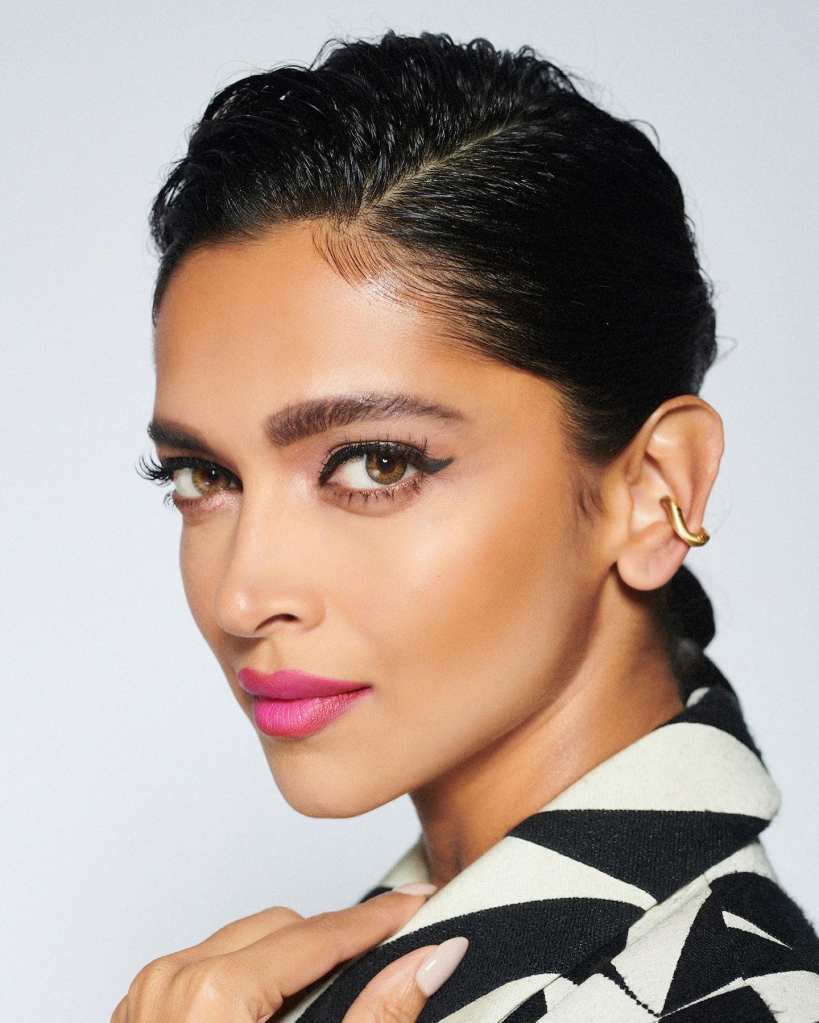
Early Life & Family
- Born January 5, 1986 in Copenhagen, Denmark
- Raised in Bangalore, India
- Father: Prakash Padukone, one of India’s greatest badminton champions
- Mother: Ujjala Padukone, travel agent
- Younger sister: Anisha Padukone, professional golfer
- Originally trained in sports before transitioning into modeling
Ethnicity / Race
- Indian (South Asian), of Konkani ancestry
- Her upbringing merges Nordic birth geography with a deeply Indian childhood cultural imprint
Marriage & Children
- Married Bollywood actor Ranveer Singh in November 2018
- Child: Dua Padukone Singh, born 2024
Career Beginnings & Hollywood Entry
- Started career in professional modeling and fashion campaigns
- Bollywood debut: Om Shanti Om (2007), which transformed her into a national sensation
- Hollywood debut: xXx: Return of Xander Cage (2017)
- Regular presence at the Cannes Film Festival
- Built a parallel career as a mental health advocate, founding the Live Love Laugh Foundation
Major Awards & Honors
- 3 Filmfare Best Actress Awards
- Cannes 2022 Jury Member
- Time 100 Impact Award
- Multiple global honors for fashion and influence
Beauty Representation
Her towering height, flawless beauty, sculpted bone structure, and bronzed, warm skin give her the presence of a living couture doll. She reflects beauty that is bold, visible, and undeniable, inspiring Indian girls to see power in presence, not just prettiness.
Aishwarya Rai Bachchan — The Iconic Bollywood Doll
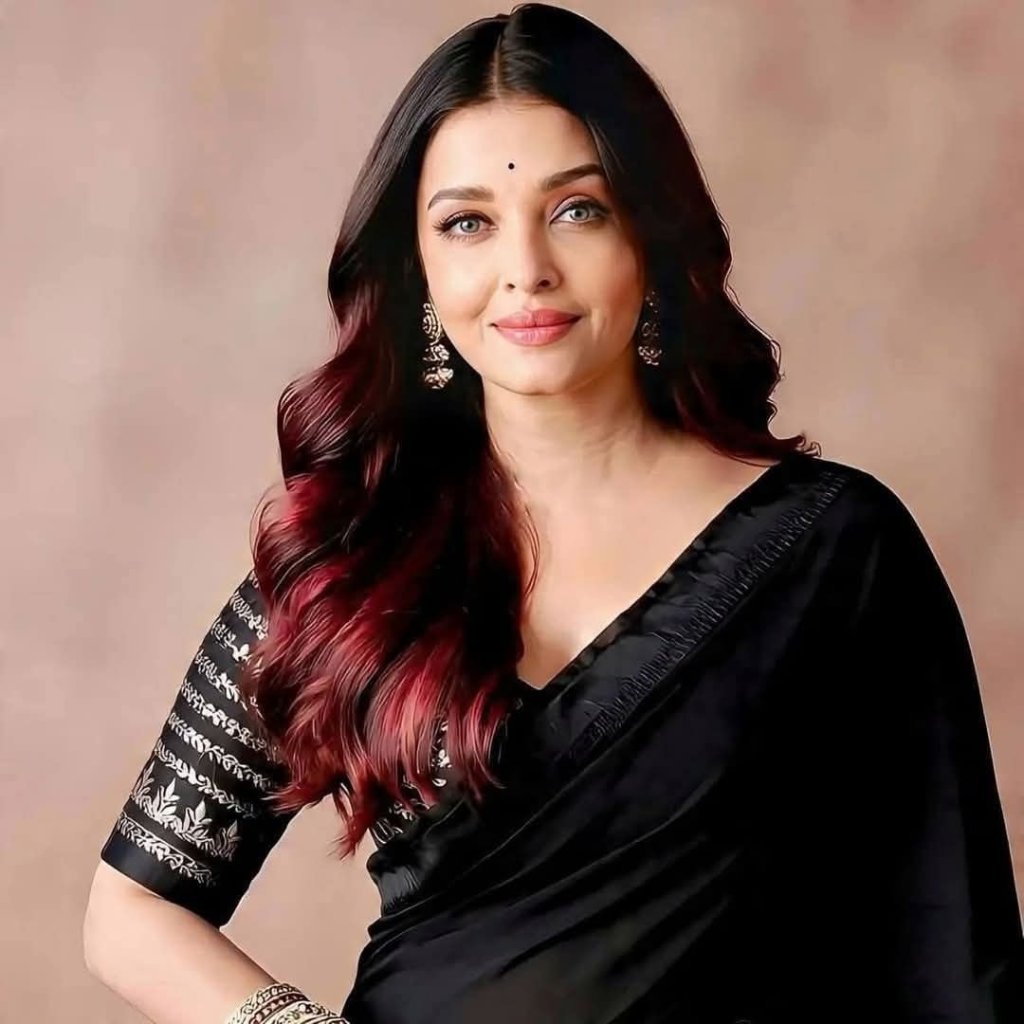
- Born November 1, 1973 in Mangalore, Karnataka, India
- Raised in Mumbai
- Father: Krishnaraj Rai, marine biologist
- Mother: Brindya Rai, writer/author
- Fluent in Tulu, Hindi, English, Tamil, and Bengali
- Academically gifted; originally studied architecture before pivoting to modeling and film
Ethnicity / Race
- Indian (South Asian), from a Tulu-speaking community
- Represents intelligence and cultural rootedness underneath global beauty admiration
Marriage & Children
- Married Bollywood actor Abhishek Bachchan in April 2007
- Daughter: Aaradhya Bachchan (born 2011)
Career Beginnings & Hollywood Entry
- Won Miss World 1994
- Bollywood debut: Aur Pyaar Ho Gaya (1997)
- International film visibility early, making her India’s first major crossover global film star
- Major English-language roles:
- Bride & Prejudice (2004)
- The Last Legion (2007)
- The Pink Panther 2 (2009)
- Longstanding Cannes red carpet presence since 2002
Major Awards & Honors
- 2 Filmfare Awards
- Padma Shri
- Ordre des Arts et des Lettres (France, 2012)
- Numerous global beauty and cinema honors
Beauty Representation
Her eyes are her signature—not common in India. She became the blueprint for success in Bollywood – unforgettable and delicate-fierce.
Why They Represent the “Indian Doll” Legacy Well
They are not a monolith. They represent a trinity of Hispanic-style inspiration in South Asian form:
| Woman | Doll Essence | Representation Value |
|---|---|---|
| Priyanka | glowing skin, sculpted face, golden tone | Modern global Desi woman + cross-cultural beauty |
| Deepika | statuesque runway statue brought to life | Tall South Asian beauty + mental health voice |
| Aishwarya | green-blue eyes | India’s first global beauty |
Their representation matters because:
- They reflect the true multiracial and multi-textural harmony of South Asian populations
- They preserve long-term marriage and motherhood narratives, resisting Hollywood instability tropes
- They carried their languages, traditions, and ancestry onto global screens
- They embody beauty that is ornamental, aspirational, emotional, political, cultural, and personal
They are a good representation of the idea of Indian dolls because they show the world that South Asian beauty is not factory-made—it is lineage-made, climate-born, grace-carried, and culturally embodied.
References
Chopra Jonas, P. (2019). Unfinished: A Memoir. Ballantine Books.
Live Love Laugh Foundation. (2021). Mental health advocacy research and campaigns.
Cannes Film Festival Archives. (2003, 2022). Jury member and red carpet documentation.
Nayar, P. K. (2014). The Indian Cinematic Imagination. Routledge.
Dudrah, R. (2006). Bollywood and Globalization: The Global Power of Popular Hindi Cinema. Manchester University Press.
ChatGPT can make mistakes. Check important info.
Discover more from THE BROWN GIRL DILEMMA
Subscribe to get the latest posts sent to your email.
 THE BROWN GIRL DILEMMA